
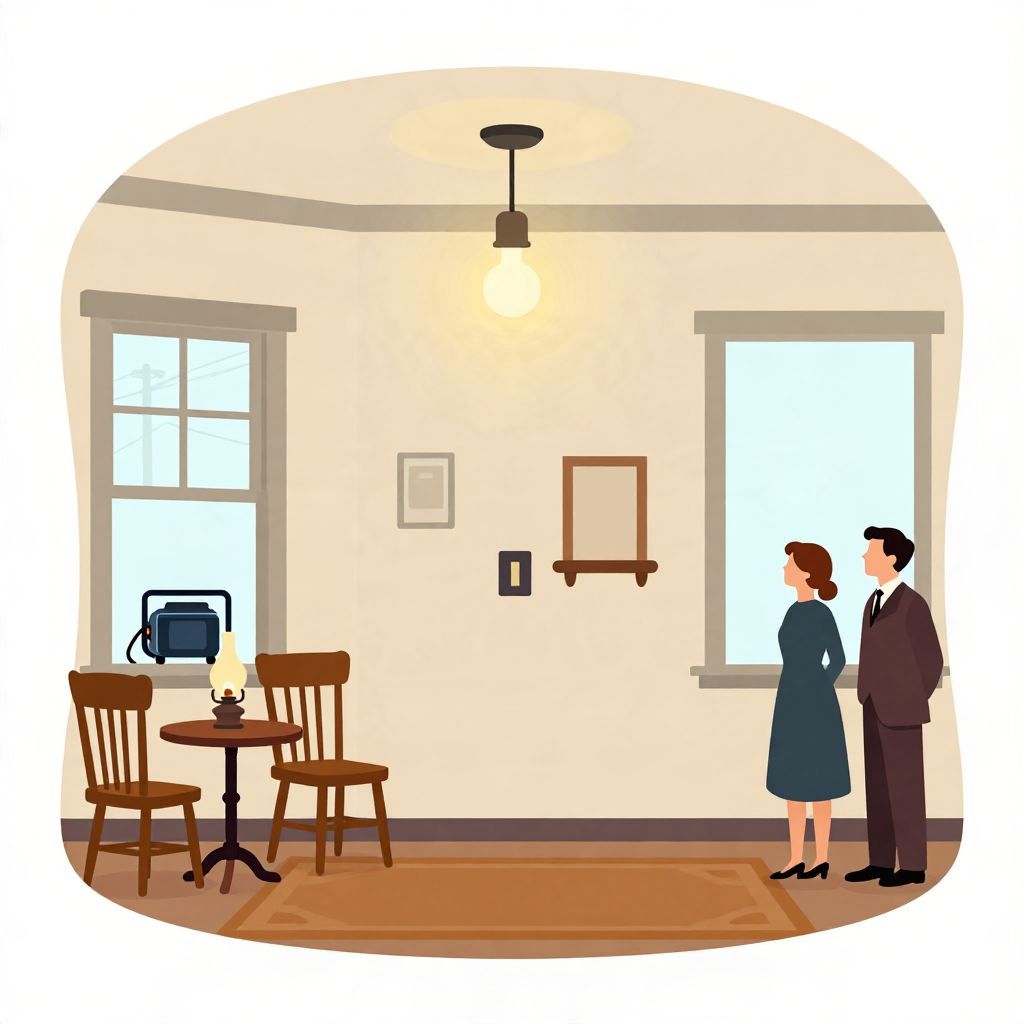
When was electricity invented in homes? The short answer is that electricity was not “invented” for homes all at once. It arrived gradually, with the first practical home electric lighting appearing in the late 1870s and 1880s, and with widespread household electrification coming much later, mainly in the early 20th century.
In other words, the history of electricity in homes is really the history of how inventors, utilities, and governments turned a scientific discovery into a safe, affordable public service. The timeline begins with experiments in electric light and ends with millions of households being wired for lights, appliances, and power.
When was electricity invented in homes?
Electricity was not invented in homes on a single date. The first homes to use electric light appeared in the late 1870s and 1880s, especially after practical incandescent bulbs and electrical systems were developed. But most homes were not electrified until the 1900s through the 1930s, and in some rural areas not until the mid-20th century.
How electricity came into the home
Before electricity reached ordinary houses, it had to be made useful, safe, and deliverable. That meant creating generators, wires, switches, sockets, meters, and lighting that would work reliably indoors. The key breakthrough was not electricity itself, but the ability to distribute it as a service.
From scientific discovery to practical power
By the 18th and early 19th centuries, scientists understood electric phenomena, but electricity was still mostly a laboratory curiosity. The real turning point came with the development of electrical generation and lighting in the 19th century. Once engineers could produce steady current, they could begin to imagine powering buildings, streets, and eventually homes.
The first home electric lights
Early electric lighting appeared first in wealthy houses, experimental buildings, and special installations. These systems were expensive and often limited to a few rooms or a single lamp. In the 1880s, as incandescent bulbs improved and electrical companies formed, electric light began moving from novelty to practical household feature.
The key dates in home electrification
The story of electricity in homes is best understood as a sequence of milestones rather than one invention date. A few dates stand out because they changed what was possible in domestic life.
- 1879 — Thomas Edison demonstrated a practical incandescent light bulb.
- 1882 — Edison’s Pearl Street Station in New York began supplying electric power, one of the first central stations for customers.
- 1880s — Some urban homes and businesses began installing electric lighting.
- 1900s–1920s — Household electrification expanded in many cities and towns.
- 1930s–1940s — Rural electrification dramatically increased access in the United States and other countries.
1879: the bulb that made home electricity practical
Thomas Edison is often associated with “inventing electricity,” but that is not accurate. What he and others helped develop was a practical incandescent lamp and a system for delivering electric light. The bulb mattered because home lighting required a source that was safer and more convenient than gas lamps or candles.
1882: the first central power station
The opening of Edison’s Pearl Street Station in Manhattan marked a major step toward home electricity. Instead of each house generating its own power, electricity could now be produced centrally and distributed through wires. This model became the foundation of modern electric utilities.
What did the earliest electrified homes look like?
The first electrified homes were not like modern houses filled with outlets and appliances. They usually had electric lighting in a few rooms, often in wealthier urban neighborhoods. Many still relied on gas, coal, or wood for heating and cooking. Electricity first changed the way people lit their homes, not the whole structure of domestic life.
Lighting came before appliances
For decades, the main household use of electricity was illumination. Electric irons, fans, vacuum cleaners, refrigerators, and radios came later, once electrical supply became more reliable and homes had more wiring. The electric home as we imagine it today emerged gradually, not instantly.
Wiring and safety were major concerns
Early electrical systems were often uneven and sometimes dangerous. Standardized wiring, fuses, circuit breakers, and building codes developed over time. These improvements were crucial because home electricity had to be not only available, but also safe enough for everyday use.
Why did home electrification take so long?
Even after electric lighting was invented, it took decades for electricity to become common in homes. The reasons were economic, technical, and geographic. Building power stations and transmission networks was expensive, and many households could not afford the installation costs at first.
Cost and infrastructure
Electricity required a network: generators, poles, wires, meters, and maintenance crews. Urban areas were easier to serve because homes were close together. Rural areas were much harder and more costly to electrify, which is why many farms and small communities waited much longer.
Competition from gas and other fuels
In the late 19th century, gas lighting was already well established in many cities. Kerosene lamps were also common. Electricity had to prove that it was brighter, cleaner, and eventually cheaper or more convenient. It did, but only after utilities expanded and prices became more manageable.
When did electricity become common in ordinary homes?
For most households, the answer is the early 20th century, not the 1880s. In the United States, urban electrification accelerated in the 1910s and 1920s, while rural electrification lagged until the 1930s and after. In Europe and other regions, the pace varied, but the broad pattern was similar: cities first, countryside later.
The rise of the electric household
As more homes were wired, electricity changed daily routines. People could stay up after dark more easily, household labor became less dependent on daylight, and new appliances slowly appeared. This did not eliminate work, but it transformed the rhythm of domestic life.
Rural electrification changed everything
In the United States, the New Deal’s Rural Electrification Administration, created in 1935, helped bring power to farms and remote communities. Similar public and private efforts elsewhere also expanded access. For many families, this was the moment when electricity truly entered the home in a meaningful, everyday way.
Why the question is often answered differently
People ask “when was electricity invented in homes” because they want a single date. Historians usually give a range instead, because the answer depends on what counts as “invented.” If you mean the first electric light in a house, the answer is the late 1870s and 1880s. If you mean widespread household electrification, the answer is the early 20th century.
Three different meanings of “in homes”
- First use in a home: experimental electric lighting in the late 19th century.
- First practical household system: the 1880s, with central stations and incandescent bulbs.
- Common in ordinary homes: the 1900s to 1930s, depending on region.
The lasting impact of electricity on domestic life
Electricity reshaped homes far beyond lighting. It made possible modern refrigeration, entertainment, communication, cleaning machines, and climate control. It also changed architecture, interior design, and the daily schedule of family life. A home wired for electricity became a different kind of space from a house lit by flame.
From novelty to necessity
What began as a luxury for elite households became a basic expectation. Over time, electricity moved from being an impressive innovation to something most people regarded as essential. That shift is one of the clearest examples of how a technological invention becomes part of everyday history.
So, when was electricity invented in homes? The best historical answer is that home electricity began in the late 19th century, but it became truly common only in the early-to-mid 20th century. If you want to follow how modern life changed after that, you might also enjoy reading about when the first car was invented and when the first Super Bowl was played.