
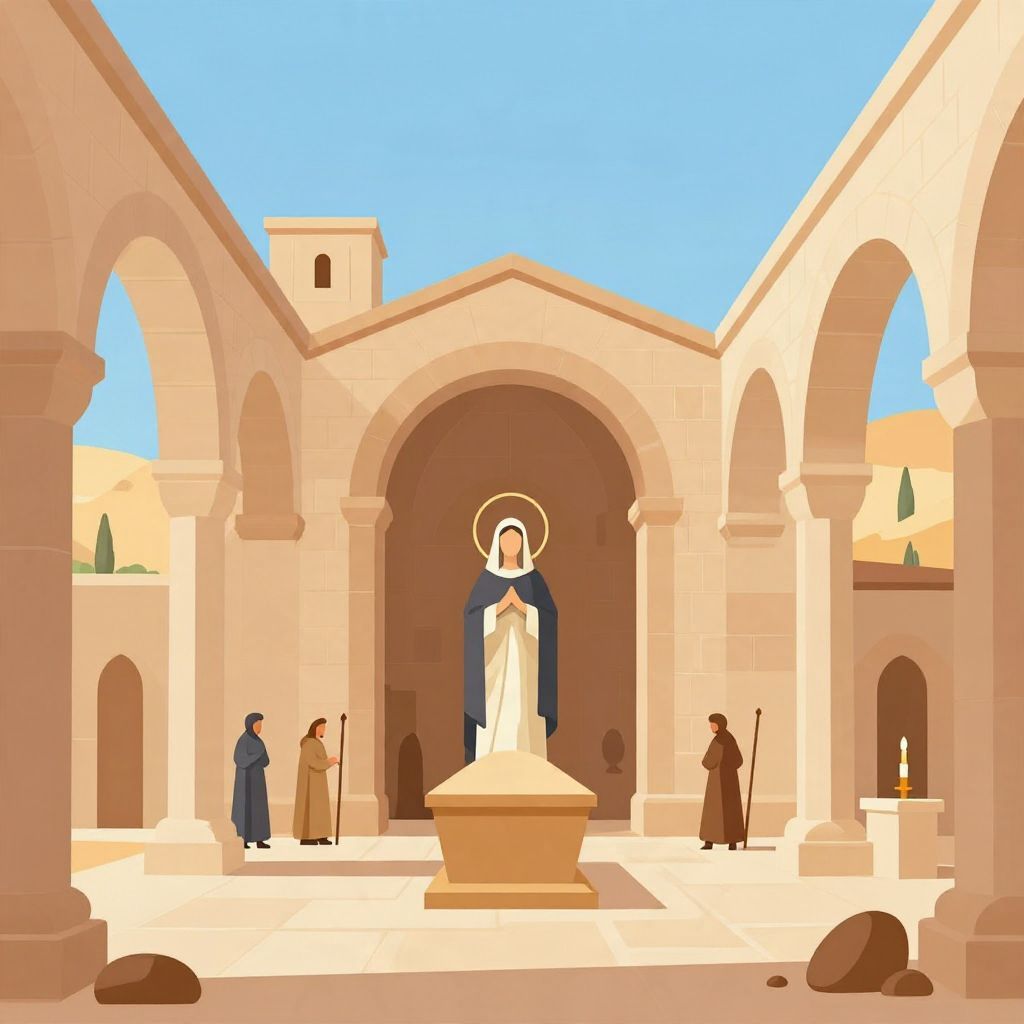
Where is Mary Magdalene buried? The short historical answer is that no burial site can be verified with confidence. The New Testament does not describe her death or burial, and later traditions place her remains in different locations, especially in France and, in some traditions, in Ephesus. Because the evidence is late and legendary, historians treat any specific grave claim as uncertain.
That uncertainty matters because Mary Magdalene became one of the most important figures in Christian memory. Over centuries, devotion, legend, and local pilgrimage traditions shaped stories about her final resting place, often more than early historical evidence did.
Where Is Mary Magdalene Buried?
There is no historically confirmed burial site for Mary Magdalene. The earliest Christian sources identify her as a follower of Jesus and witness to the resurrection, but they do not record where she died or was buried. Claims about her tomb in southern France or elsewhere belong to later medieval tradition, not secure first-century evidence.
What the Historical Sources Actually Say
Mary Magdalene in the New Testament
Mary Magdalene appears in the Gospels as a disciple of Jesus from whom seven demons had been cast out, a witness to the crucifixion, and the first person to see the risen Christ in the Gospel of John. Those texts are central to her historical importance, but they say nothing about her later life, death, or burial.
That silence is important. In ancient biography and religious memory, the absence of a burial account usually means later generations filled the gap with tradition. For Mary Magdalene, that is exactly what happened.
Why the burial question is difficult
For many early Christian figures, the historical record is fragmentary. Burial places were sometimes remembered locally, but many traditions developed decades or centuries later. In Mary Magdalene’s case, no early, widely accepted source establishes a tomb. That means historians must distinguish between evidence from the first century and devotional stories that appeared much later.
The Main Traditions About Her Final Resting Place
The southern France tradition
The best-known tradition says Mary Magdalene traveled to Provence in present-day France after the events of the New Testament and spent her final years there. According to medieval legend, she lived as a hermit and was eventually buried at Saint-Maximin-la-Sainte-Baume. This site became an important pilgrimage center in the Middle Ages.
Historically, this tradition is not well supported by first-century evidence. It emerged long after Mary’s lifetime and reflects medieval Christian devotion in western Europe. The shrine’s importance is real as a matter of religious history, but that does not make the burial claim historically certain.
The Ephesus tradition
Another tradition connects Mary Magdalene with Ephesus, in Asia Minor, where some early Christian memory placed the later life of John the Apostle and, in some accounts, Mary and other women associated with Jesus. This tradition is less famous than the French one, but it shows how early Christian communities often linked major figures to important pilgrimage locations.
Even here, however, the evidence is not strong enough to identify a verified tomb. Ephesus is associated with several revered Christian traditions, but Mary Magdalene’s burial there remains speculative rather than established fact.
Other local claims
Over time, different churches and monasteries claimed relics or burial associations with Mary Magdalene. Such claims were common in medieval Christianity, where relics could attract pilgrims, prestige, and donations. Some claims may have grown from sincere devotion; others may have been shaped by competition among religious centers. None has produced conclusive historical proof.
Why the French Tradition Became So Influential
Medieval pilgrimage and relic culture
In the Middle Ages, saints’ shrines were powerful religious and economic centers. A place linked to Mary Magdalene would naturally attract pilgrims, and pilgrimage could strengthen a local church’s standing. Once a shrine gained popularity, stories about the saint’s life often became more elaborate and more widely repeated.
That helps explain why the Provence tradition became dominant in parts of western Europe. It was not simply a random legend; it was part of a broader medieval pattern in which communities anchored sacred history to local geography.
Legend and devotion versus historical proof
Historians do not dismiss these traditions as meaningless. They are valuable evidence for how later Christians understood Mary Magdalene and how her image changed over time. But a tradition’s devotional power is not the same thing as proof of a burial site. The historical method requires asking when a story first appears, who promoted it, and whether earlier sources support it.
How Mary Magdalene’s Image Changed Over Time
From disciple to legendary penitent
Mary Magdalene’s reputation evolved dramatically. In the New Testament, she is a key disciple and witness. In later Western Christian tradition, she was often merged with other women from the Gospel stories and portrayed as a repentant sinner. That blending affected how people imagined her life after Jesus, including where she might have died and been buried.
This is one reason burial traditions became so elaborate. A figure imagined as a penitent saint or apostolic witness could be linked to conversion, travel, retreat, and holy death in ways that supported local devotion.
The role of relics in Christian memory
Relics were central to medieval Christianity. Bones, clothing, or objects associated with saints were believed to mediate holiness and inspire prayer. Because of that, identifying Mary Magdalene’s remains would have been spiritually and institutionally significant. But the very popularity of relics also created incentives for uncertain or embellished claims.
What Historians Can Say with Confidence
- Mary Magdalene was a historical follower of Jesus remembered in the earliest Christian traditions.
- No first-century source records her burial place or gives a reliable account of her death.
- Medieval traditions later placed her remains in places such as Provence and, in some accounts, Ephesus.
- No burial claim is universally accepted by historians as proven fact.
- Her importance in Christian history comes from her role as witness, disciple, and symbol, not from a verified tomb.
Why People Still Ask the Question
The question “Where is Mary Magdalene buried?” persists because burial places matter in religious history. A tomb can become a focal point for memory, pilgrimage, and identity. In Mary Magdalene’s case, the lack of certainty invites both curiosity and legend. People want a physical link to a figure who stands at the center of Easter faith and Christian tradition.
That desire is understandable, but it should be balanced with historical caution. The most responsible answer is that her burial place is unknown. The traditions are important cultural history, yet they do not provide firm evidence for a single authenticated grave.
Historical Background: Mary Magdalene’s Lasting Legacy
Mary Magdalene’s legacy is larger than the question of where she was buried. She became a symbol of faithful witness, repentance in some traditions, and devotion in others. Her story also shows how early Christian memory developed over centuries: scripture, oral tradition, local cults, medieval legend, and modern scholarship all shaped the picture we have today.
So, while no historian can point to a verified tomb and say, “This is Mary Magdalene’s burial place,” we can say something more precise: her burial is not historically established, and the best-known resting-place traditions are products of later Christian memory rather than secure first-century record.
For readers interested in the wider story, it helps to compare Mary Magdalene’s traditions with other early Christian burial claims, including the debate over where Jesus’ tomb is believed to be and the broader question of what happened to Mary Magdalene. In the end, the historical answer is clear: her burial place remains unknown, even as the traditions surrounding her continue to shape Christian memory.