
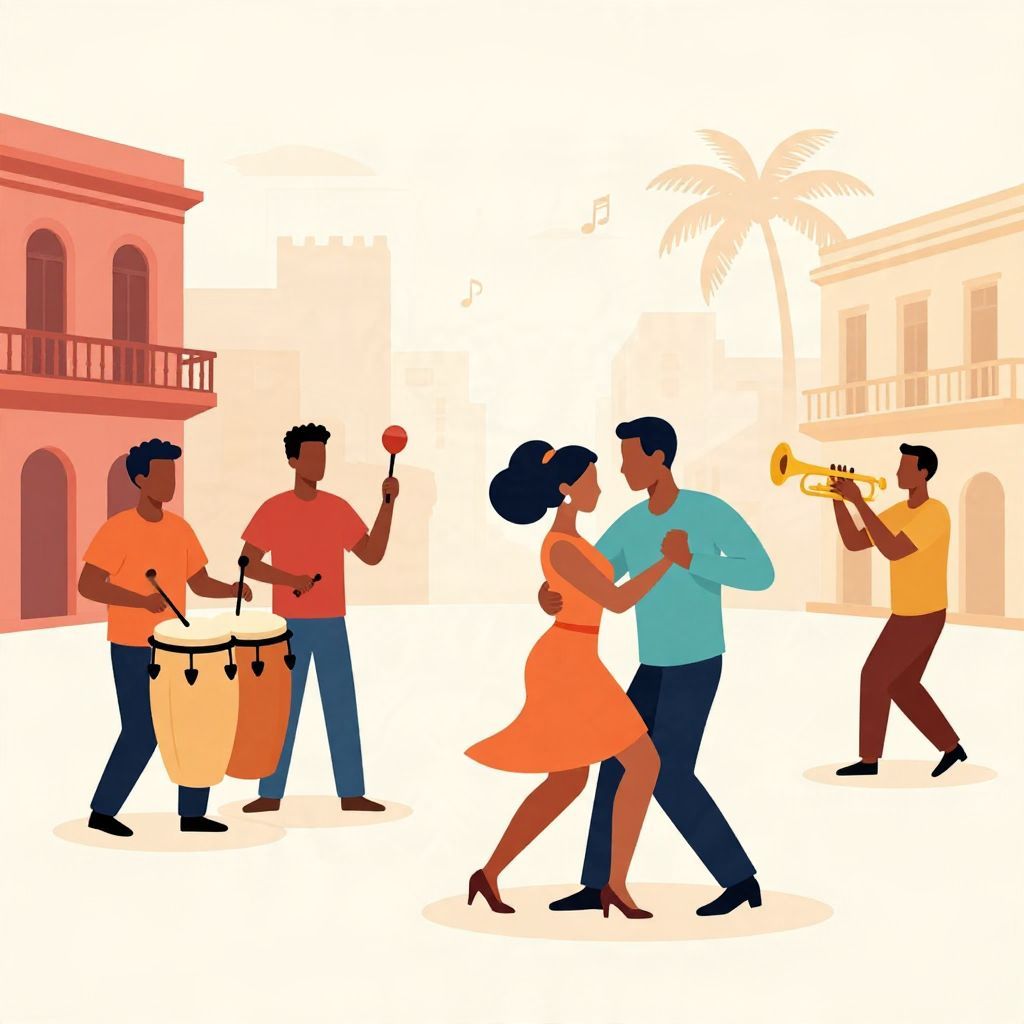
Where did salsa originate? The short answer is that salsa developed in New York City in the 1960s and 1970s, especially among Caribbean musicians and dancers from Puerto Rico, Cuba, and other Latin American communities. It was not invented in one single moment or place, but grew out of older Afro-Caribbean musical traditions.
Its roots reach back to Cuba, Puerto Rico, and the wider Caribbean, where son, mambo, rumba, plena, and other styles blended over time. Salsa became a modern urban genre and dance culture when these traditions met jazz, migration, recording studios, and nightclub life in the United States.
Where Did Salsa Originated?
Salsa originated in New York City as a commercial and cultural label in the 1960s and 1970s, but its musical foundations came from Cuba, Puerto Rico, and other Caribbean traditions. In other words, salsa is best understood as a transnational Afro-Caribbean style that was shaped in New York rather than invented there from nothing.
The Caribbean Roots Behind Salsa
Long before the word “salsa” became popular, Caribbean musicians were building the rhythms and song forms that would later feed it. Cuban son, guaracha, mambo, and rumba were especially important, along with Puerto Rican plena and bomba. These traditions carried African rhythmic structures, Spanish-language lyrics, call-and-response singing, and dance-centered performance.
Cuba’s major influence
Cuba played a central role because its son music became widely recorded and exported in the early 20th century. Son combined Spanish guitar traditions with African-derived percussion and rhythmic patterns. By the 1920s and 1930s, Cuban dance music was already circulating internationally, and later styles such as mambo and cha-cha-chá helped shape the sound that salsa musicians would draw upon.
Puerto Rican musical traditions
Puerto Rican musicians also contributed strongly to salsa’s formation. In New York, many Puerto Rican migrants brought plena, bomba, bolero, and dance-band traditions with them. These styles helped define the percussion, phrasing, and social energy of salsa, especially in neighborhoods where Caribbean communities lived close together and shared clubs, radio stations, and performance spaces.
Why New York City Became the Center
New York City became the key birthplace of salsa as a modern genre because it was a major migrant hub. After World War II, large numbers of Puerto Ricans moved to the city, and Cuban, Dominican, and other Latin American musicians also worked there. The city’s dense nightlife, recording industry, and radio market made it the perfect place for musical fusion.
Migration and urban life
In the 1950s and 1960s, Puerto Rican neighborhoods such as East Harlem and the Bronx became important cultural centers. Musicians and dancers were not simply preserving old traditions; they were adapting them to new urban realities. The result was a faster, louder, more hybrid sound that fit dance halls, clubs, and large orchestras.
The influence of jazz and big-band arranging
New York musicians also absorbed American jazz, swing, and big-band arranging techniques. Brass sections became more prominent, improvisation grew more elaborate, and arrangements were tailored to the energy of crowded dance floors. Salsa therefore emerged as a conversation between Caribbean rhythm and U.S. urban popular music.
When Did Salsa Become a Recognizable Genre?
Salsa became recognizable in the late 1960s and early 1970s. The term itself was used by record labels, promoters, and musicians to market a broad mix of Afro-Caribbean dance music. It did not describe a single ancient tradition; it was a modern umbrella term for related styles that had already been developing for decades.
The role of Fania Records
One of the most important forces in salsa’s rise was Fania Records, founded in New York in 1964. The label brought together major performers and helped create a unified salsa scene. Artists such as Johnny Pacheco, Celia Cruz, Willie Colón, and Héctor Lavoe became associated with the genre’s golden era. Their recordings helped standardize the sound and spread it internationally.
Why the word “salsa” mattered
The term “salsa” means “sauce” in Spanish, and it worked as a vivid, marketable label for a music style that was spicy, mixed, and energetic. The word was not a historical name used by earlier generations for one fixed genre. Instead, it became a cultural brand that grouped together son, mambo, guaracha, boogaloo, and related forms under one banner.
Was Salsa Invented in One Place?
No single place can claim to have invented salsa in a simple sense. If the question is about the modern genre, New York City is the clearest answer. If the question is about the musical ingredients, then Cuba and Puerto Rico are essential, with wider Caribbean and African roots behind them. Salsa is best described as a diasporic creation.
A shared Caribbean-American history
This matters because salsa reflects movement across borders. African rhythms survived and transformed in the Caribbean under slavery and colonialism. Spanish-language song traditions mixed with African percussion. Later, migration to the United States brought those traditions into new contact with jazz, commercial recording, and urban dance culture. Salsa is therefore a product of historical exchange, not isolation.
How Salsa Developed from Earlier Music
The evolution of salsa can be traced through several stages rather than a single origin story. Each stage added something important to the style that later audiences would call salsa.
- 19th and early 20th centuries: Afro-Caribbean musical forms develop in Cuba, Puerto Rico, and nearby islands.
- 1920s–1940s: Cuban son, rumba, and related dance music spread through recordings and touring bands.
- 1950s: Mambo and cha-cha-chá become popular in New York dance halls and Latin clubs.
- 1960s: Puerto Rican and Cuban musicians in New York blend these traditions with jazz and urban dance music.
- Late 1960s–1970s: “Salsa” becomes the dominant label for this new commercial and cultural scene.
Boogaloo and other transitional styles
Before salsa fully took shape, styles such as Latin boogaloo helped bridge the gap between older Caribbean music and the new urban sound. Boogaloo often incorporated English-language lyrics and soul influences, showing how flexible Latin music in New York had become. Salsa inherited that flexibility while returning more strongly to Afro-Caribbean rhythmic foundations.
Salsa as Music and Dance
Salsa is not only a musical genre; it is also a dance culture. The dance developed alongside the music in clubs, ballrooms, and social spaces where partners responded to the percussion and horn lines. Different regional styles later appeared, including Cuban-style casino, New York-style salsa, Los Angeles-style salsa, and Colombian salsa traditions.
From social dance to global performance
As salsa spread internationally, it became both a social dance and a stage performance. Dance schools, festivals, and touring bands helped standardize certain steps and patterns, but local communities adapted the dance to their own tastes. This global spread did not erase its origins; instead, it made the genre even more diverse.
Common Misconceptions About Salsa’s Origin
One common misconception is that salsa comes from a single “mother country.” In reality, it is a hybrid tradition shaped by migration and exchange. Another mistake is to treat salsa as an ancient folk style unchanged for centuries. While its roots are older, salsa itself is a modern name for a modern musical movement.
Not just Cuban, not just Puerto Rican
Because Cuba contributed so much to the musical vocabulary, some people assume salsa is simply Cuban music under another name. Others emphasize Puerto Rican musicians because of New York’s diaspora communities. Both views capture part of the story, but neither is complete on its own. Salsa emerged from the interaction of many Caribbean traditions in an urban North American setting.
Why the Origin Story Still Matters
Understanding where salsa originated helps explain why it sounds the way it does and why it became so influential. Its history shows how migration can create new cultural forms, how African diasporic traditions survived and adapted, and how cities like New York became laboratories for modern music. Salsa is a reminder that cultural identity is often made through movement, exchange, and reinvention.
So, if you are asking where salsa originated, the best historical answer is this: salsa originated as a modern genre in New York City, built from Cuban, Puerto Rican, and broader Afro-Caribbean musical traditions. Its story is not one of a single birthplace, but of many roots coming together in one powerful urban scene. For related cultural histories, you can also explore what carnival is and the history of Brazilian carnival.