
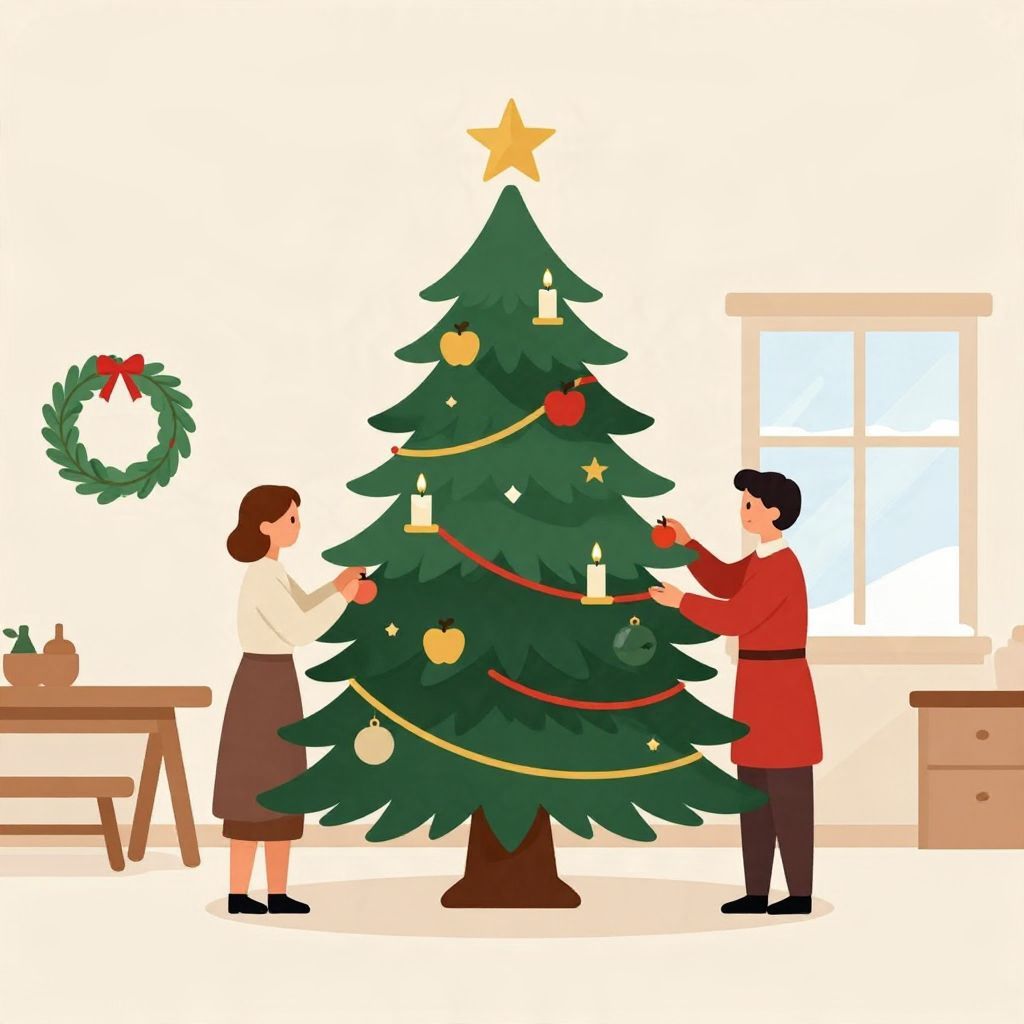
What is the meaning of the Christmas tree? In historical terms, it is a symbol that grew out of a mix of Christian devotion, winter customs, and later family-centered holiday traditions. Its meaning has changed over time, moving from religious symbolism and seasonal greenery to a widely recognized emblem of Christmas itself.
The tree’s history is not a single origin story. Instead, it reflects centuries of practice in Europe, especially in German-speaking regions, before spreading across the world in the 19th and 20th centuries. Today, people may see it as a Christian symbol, a cultural tradition, or simply a festive decoration.
What Is the Meaning of the Christmas Tree?
The Christmas tree traditionally represents life, hope, and renewal in the darkest part of the year, while also pointing for many Christians to the celebration of Christ’s birth. Its evergreen branches symbolized endurance through winter long before the custom became linked to Christmas, and later Christian interpretation gave it deeper religious meaning.
Where Did the Christmas Tree Tradition Come From?
The Christmas tree developed gradually, rather than appearing all at once. Evergreen plants were important in pre-Christian winter festivals across Europe because they stayed green when other plants died back. These customs were later reshaped by Christian communities, especially in the late medieval and early modern periods.
Evergreens Before Christmas Trees
Long before decorated indoor trees became common, people in ancient Europe used evergreen boughs to mark winter festivals. Romans, for example, decorated with greenery during Saturnalia. In northern Europe, evergreens were associated with survival, protection, and the return of light after the winter solstice. These older customs did not yet create a Christmas tree, but they helped establish the symbolic power of green plants in winter.
German-Speaking Regions and Early Christmas Trees
Most historians trace the modern Christmas tree to German-speaking lands in the late 15th and 16th centuries. One early custom involved setting up decorated trees or branches in homes and public spaces for religious plays and seasonal celebrations. By the 17th century, indoor Christmas trees were becoming more recognizable in parts of Germany, often adorned with apples, nuts, paper ornaments, and candles.
These trees were not universally used, and the tradition remained regional for a long time. Still, Germany became the main source from which the custom spread to other parts of Europe and beyond.
How Did the Christmas Tree Become a Christian Symbol?
For Christians, the Christmas tree came to represent more than winter greenery. Its evergreen leaves suggested eternal life, while its upward shape pointed heavenward. In some traditions, the tree was also connected to the story of Eden and the promise of redemption through Christ, giving it a theological meaning layered onto older seasonal symbolism.
Religious Interpretation and Popular Practice
The Christmas tree was not originally a formal church object. It was a household tradition that Christians gradually interpreted in religious terms. That distinction matters historically: the tree’s meaning was shaped by both popular custom and devotional explanation. In many homes, it became part of a broader Christmas setting that included candles, nativity scenes, gifts, and family gatherings.
Martin Luther and the Candle Story
A popular legend says that Martin Luther was the first to place candles on a Christmas tree after being inspired by stars shining through trees. This story is widely repeated, but historians treat it cautiously. Luther may have helped popularize Christmas customs in Protestant households, but there is no firm evidence that he invented the lit tree tradition. The candle story is best understood as a later tradition that captures the symbolic appeal of light in winter.
How Did the Christmas Tree Spread Across the World?
The Christmas tree spread more widely in the 18th and 19th centuries, especially through elite and royal influence. German customs entered Britain in the 1800s and then became fashionable in the English-speaking world. Migration also carried the tradition to North America, where it gradually became a mainstream Christmas practice.
Britain and Queen Victoria’s Era
The Christmas tree became especially popular in Britain during the 19th century. German-born Prince Albert, husband of Queen Victoria, helped make the custom fashionable in the royal household. Images of the royal family gathered around a decorated tree were widely circulated and encouraged imitation among the middle classes. This was a major turning point in the tree’s history.
By the mid-1800s, the Christmas tree had moved from a regional custom to a broader symbol of family celebration in Britain and beyond. Its meaning was increasingly tied to domestic warmth, children, gifts, and holiday cheer.
Arrival in the United States
German immigrants brought Christmas tree customs to North America, where they were at first seen as unfamiliar or even strange by some observers. Over time, however, the practice gained popularity, especially in urban areas and among communities with German roots. By the late 19th century, the Christmas tree had become a common part of American Christmas celebrations.
As the tradition spread, it absorbed new forms of decoration and public display. Department stores, town squares, and later electric light displays helped turn the Christmas tree into both a private family symbol and a public seasonal icon.
What Do Christmas Tree Decorations Mean?
Decorations have added layers of meaning to the Christmas tree over time. Some ornaments are practical, some are decorative, and some carry symbolic or religious significance. The meaning of the tree is therefore not fixed; it is shaped by the objects placed on it and the traditions of the family or community using it.
Candles and Lights
Candles were among the earliest tree decorations and symbolized light in the darkness of winter. Because open flames were dangerous, they were eventually replaced by safer electric lights in the late 19th and early 20th centuries. The lights still preserve the older idea of brightness, hope, and celebration during the darkest season of the year.
Ornaments, Stars, and Angels
Many Christmas trees are topped with a star or angel. The star is often linked to the Star of Bethlehem, which in Christian tradition guided the Magi to the infant Jesus. Angels can represent the heavenly messengers in the Nativity story. Other ornaments, such as glass baubles, tinsel, candy canes, and handmade decorations, reflect changing tastes and local customs rather than one fixed historical meaning.
Gifts Beneath the Tree
Placing gifts under the Christmas tree became a major part of the holiday in the 19th century, especially as Christmas became more focused on children and family life. This practice reinforced the tree’s role as a center of domestic celebration. In many homes, the tree became the visual and emotional heart of Christmas morning.
Why Did the Christmas Tree Become So Popular?
The Christmas tree became popular because it fit several needs at once. It was visually striking, easy to adapt, and meaningful to both religious and secular households. It also suited the rise of modern family-centered Christmas celebrations in the 19th century, when the holiday became more closely associated with home, children, generosity, and winter festivity.
A Symbol That Could Be Shared
One reason for the tree’s success is its flexibility. Christians could read religious meaning into it, while others could enjoy it as a seasonal tradition without needing a specific theological interpretation. That broad appeal helped the Christmas tree move across class, national, and denominational boundaries.
Commercialization and Modern Christmas
In the modern era, the Christmas tree also became part of holiday commerce. Tree farms, ornament makers, light manufacturers, and retailers all helped standardize the custom. Public trees in town centers and shopping districts turned the symbol into a shared seasonal image. This commercialization did not erase older meanings, but it did broaden the tree’s role in modern culture.
What Is the Christmas Tree’s Meaning Today?
Today, the Christmas tree can mean different things to different people. For many Christians, it remains a sign of Christ’s birth and the hope associated with Christmas. For others, it is a family tradition, a reminder of childhood, or a decorative symbol of winter celebration. Its modern meaning is layered because its history is layered.
That flexibility explains why the Christmas tree has endured. It combines ancient evergreen symbolism, medieval and early modern religious custom, and modern ideas of home and celebration. Few holiday symbols have traveled so far or adapted so successfully.
Key Facts About the Christmas Tree
- Ancient roots: Evergreen plants were used in winter festivals long before Christmas trees existed.
- Early modern development: The decorated indoor Christmas tree emerged in German-speaking regions by the 16th and 17th centuries.
- Christian symbolism: The evergreen tree came to represent eternal life, hope, and the Christmas story.
- 19th-century spread: Britain, the United States, and other countries adopted the custom widely in the 1800s.
- Modern meaning: It now functions as both a religious and cultural symbol of Christmas.
Conclusion
The meaning of the Christmas tree is historical as much as it is symbolic. It began with winter greenery and evolved into a Christian and cultural emblem of life, light, and celebration. Its enduring appeal lies in that layered history: the tree can speak to faith, family, memory, and the hope that winter will give way to renewal. For related holiday traditions, see how people celebrate Christmas and what a Christmas stocking is.