
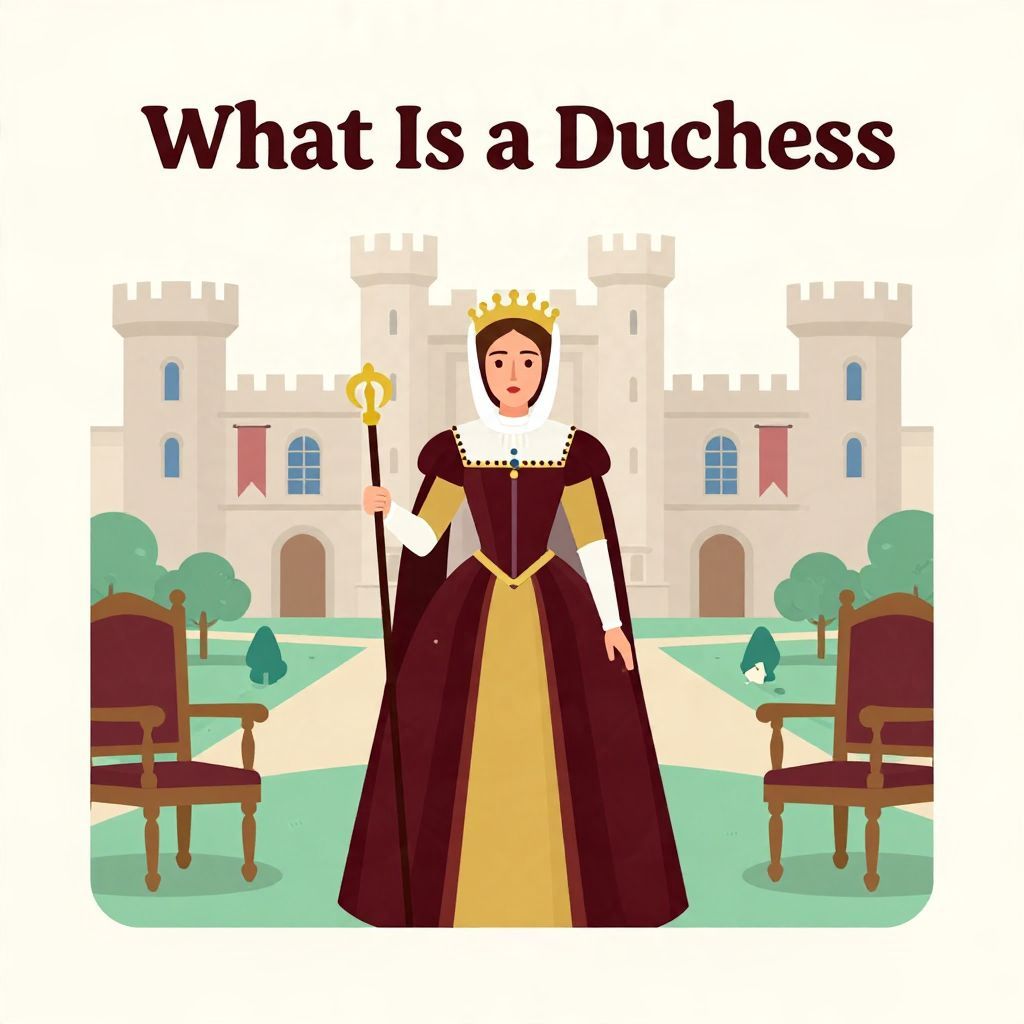
What is a duchess? In history, a duchess is usually a woman who holds the rank of duke’s wife, or in some cases a woman who holds the title in her own right. The title belongs to the European nobility and was shaped by medieval feudal politics, dynastic marriage, and the long evolution of aristocratic privilege.
Understanding the duchess helps explain how monarchy, inheritance, and social rank worked in Europe. The title could signal real political power, ceremonial prestige, or simply membership in a ruling family, depending on the time and place.
What Is A Duchess?
A duchess is the female holder of the title “duke” by marriage or, less commonly, by direct inheritance or royal grant. In most historical contexts, she stood near the top of the nobility, below queens and princesses but above lower-ranking aristocrats. Her status often depended on the laws of succession and the political importance of the duchy.
The Origins of the Title Duchess
The word “duke” comes from the Latin dux, meaning leader or commander. In late Roman and early medieval Europe, a dux was often a military or provincial leader rather than a hereditary noble. Over time, especially in the early Middle Ages, the title became tied to territorial rule, and the feminine form “duchess” developed as noble families and courts formalized rank.
From Roman command to medieval nobility
In the Roman world, titles were not yet fixed in the later aristocratic sense. By the early medieval period, however, rulers in places such as Francia and the Holy Roman Empire began to use “duke” for powerful regional lords. As these positions became hereditary, the duchess emerged as part of the same dynastic system.
The rise of hereditary duchies
By the High Middle Ages, duchies such as Normandy, Burgundy, Bavaria, and Brittany were important political units. A duchess might be the wife of the ruling duke, but she could also be a dynastic figure whose marriage linked noble houses, transferred claims, or strengthened alliances. In some cases, she could govern as regent if her husband died or was absent.
How a Woman Became a Duchess
There were several ways to become a duchess, and the title did not always mean the same thing in every country. In general, a woman became a duchess through marriage to a duke, through inheritance in systems that allowed female succession, or by a sovereign’s creation of a title for her or her family.
1. By marriage
This was the most common route. The wife of a duke was styled duchess, even if she did not rule the duchy herself. Her rank came from her husband’s title, and her public role often centered on court representation, household management, patronage, and dynastic childbearing.
2. By inheritance or succession
In some territories, women could inherit a duchy if no eligible male heir existed or if local law permitted female succession. Such a woman was a duchess in her own right, not merely by marriage. This made her status more politically significant, because she could hold authority over land, revenues, and subjects.
3. By royal or princely grant
In later periods, especially in monarchies with more formalized nobility, rulers could create or confirm titles. A woman might be made duchess as part of a marriage settlement, a royal favor, or a dynastic arrangement. In these cases, the title was often ceremonial, though still socially important.
What Did a Duchess Do?
The role of a duchess varied widely across centuries. Some duchesses were largely symbolic figures in court society, while others exercised real influence through estates, patronage, diplomacy, and regency. Their lives were shaped by gender expectations, family strategy, and the political structure of their realm.
Household, patronage, and court life
A duchess often oversaw a large household and participated in aristocratic culture. She might sponsor religious houses, support artists, arrange marriages, or distribute favors to clients and retainers. These activities were not merely decorative; they helped maintain family power and social networks.
Political influence
Although women were usually excluded from formal military command and many offices, duchesses could still wield influence behind the scenes. Their marriages linked powerful families, and their correspondence or patronage could shape alliances. Some acted as intermediaries between rulers, nobles, and foreign courts.
Regency and rule
When a duke was absent, incapacitated, or dead, a duchess might serve as regent for a minor heir. In such cases, she could exercise practical authority over administration, finance, and defense. This was especially important in periods when succession crises were common and dynastic continuity mattered greatly.
Duchess as a Title of Rank
The duchess ranked among the highest noblewomen in Europe. Her position reflected the importance of the duchy, the prestige of the family, and the political order of the kingdom or empire. Yet the exact meaning of the title depended on local custom, because noble hierarchies were not identical across Europe.
Below royalty, above most nobility
A duchess was usually beneath a queen, empress, or princess of the blood, but above countesses, marchionesses, and baronesses. In some courts, the wife of a duke could enjoy exceptional ceremonial precedence. In others, her social standing was strong but more limited by law and custom.
Not all duchesses were equal
The duchess of a sovereign or ruling house could be far more influential than the wife of a nobleman with a courtesy title. Likewise, a duchess in a major territorial principality might possess more real power than a duchess in a court where the title was mostly honorific. Historical context matters more than the title alone.
Famous Historical Examples
Several well-known duchesses illustrate how varied the title could be. Some were political actors, some were cultural patrons, and some became famous because of the dynastic struggles around them.
- Anne of Brittany (1477–1514) was Duchess of Brittany in her own right and twice queen of France. Her life shows how a duchess could become central to national politics.
- Isabella of Castile is not a duchess, but her reign helps show the broader world of noble titles and dynastic power in late medieval Europe.
- Catherine de’ Medici was queen, not duchess, yet her court demonstrates how noblewomen could shape politics through family strategy and patronage.
- Margaret of York, Duchess of Burgundy by marriage, became part of one of the most powerful courts in late medieval Europe.
These examples show that duchesses were not a single type of person. Some were heirs, some were consorts, and some were political negotiators in their own right.
Duchess in Different Historical Periods
Medieval Europe
In the medieval period, duchesses were closely tied to feudal landholding and dynastic marriage. Their status depended on the military and territorial power of the duchy. Because succession could be disputed, a duchess might become a key figure in negotiations over inheritance and legitimacy.
Early modern Europe
From the 16th to the 18th centuries, many duchies remained important, but royal states became stronger. In some places, dukes and duchesses retained major influence; in others, their political role narrowed as monarchies centralized power. Court etiquette and ceremonial rank became increasingly important.
Modern era
In modern Europe, duchess is usually a hereditary or courtesy title within a constitutional or ceremonial nobility. The title no longer carries the governing power it once could, though it still has social and historical significance. In Britain and several other monarchies, it remains part of the aristocratic system.
Was a Duchess Always a Ruler?
No. This is one of the most common misunderstandings. A duchess could be a ruler, but she was often not. Many duchesses were consorts whose status came from marriage, not sovereignty. Others were rulers in their own right, especially where inheritance laws allowed female succession or where no male heir existed.
Consort versus sovereign
A duchess-consort shared her husband’s rank but did not necessarily govern. A duchess regnant, by contrast, held the title herself and could exercise authority. The distinction is important because the word “duchess” does not automatically tell us whether she had legal power.
Why the Title Mattered
The duchess mattered because noble titles were not just labels; they organized power, property, and family strategy. Marriages between ruling houses could settle disputes, create alliances, and secure inheritance claims. A duchess could symbolize continuity, legitimacy, and prestige in a world where bloodline and rank shaped politics.
Social and cultural significance
Beyond politics, duchesses influenced fashion, religion, architecture, and patronage. They funded chapels, commissioned portraits, and helped define elite culture. Their courts could become centers of taste and influence, even when they had little formal authority.
Key Facts About a Duchess
- A duchess is usually the wife of a duke, but she may also hold the title in her own right.
- The title developed from the Latin dux, meaning leader or commander.
- In medieval Europe, duchesses could be politically important through marriage, inheritance, or regency.
- The exact rank and power of a duchess varied by country and period.
- In modern times, the title is usually ceremonial or hereditary rather than governing.
Conclusion
A duchess was, historically, a woman of very high noble rank whose status could come from marriage, inheritance, or royal creation. The title grew out of medieval Europe’s feudal and dynastic world, where land, lineage, and loyalty shaped political life. To understand a duchess is to understand how power worked in aristocratic society. For related background, see what a duchy was and what a duke was in royalty.