
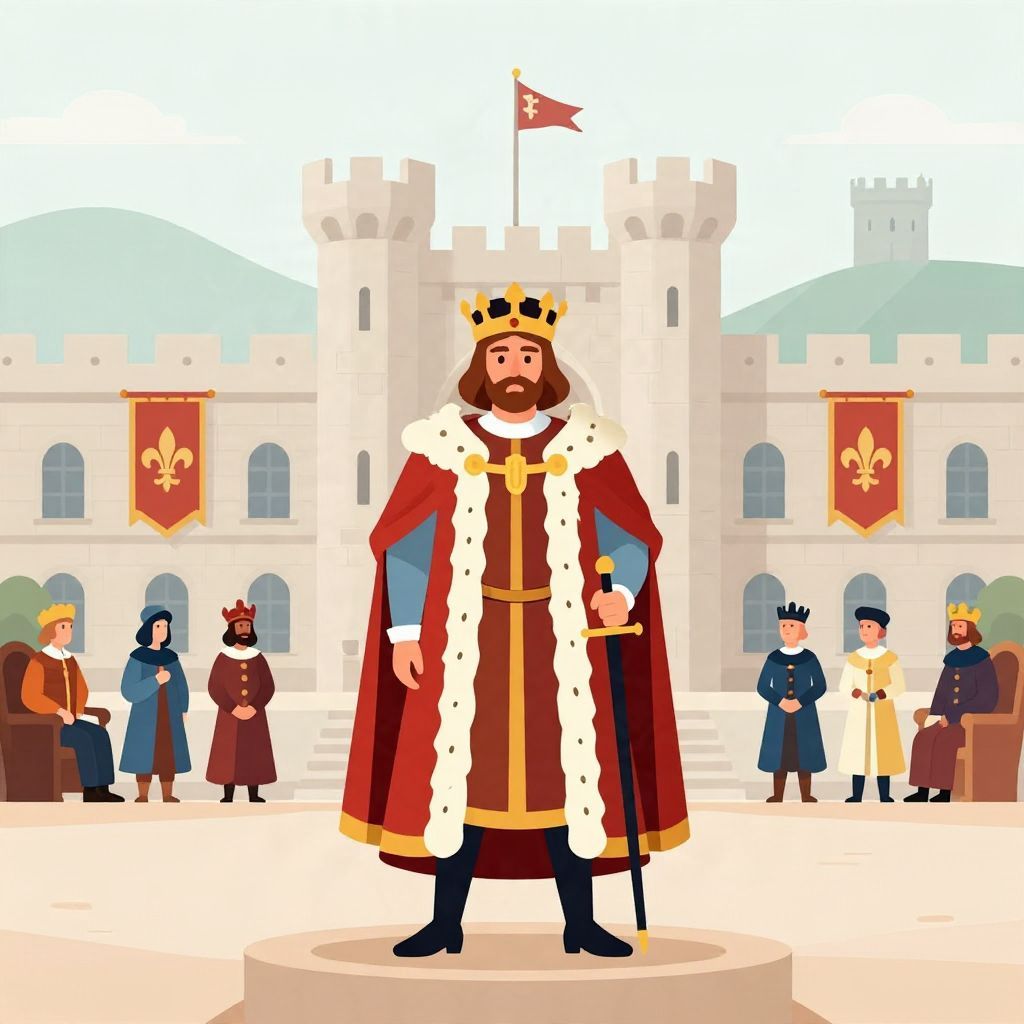
What is a duke in royalty? The short answer is that a duke is a high-ranking noble title, usually just below a prince or monarch and above an earl, count, or marquess depending on the country. Dukes were historically powerful landholders and political figures, especially in medieval and early modern Europe.
The title has long been tied to land, military service, and royal favor, but its meaning has changed over time. In some monarchies, a duke ruled a large territory; in others, the title became mainly honorific and ceremonial.
What Is A Duke In Royalty?
A duke is a noble title traditionally granted by a monarch to someone of very high rank. In the British system, a duke is the highest rank of the peerage below the royal family. Historically, dukes often governed important regions, commanded armies, or advised the crown, though today the title is usually symbolic.
Where Did the Title Duke Come From?
The word “duke” comes from the Latin dux, meaning “leader.” In the late Roman Empire, a dux was a military commander. Over time, the term spread into medieval Europe, where it became a hereditary noble title attached to territory, authority, and elite status.
From Roman commander to medieval noble
In Roman usage, dux did not originally mean a hereditary aristocrat. It described a person placed in command, often for military defense. As Roman political structures changed and kingdoms replaced imperial administration in western Europe, the title evolved into a feudal rank. By the early Middle Ages, dukes were among the most powerful nobles in many realms.
How Did Dukes Fit Into Royal Hierarchies?
Dukes sat near the top of the aristocratic order, but their exact place depended on the country and period. In England and later Britain, the order of rank generally placed dukes above marquesses, earls, viscounts, and barons. In France, Spain, and other monarchies, similar titles existed, though local traditions varied.
Typical rank in a monarchy
- Monarch — king, queen, emperor, or empress
- Royal family — princes and princesses
- High nobility — dukes and other great lords
- Lower nobility — marquesses, earls/counts, viscounts, barons, and similar ranks
It is important to note that a duke is not usually “royalty” in the strict sense. Royalty refers to members of the ruling family. A duke may be a close relative of the monarch, but the title itself is noble rather than royal.
What Did a Duke Actually Do?
In the Middle Ages, a duke could control land, collect revenues, administer justice, and raise troops. Some dukes were semi-independent rulers in practice, especially when central monarchies were weak. Others served the crown more directly and depended on royal approval for their power and status.
Military and political power
Because the title grew out of military command, dukes often had strategic responsibilities. They guarded borders, managed frontier regions, or led noble contingents in war. Their estates and castles gave them local influence, while their rank gave them access to court politics. In some kingdoms, dukes were among the monarch’s most important advisers.
Land and wealth
A duchy was the territory associated with a duke. In feudal Europe, land was the basis of wealth and authority, so a duchy could make its holder exceptionally powerful. Over time, however, many duchies lost real governing power and became titles attached to prestige rather than direct rule.
What Is a Duchy?
A duchy is the territory, domain, or administrative unit associated with a duke. Historically, a duchy could function as a political region ruled by a duke. In modern usage, the word may still refer to a ceremonial or historical territory rather than an independent state.
Some duchies were major political entities, such as the Duchy of Normandy or the Duchy of Burgundy in medieval Europe. Others existed mainly as formal titles within a centralized monarchy. The relationship between duke and duchy helps explain why the title carried so much weight for centuries.
How Did the Title Change Over Time?
The role of dukes changed as monarchies became more centralized. In the early medieval period, dukes might govern large regions with substantial autonomy. By the late medieval and early modern periods, kings and queens increasingly absorbed local power, reducing dukes to noble status under the crown.
Medieval period
During the Middle Ages, dukes could be territorial rulers, war leaders, and major feudal lords. Their power often depended on family alliances, military force, and landholding rather than on a fixed bureaucratic system.
Early modern period
As states strengthened in the 15th to 18th centuries, monarchs limited the independence of great nobles. Dukes remained prestigious, but their political power was more tightly controlled. In many places, the title became a reward for loyalty or service.
Modern period
Today, in constitutional monarchies such as the United Kingdom, dukedoms are mostly ceremonial. They may be granted to senior royals or distinguished figures, but they no longer imply sovereign authority over land or people. The title survives as part of aristocratic tradition.
Are Dukes Part of the Royal Family?
Sometimes, but not always. A duke can be a member of the royal family if the monarch bestows the title on a prince or close relative. For example, British princes have often been given dukedoms upon marriage or adulthood. Yet many dukes throughout history were not royal by birth and were simply members of the nobility.
Royal dukes and non-royal dukes
A “royal duke” is a duke who is also a prince of the royal house. A “non-royal duke” holds the title without being part of the ruling family. This distinction matters because it shows that dukedom is a rank, not a bloodline category.
Why Were Dukes So Important in European History?
Dukes mattered because they stood at the intersection of land, war, and monarchy. In fragmented medieval societies, they could act almost like regional kings. In stronger kingdoms, they helped stabilize rule by carrying out royal policy in the provinces. Their influence shaped succession disputes, military campaigns, and court politics.
Examples of historical importance
- Duchy of Normandy — a powerful territory that played a major role in English history after 1066
- Duchy of Burgundy — one of the most influential political powers in late medieval Europe
- Various British dukedoms — titles that became central to aristocratic hierarchy and royal patronage
These examples show that dukes were not merely ceremonial figures. At different times, they could shape dynastic politics and even alter the course of kingdoms.
What Is the Difference Between a Duke, a Prince, and a King?
A king rules a kingdom; a prince is usually a royal family member, often the child or close relative of a monarch; and a duke is a noble of very high rank. A prince may outrank a duke socially if he is born royal, but a duke may outrank other nobles in formal precedence.
Simple distinction
- King/Queen — sovereign ruler
- Prince/Princess — usually royal family member
- Duke/Duchess — high noble title, sometimes held by royals
The confusion comes from the fact that some dukes are also princes. A title can describe both rank and family connection, depending on the monarchy.
What Is a Duchess?
A duchess is the female equivalent of a duke’s title. A woman may be a duchess in her own right if she inherits the title, or she may hold the title through marriage to a duke. In some systems, the title is strictly tied to the husband’s rank, while in others inheritance rules allow women to hold it independently.
How Did Dukedoms Affect Society?
Dukedoms helped organize aristocratic society by marking rank, landholding, and privilege. They reinforced the idea that political order flowed from the monarch downward through layers of nobility. At the same time, powerful dukes could challenge royal authority, which is why monarchs often tried to control them carefully.
Because dukes sat so close to the center of power, they also became symbols of status in literature, ceremony, and court life. Even when their practical authority declined, the title retained social prestige.
Key Facts About Dukes
- The title comes from the Latin dux, meaning “leader.”
- It became a noble rank in medieval Europe after originally being a military term.
- A duchy is the territory associated with a duke.
- Historically, dukes could be powerful regional rulers.
- In modern monarchies, the title is usually ceremonial rather than governing.
- A duke is not automatically a member of royalty, though some dukes are royal princes.
Conclusion
A duke in royalty is best understood as a high-ranking noble title with deep medieval roots, not simply as a synonym for prince or king. The office began as a military command, grew into territorial power, and later became a mark of prestige within monarchies. For related background, see What Is A Duchy? and What Is A Marquess?.