
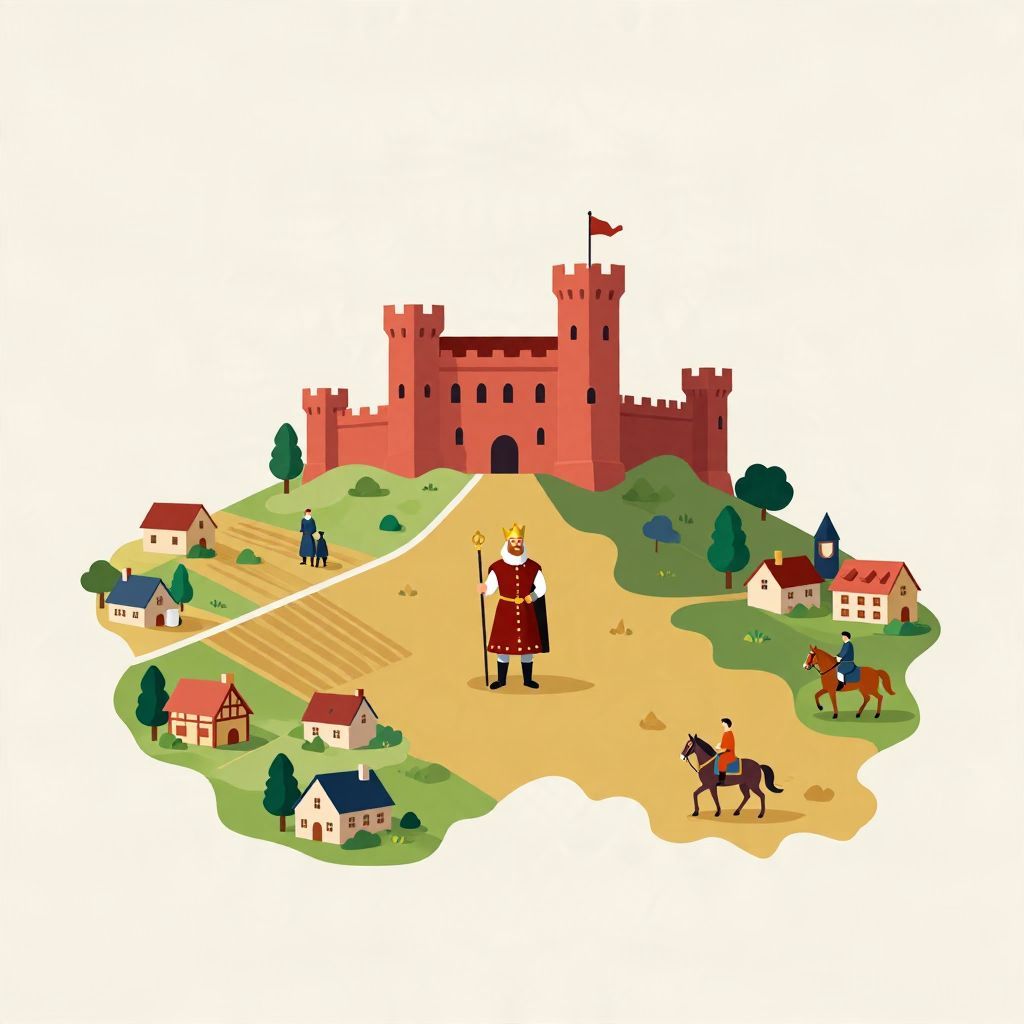
A duchy is a territory ruled by a duke or duchess, or historically governed as a political unit associated with that rank. In medieval and early modern Europe, duchies could be powerful states, semi-independent principalities, or lands held within larger kingdoms and empires. The term matters because it helps explain how Europe was organized before modern nation-states became dominant.
Understanding what a duchy was also means understanding how power, land, and hereditary titles worked in European history. Duchies were not all the same: some were sovereign in practice, some were fiefs under a king or emperor, and some survived only as ceremonial or administrative units.
What Is a Duchy?
A duchy is a territory associated with a duke or duchess. Historically, it was usually a hereditary lordship or principality ranked below a kingdom and above many lesser noble holdings. Some duchies were independent states, while others were subordinate to a larger realm and owed military or political service to a king or emperor.
Where Did Duchies Come From?
The duchy developed out of early medieval Europe, especially after the collapse of Roman imperial authority in the West. As centralized rule weakened, regional military leaders gained power over large areas. The word “duke” comes from the Latin dux, meaning leader, and initially referred more to a commander than to a hereditary noble rank.
From Roman Commanders to Medieval Lords
In late Roman usage, a dux was often a military commander in charge of frontier defense or regional troops. After the fall of the Western Roman Empire in the 5th century, Germanic kingdoms and later feudal societies adapted this idea. By the early Middle Ages, the title had become tied to land, lineage, and local authority.
The Rise of Regional Power
Between the 8th and 11th centuries, duchies became especially important in areas such as Francia, Germany, Italy, and parts of the Low Countries. Rulers needed local elites to defend borders, collect revenues, and govern distant regions. Over time, these local leaders turned office into inheritance, and officeholding became territorial lordship.
How Did Duchies Work in Practice?
In practice, a duchy was a political territory governed by a duke or duchess, often with its own laws, courts, taxes, and military obligations. The degree of independence varied widely. Some duchies acted almost like small kingdoms, while others were tightly controlled by a larger monarch or imperial authority.
Independence and Subordination
Many duchies were feudal holdings. That meant the duke held land from a higher ruler in exchange for loyalty, military support, or tribute. In other cases, especially in the Holy Roman Empire, duchies could be highly autonomous and function as major political actors in their own right.
Hereditary Rule
Most duchies became hereditary, passing within noble families. This helped stabilize rule but also encouraged dynastic politics, marriage alliances, inheritance disputes, and occasional civil war. A duchy could be divided, reunited, elevated, or absorbed depending on family succession and broader political change.
What Was the Difference Between a Duchy, a Kingdom, and a Principality?
The difference was mainly one of rank, sovereignty, and historical context. A kingdom was ruled by a king or queen and usually carried the highest prestige among secular states. A principality was ruled by a prince. A duchy was ruled by a duke or duchess and usually ranked below a kingdom, though some duchies were more powerful than smaller kingdoms.
Titles Did Not Always Match Real Power
Historical titles can be misleading if read too literally. A duke might govern a vast and wealthy territory, while a king might rule a weaker realm. In the fragmented political landscape of medieval Europe, actual power depended on armies, alliances, land, and recognition by peers, not just on title alone.
Why Were Duchies Important in European History?
Duchies mattered because they were one of the main building blocks of medieval and early modern politics. They helped organize territory, military service, inheritance, and regional identity. In many parts of Europe, duchies were central to the slow transition from feudal fragmentation to more centralized states.
Political Fragmentation and State Formation
Some regions contained multiple duchies competing for influence. This fragmentation could weaken central governments, but it also created durable regional institutions. Over time, monarchs often tried to absorb duchies into larger states, while some duchies resisted and preserved local autonomy for centuries.
Examples of Influence
Several duchies played major historical roles. The Duchy of Normandy helped shape the conquest of England in 1066. The Duchy of Burgundy became one of the most powerful territories in late medieval Europe. In the German lands, duchies such as Bavaria, Saxony, and Swabia were crucial to imperial politics.
Examples of Famous Duchies
- Normandy — Founded in the early 10th century, it became a major power and later linked to the Norman Conquest of England.
- Burgundy — A wealthy and influential duchy in medieval France and the Low Countries, especially powerful in the 14th and 15th centuries.
- Bavaria — One of the major duchies in the German-speaking world, with a long and complex political history.
- Brabant — An important duchy in the Low Countries, later tied to the rise of the Habsburg Netherlands.
- Württemberg — A territorial state that evolved from a county into a duchy and later a kingdom.
Were Duchies Only a Medieval Institution?
No. Although duchies are most closely associated with the Middle Ages, some survived well into the modern era. In parts of Germany and Italy, duchies remained important until the 19th century. Others were transformed into ceremonial titles or administrative regions as monarchies centralized and constitutional states emerged.
The Holy Roman Empire
The Holy Roman Empire preserved a particularly long-lived system of duchies, bishoprics, counties, and free cities. Many duchies there were not fully sovereign in the modern sense, but they retained substantial rights. The empire’s political structure made duchies a lasting feature of Central European history.
From Political Unit to Ceremonial Title
As modern states developed, the duchy often lost real governing power. In some countries, the title “duke” remained as part of aristocratic hierarchy, while the duchy itself became symbolic or disappeared altogether. In a few cases, the name survived in administrative or ceremonial form, even after political authority had ended.
What Was Life Like in a Duchy?
Life in a duchy depended on time, place, and social class. For nobles, a duchy could mean court politics, land management, and military obligations. For ordinary people, it meant paying rents, taxes, and dues to local lords while living under the legal and economic structures of the territory.
Law, Taxation, and Local Identity
Many duchies had distinctive legal customs and institutions. People might identify strongly with their duchy, especially where local law differed from neighboring regions. This regional identity could outlast the duchy itself and influence later political and cultural divisions.
War and Diplomacy
Duchies were often caught between larger powers. Their rulers used marriage, diplomacy, and military alliances to survive. Because they sat between kingdoms or empires, duchies frequently became borderlands, contested zones, or strategic prizes in broader conflicts.
How Did Duchies End or Change?
Duchies changed in several ways. Some were absorbed into kingdoms, some were elevated into kingdoms, and some were broken apart by inheritance or conquest. The rise of centralized monarchies, then nation-states, made independent duchies less common over time.
- Absorption into a larger state by conquest, inheritance, or political union.
- Elevation into a kingdom or grand duchy when rulers gained greater prestige.
- Partition among heirs, which could weaken or divide the territory.
- Transformation into a ceremonial title or administrative region in the modern era.
What Is a Duchy in Modern Terms?
Today, the word duchy usually refers either to a historical state or to a territory associated with a ducal title. In a few places, the term survives in modern constitutional or ceremonial contexts. The best-known example is the Duchy of Cornwall in the United Kingdom, which is not a sovereign state but a landed estate supporting the heir to the throne.
Why the Term Still Matters
The duchy is more than a noble title. It reveals how medieval Europe organized authority through land, lineage, and regional power. It also shows how political units could be flexible: sometimes independent, sometimes subordinate, and sometimes purely symbolic. That flexibility is one reason duchies are so important to historical study.
In short, a duchy was a territory ruled by a duke or duchess, usually with inherited authority and varying degrees of independence. Its history helps explain the transition from fragmented medieval lordships to the centralized states of later Europe. For related background, you may also want to explore broader articles on European history and feudalism.