
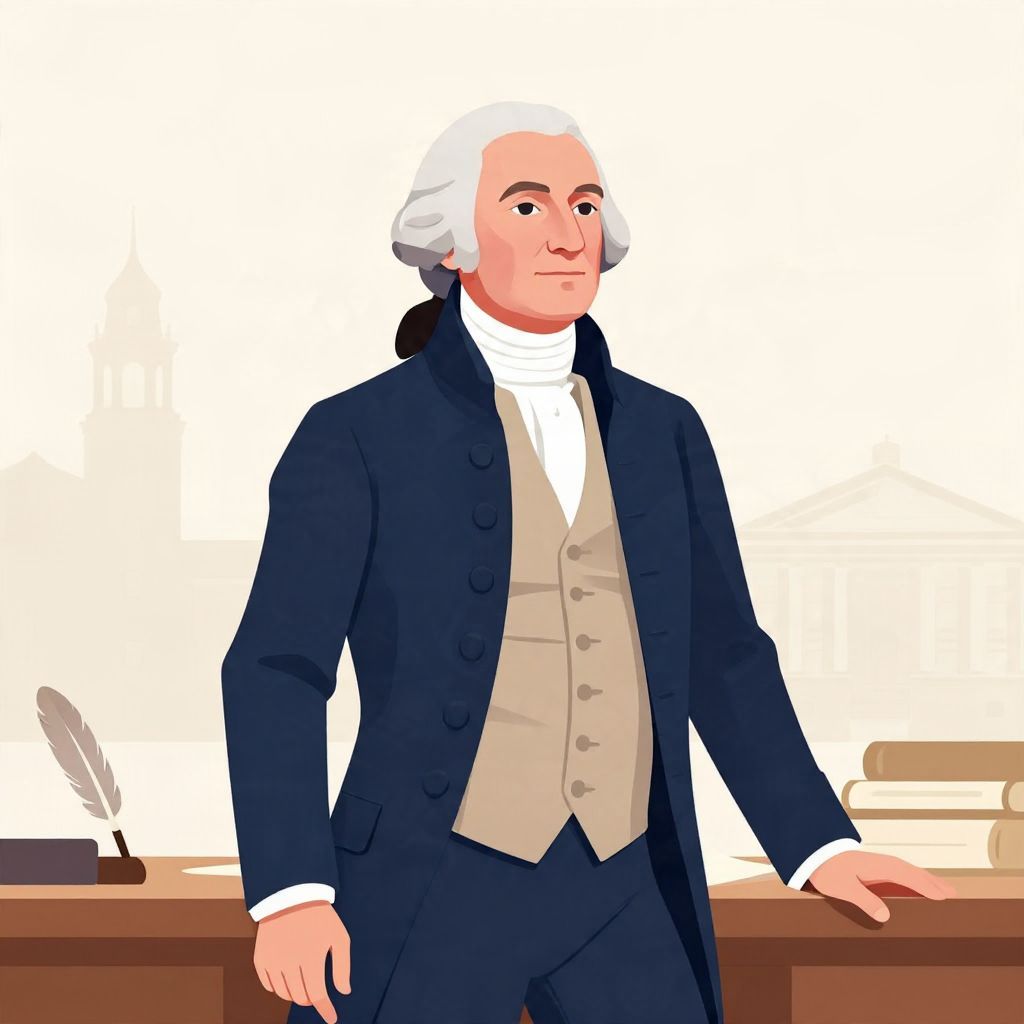
George Washington is one of the most recognizable figures in American history, but the image many people have in mind comes partly from portraits, later reproductions, and patriotic memory. So what did George Washington actually look like?
Historical evidence shows a tall, broad-shouldered man with a long face, strong nose, pale skin, blue-gray eyes, and reddish-brown hair that he wore powdered in the style of his era. He was not the stern, wigged figure often imagined today, but a carefully dressed 18th-century gentleman whose appearance changed with age, war, and the demands of public life.
What Did George Washington Look Like?
George Washington was tall for his time, lean in youth, broad in middle age, and dignified in old age. He stood about 6 feet 2 inches tall, had a long face, prominent nose, deep-set eyes, and a firm mouth. Contemporary descriptions and portraits suggest a man whose physical presence was as striking as his political role.
How Tall Was George Washington?
Washington’s height is one of the best-known facts about his appearance. At roughly 6 feet 2 inches, he was significantly taller than the average man in late 18th-century America, when adult male height was much lower than today. His height helped create the impression of authority and command, especially in military settings.
He was also physically imposing in other ways. Washington had broad shoulders, a straight posture, and a long, well-proportioned frame. In uniform, he would have appeared especially commanding, even before he became president. His size mattered in a culture that often linked stature with leadership.
A body shaped by riding and military life
Washington spent much of his life on horseback, outdoors, and in physically demanding work. As a young surveyor and later as a planter and officer, he developed the strong, upright bearing that many observers noticed. His appearance was not that of a delicate scholar or court politician; it reflected the hard physical life of an 18th-century Virginian gentleman.
What Did His Face and Features Look Like?
Washington’s face was long and angular, with a prominent nose, a broad forehead, and a somewhat severe expression in many portraits. He had blue-gray eyes and a strong jawline. His skin was fair, and his features were often described as serious rather than smiling, though that was partly a matter of portrait convention and dental discomfort.
Was he handsome?
By the standards of his own era, Washington was generally considered a handsome and impressive man, though not in a soft or elegant way. He was admired for his dignity, symmetry, and presence more than for charm. His looks were tied to character in the minds of many contemporaries: he seemed disciplined, self-controlled, and capable.
That said, portraits can mislead. Artists often softened or idealized his face, while the public image of Washington became more polished over time. The real man likely looked less like an icon and more like a hard-working, aging elite Virginian with a serious expression and carefully managed appearance.
What Color Was George Washington’s Hair?
Washington had reddish-brown hair in youth, though accounts and surviving depictions suggest that it may have darkened with age. Like many men of his class, he powdered his hair, especially in public life, which gave him the pale, powdered appearance familiar from many portraits. He did not wear a modern-style wig as is sometimes assumed.
Instead, he styled his own hair in the fashion of the 18th century, often tied back and powdered. This was common among elite men of the period. Powdering hair was both fashionable and practical, helping create a neat, formal appearance that signaled status and self-discipline.
Did Washington wear a wig?
Not usually, at least not in the way many people imagine. Washington had his own hair, which he arranged and powdered. Some later images and stage portrayals have made him look wigged, but that is more a product of costume memory than historical fact. The distinction matters because it changes how we picture him: less theatrical, more authentically Georgian.
What Did George Washington Wear?
Washington’s clothing played a major role in how people saw him. As a young man and planter, he wore the dress of a Virginia gentleman: coats, waistcoats, breeches, stockings, and polished shoes. As a military leader, he wore a Continental Army uniform that emphasized rank and restraint rather than flamboyance.
His public style
Washington favored clothing that projected order and sobriety. Even when his wardrobe was expensive, it was generally understated compared with the most fashionable European court styles. He wanted to appear respectable and authoritative, not extravagant. That image suited both his military command and his later role as president.
In office, he helped establish a republican style of leadership. His appearance was part of that effort. He dressed as a statesman, not a monarch, while still preserving ceremonial dignity. This balance was important in the early United States, where leaders had to look powerful without seeming aristocratic in the old-world sense.
How Did Age Change Washington’s Appearance?
Washington changed noticeably over the course of his life. The young surveyor and officer was likely slimmer, more energetic in posture, and less weathered. By the time he became commander of the Continental Army and later president, he had a more lined face, a heavier build, and the worn expression of a man who had spent decades under strain.
His face appears more severe in later portraits, and that is consistent with his age and experience. He endured war, political conflict, illness, and the burdens of leadership. By the 1790s, his appearance reflected not only maturity but also fatigue. He was still tall and impressive, but he looked older than his years in some depictions.
His final years
In the last years of his life, Washington’s appearance was marked by age and declining health. He remained upright and formally dressed, but he was no longer the vigorous man of earlier decades. Contemporary images from the 1790s show a face that is fuller and more lined, with a gravity that matched his public role.
How Reliable Are the Portraits of George Washington?
Portraits are essential to understanding Washington’s appearance, but they must be used carefully. Several well-known paintings were made from life or based on direct observation, yet artists often adjusted features to suit artistic tastes or political expectations. Washington also sat for portraits under different circumstances, so no single image captures him perfectly.
What portraits can tell us
Portraits by artists such as Gilbert Stuart, Charles Willson Peale, and others help historians identify recurring features: the long face, strong nose, pale complexion, and composed expression. When multiple independent images agree, they provide useful evidence. Still, portraits are not photographs. They show both the man and the ideal his society wanted to see.
That is why Washington’s image became standardized over time. Later engravings, prints, and schoolbook illustrations repeated the same basic features until they became iconic. The result is a historically grounded but highly curated face of the nation’s first president.
Did George Washington’s Teeth Affect His Appearance?
Yes, very likely. Washington’s dental problems are well documented in broad historical terms, and they affected both his comfort and his expression. He suffered from poor teeth and eventually wore dentures, though not wooden ones, as popular myth claims. Dental pain could have made him look tense or unsmiling in portraits and public life.
His teeth and dentures mattered because they influenced the shape of his mouth and lower face. This helps explain why some portraits show a compressed or tight-lipped expression. It also reminds us that famous historical images can conceal ordinary human suffering. Washington was not a marble figure; he was a man dealing with aging and pain.
Why Do People Picture George Washington the Way They Do?
The modern image of Washington comes from a mix of authentic likenesses, patriotic art, and later cultural memory. School portraits, currency, statues, and ceremonial paintings all reinforced a single visual identity: tall, powdered, solemn, and noble. Over time, that image became more important than the living person behind it.
This process is common in history. Public memory simplifies. A complicated human being becomes a symbol. In Washington’s case, the symbol had to communicate leadership, restraint, and republican virtue. His appearance was therefore remembered not just as a physical fact, but as a moral statement about the new nation.
So, What Did George Washington Really Look Like?
George Washington looked like a tall, well-built 18th-century gentleman with a long face, strong nose, blue-gray eyes, and powdered reddish-brown hair. He dressed with formal restraint, carried himself with military bearing, and aged into a serious, dignified elder statesman. The famous image is broadly accurate, but it was also shaped by portraiture and national myth.
In the end, Washington’s appearance helped make him memorable, but his image was never just about looks. It reflected the world he lived in, the roles he played, and the kind of leader Americans wanted to remember. If you want to explore more, you may also be interested in what George Washington would look like today and what George Washington’s teeth were made of.