
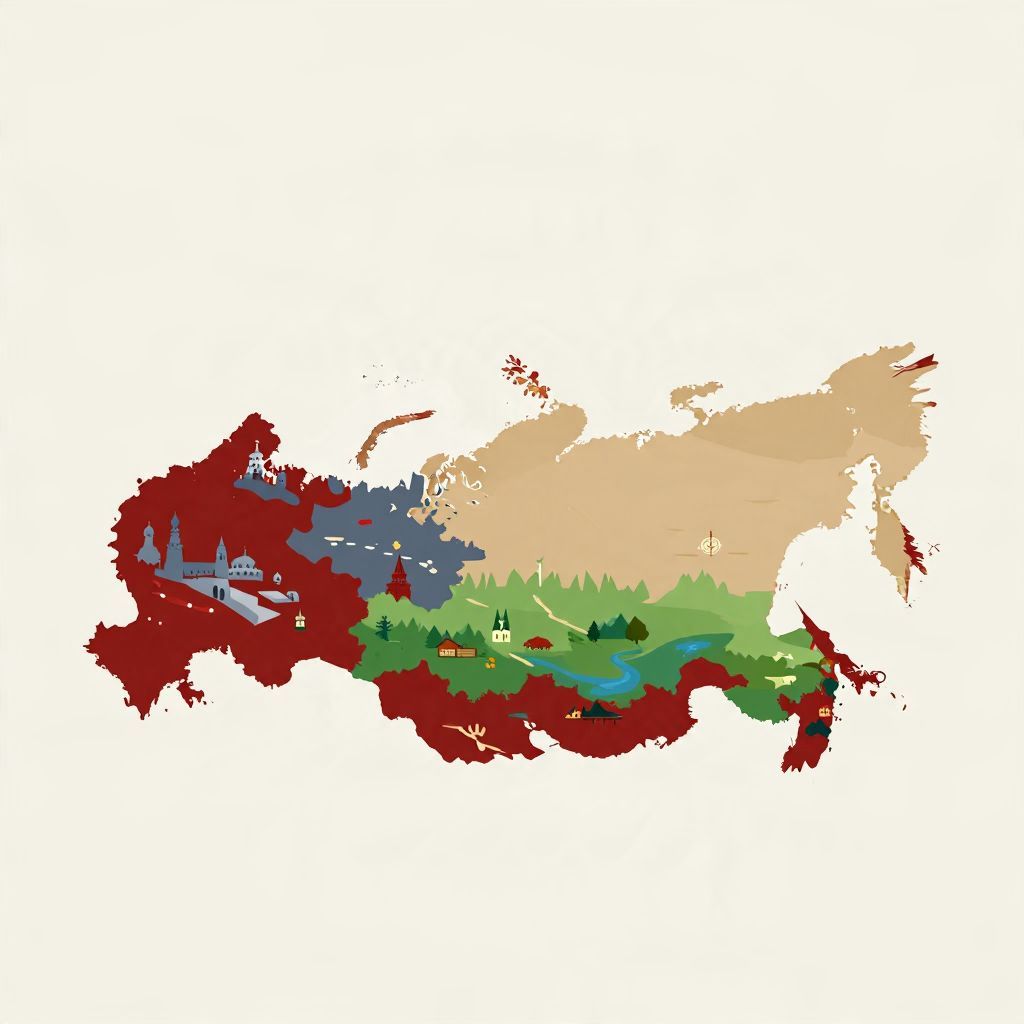
Is Russia part of Asia? The short answer is yes and no: Russia is a transcontinental country, with territory in both Europe and Asia. Most Russians live in the European part, but the country stretches far across northern Asia to the Pacific Ocean. That geographic fact has shaped Russian history, politics, trade, and identity for centuries.
Whether Russia is “European,” “Asian,” or both depends on the definition being used. Geographers usually place the Ural Mountains as the conventional boundary between Europe and Asia, which leaves a huge share of Russia in Asia. Historians, however, also look at culture, empire, and state formation, where Russia’s story is deeply tied to both worlds.
Is Russia Part of Asia?
Yes. About three-quarters of Russia’s land area lies in Asia, east of the Ural Mountains, while most of its population and major cities are in European Russia. Russia is therefore best understood as a transcontinental state: European in many historical institutions and cultural influences, but Asian in much of its territory and imperial expansion.
How Geography Makes Russia Both European and Asian
The Ural Mountains as a boundary
The most common geographic divider between Europe and Asia is the Ural Mountains, along with the Ural River and nearby lowlands. This division is conventional rather than absolute; continents are human-made categories. Still, it is widely used in maps, atlases, and historical writing, and it places Siberia and Russia’s Far East in Asia.
Why the map matters
Russia’s Asian territory is enormous. It includes Siberia, the Russian Far East, and vast Arctic regions extending to the Pacific. Yet the country’s political center developed in the west, around Moscow and surrounding lands. This imbalance helps explain why Russia often appears European in government and culture, even though most of its landmass is Asian.
How Russia Expanded into Asia
From a medieval principality to a Eurasian empire
Russia’s Asian dimension was not always obvious. Early Russian statehood developed in the western forest zone around Kievan Rus’ and later the principality of Moscow. The decisive eastward expansion began after the Mongol period, especially from the late 15th century onward, when Moscow consolidated power and pushed beyond the Urals.
The conquest of Siberia
In the late 16th century, Russian expansion across the Urals accelerated. The campaign associated with Yermak Timofeyevich and the defeat of the Siberian Khanate in the 1580s opened the way for further movement east. Russian forts, traders, settlers, and tax collectors followed river routes across Siberia, gradually extending state control over immense distances.
This expansion was driven by several forces: fur trade, frontier settlement, military competition, and the search for new revenue. It was not a single planned conquest, but a long process of colonization, diplomacy, coercion, and adaptation to local peoples and environments.
Reaching the Pacific
By the 17th century, Russian explorers and Cossack expeditions had reached the Pacific coast. In the 18th and 19th centuries, the empire continued to consolidate its hold on Siberia and the Far East. Ports, administrative centers, and military posts linked the region more tightly to the imperial state, though it remained sparsely populated compared with western Russia.
Why Russia Is Often Seen as European
Population, politics, and culture
Although most of Russia’s territory is in Asia, most of its people live west of the Urals. Moscow, Saint Petersburg, and other major centers are in the European part of the country. Russia’s literature, Orthodox Christianity, imperial bureaucracy, and many elite institutions developed in dialogue with Europe, especially from the 18th century onward.
Peter the Great’s reforms in the early 1700s strengthened this European orientation. He built a new capital, Saint Petersburg, as a “window to Europe,” reorganized the military and administration, and encouraged Western technical and cultural models. These changes did not erase Russia’s Asian geography, but they reinforced the idea that Russia belonged to Europe politically and culturally.
Competing identities in Russian history
Russian thinkers have long debated whether the country is fundamentally European, Asian, or a civilization of its own. Some emphasized Russia’s ties to Europe and its Christian heritage. Others argued that the steppe, the Mongol legacy, and the empire’s eastern reach made Russia distinct from the West. This debate became especially important in the 19th and 20th centuries, when nationalism and empire shaped identity.
The Historical Meaning of Russia’s Asian Territory
Siberia was not empty
It is important not to describe Siberia as “empty” before Russian arrival. Many Indigenous peoples lived there long before Russian expansion, including the Evenks, Yakuts, Buryats, Chukchi, and many others. Russian state expansion transformed their lands through tribute systems, settlement, trade, missionary activity, and conflict.
That history matters because Russia’s Asian identity is not just a matter of landmass. It is also the history of empire: the incorporation of diverse peoples across a vast frontier. In that sense, Russia’s place in Asia is tied to conquest, administration, and the long encounter between Slavic settlers and the peoples of northern Asia.
Trade and strategic power
Asian Russia gave the empire access to fur resources, river routes, and eventually Pacific trade. In the 19th century, the building of the Trans-Siberian Railway began to connect European Russia with the Far East more directly, helping to integrate the empire and strengthen its strategic reach. The railway also symbolized Russia’s attempt to master its continental scale.
Is Russia in Asia Today?
Modern borders and population patterns
Modern Russia remains a transcontinental state. Its Asian portion includes the vast territories east of the Urals, but the majority of the population still lives in the European west. Major industrial, political, and cultural hubs are concentrated there, while Siberia and the Far East are more sparsely settled and resource-rich.
In contemporary usage, Russia is often grouped with Europe in diplomacy, sport, and cultural discussion, but that does not change geography. On a map, Russia clearly occupies both continents. In historical terms, it has been shaped by both European state traditions and Asian expansion across Eurasia.
Why the answer is not simple
The question “Is Russia part of Asia?” sounds straightforward, but it depends on what kind of “part” you mean. If you mean land area, yes, a large majority of Russia lies in Asia. If you mean historical civilization, the answer is mixed. If you mean population and political life, Russia has long been centered in Europe while ruling an Asian empire.
Russia as a Eurasian Power
A bridge, not a single-civilization state
Historians often use the term Eurasian to describe Russia because it spans the conventional divide between Europe and Asia. This does not mean Russia is simply half of each. Rather, its history reflects a constant interaction between western institutions and eastern geography, between European diplomacy and Asian frontiers.
That dual position influenced military strategy, economic development, and national identity. It also helps explain Russia’s recurring role as a power that looks in both directions at once: toward Europe for political models and toward Asia for territory, resources, and strategic depth.
Conclusion: So, Is Russia Part of Asia?
Russia is part of Asia in the geographic sense, because most of its territory lies there. But it is also part of Europe in population, historical development, and many cultural traditions. The clearest answer is that Russia is a transcontinental Eurasian state, and its history cannot be understood without both continents. For related context, see what Asia Minor is and where Persia was.