
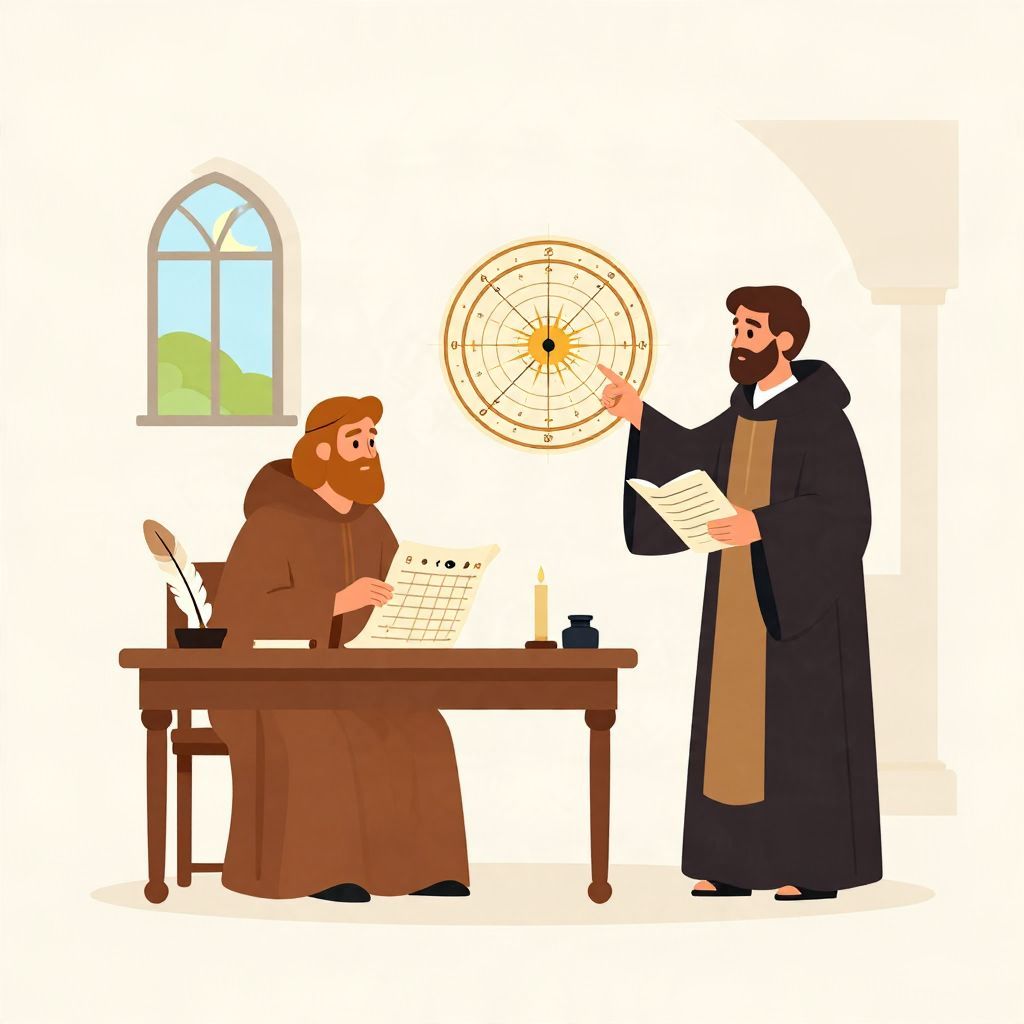
How is the date of Easter determined? The short answer is that Easter is a movable feast: in most Western Christian churches, it falls on the first Sunday after the first full moon on or after the spring equinox. That rule gives Easter a date that changes each year, usually between late March and late April.
The history behind that formula reaches back to the early centuries of Christianity, when church leaders tried to align the celebration of Jesus’ resurrection with both Jewish Passover and the rhythms of the Roman calendar. The result was a long debate over astronomy, theology, and calendar reform.
How is the date of Easter determined?
In the Western Christian tradition, Easter is celebrated on the first Sunday after the first full moon on or after March 21, which is the ecclesiastical spring equinox used by the church. This means Easter can occur between March 22 and April 25. Eastern Orthodox churches usually calculate it differently, which is why Orthodox Easter often falls on another date.
Why Easter moves each year
Easter is not tied to a fixed day of the month because it depends on a lunar cycle rather than only the solar calendar. The Christian feast commemorates the resurrection of Jesus, which the Gospels place in connection with Passover, a festival set by the Hebrew lunar calendar. That early connection helped make Easter a “moveable” feast from the beginning.
The link to Passover
Jesus’ death and resurrection are traditionally dated to the days around Passover in Jerusalem. Early Christians therefore did not choose a date at random; they inherited a celebration shaped by Jewish timekeeping. Because Passover follows the moon, the Easter season also became linked to moon phases rather than a fixed date like December 25.
The role of Sunday
Sunday mattered because Christians came to regard it as the day of Jesus’ resurrection. So the feast had to be placed on a Sunday, not merely on a lunar date. That is why Easter is not simply the first full moon of spring, but the Sunday after that full moon.
The historical debate over Easter’s date
For centuries, Christians disagreed about how to calculate Easter. The dispute was not only technical; it reflected different ideas about authority, tradition, and how closely the church should follow Jewish calendrical practice. The early controversy became known as the Quartodeciman controversy, from the Latin word for “fourteenth.”
Quartodecimans and the early church
Some early Christians, especially in Asia Minor, celebrated the death and resurrection of Christ on the 14th day of the month of Nisan, the date of Passover in the Jewish calendar, regardless of the weekday. Others insisted Easter must always be kept on a Sunday. By the second century, this disagreement had become a major issue in the Christian world.
The Council of Nicaea and a common rule
In 325 CE, the Council of Nicaea sought to bring greater unity to Christian practice. The council did not leave behind a simple surviving formula in its official canons, but later tradition strongly associates Nicaea with the principle that Easter should be celebrated on a Sunday and not coincide directly with Passover. Over time, this helped establish a common church-wide method.
The goal was practical as well as theological: Christians across the empire wanted to celebrate the same feast on the same day. Yet because the churches used different calendars and astronomical methods, a single rule still produced disagreements.
How the calculation works in practice
Today, the Western calculation uses what is called the ecclesiastical full moon and equinox. These are not always the exact astronomical events seen in the sky. Instead, they are church-defined dates used to keep the calendar consistent from year to year.
Step by step
- Begin with March 21, the fixed ecclesiastical date of the spring equinox.
- Find the first ecclesiastical full moon on or after that date.
- Move to the following Sunday.
- That Sunday is Easter.
This means Easter can be as early as March 22 or as late as April 25 in Western churches. The range is wider than many people expect because the date depends on the moon and the weekday together.
Why the church uses ecclesiastical dates
Using a church calendar rather than direct astronomical observation made the feast easier to calculate across large regions in the premodern world. Medieval clergy and scholars needed a shared system that could be predicted years in advance. Tables and computus methods, the traditional art of calculating Easter, became a major part of learned Christian chronology.
Julian and Gregorian calendars
One reason Easter dates differ between Christian traditions is that not all churches use the same calendar. The Western church eventually adopted the Gregorian calendar in the late 16th century, while many Eastern Orthodox churches continued to use the older Julian calendar for liturgical purposes.
The Gregorian reform
Pope Gregory XIII introduced the Gregorian calendar in 1582 to correct drift in the Julian calendar, which had slowly fallen out of alignment with the solar year. The reform adjusted the calendar and refined the rules for leap years. Western churches that adopted it also used revised tables for Easter.
Why Orthodox Easter is often later
Many Orthodox churches calculate Easter using the Julian calendar and a different set of ecclesiastical rules. As a result, Orthodox Easter often falls after Western Easter, sometimes by one week, sometimes by several. In some years, the two celebrations coincide, but that is not the norm.
What the full moon really means
People often assume Easter is simply the first Sunday after the first full moon of spring, but the historical reality is slightly more technical. The “full moon” in the rule is usually the church’s calculated full moon, not necessarily the exact astronomical full moon visible in the sky. That distinction matters because the church calendar is built for consistency, not observation alone.
Equinox versus season
The ecclesiastical equinox is fixed at March 21, even though the astronomical equinox can vary slightly from year to year and time zone to time zone. The church chose a stable date so that Easter would be determined by a uniform rule rather than by local observation. This is one reason the feast remains predictable even though it is movable.
Why this mattered in history
The date of Easter was more than a calendar puzzle. It shaped the Christian liturgical year, influenced fasting and feasting, and affected agricultural and civic life in medieval and early modern Europe. Because Easter determines the timing of Lent, Holy Week, Ascension, and Pentecost, it also organizes much of the Christian year.
Impact on the liturgical calendar
Once Easter is set, many other observances follow from it:
- Lent begins before Easter and lasts 40 days in many traditions, not counting Sundays.
- Holy Week includes Palm Sunday, Maundy Thursday, Good Friday, and Holy Saturday.
- Ascension and Pentecost are also counted from Easter.
This made the Easter calculation central to Christian timekeeping. Clergy needed to know the date well in advance to plan worship, fasting, and feast days.
Political and cultural significance
In medieval Europe, a shared Easter date also reinforced ecclesiastical unity. Disputes over the calendar could signal deeper tensions between regional churches, rulers, and reform movements. Even after the Gregorian reform, the difference between Western and Orthodox Easter remained a visible reminder of Christianity’s historical divisions.
Common misconceptions about Easter’s date
Because the rule is often repeated in simplified form, several misunderstandings persist. Clearing them up helps explain why Easter appears to “move” in a way other holidays do not.
- Misconception: Easter is always on the first Sunday after the first full moon of spring.
Correction: The church uses an ecclesiastical equinox and ecclesiastical full moon, not always the exact astronomical ones. - Misconception: Easter is based only on the moon.
Correction: It also depends on Sunday, which is why the weekday matters. - Misconception: All Christians celebrate Easter on the same day.
Correction: Western and Eastern churches often use different calendars and calculation methods.
The lasting historical legacy of Easter’s calculation
The story of Easter’s date shows how religion, astronomy, and calendar reform intersected in the ancient and medieval worlds. What began as a Christian feast tied to Passover became a carefully regulated date that unified worship across empires and centuries. The calculation survives today as a reminder that calendars are historical creations, not neutral facts of nature.
So, how is the date of Easter determined? In most Western churches, it is the first Sunday after the first ecclesiastical full moon on or after March 21. That rule emerged from early Christian efforts to connect Jesus’ resurrection with Passover, Sunday worship, and a shared church calendar. For more on related calendar questions, see why Easter changes date and why Easter is different every year.