
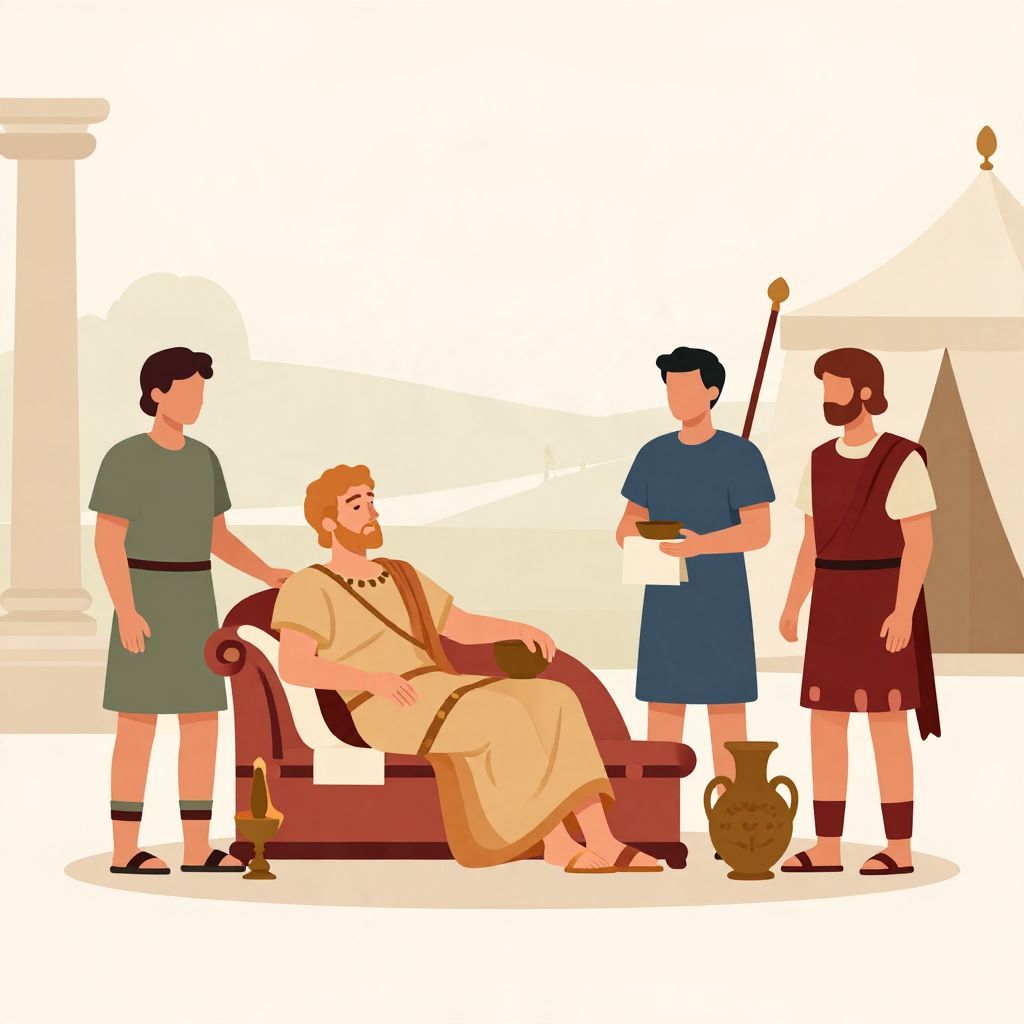
How did Marcus Aurelius die? The Roman emperor died in 180 CE, most likely of a natural illness while campaigning on the empire’s northern frontier. Ancient sources do not give a modern medical diagnosis, but they agree that he fell sick during the Marcomannic Wars and died at Vindobona or nearby Bononia in Roman Pannonia, in today’s Central Europe.
His death mattered because it ended the rule of Rome’s last “Five Good Emperors” and passed power to his son, Commodus, whose reign would mark a sharp turn in Roman politics and imperial stability.
How Did Marcus Aurelius Die?
Marcus Aurelius died in 180 CE after becoming ill during a military campaign on the Danube frontier. Ancient writers describe a sickness rather than violence, and the most common historical conclusion is that he died from a natural cause, probably an infection or fever. The exact illness is unknown, but there is no reliable evidence that he was assassinated.
What We Know About His Final Days
Marcus Aurelius spent much of his later reign in the field, trying to defend Rome’s northern borders against Germanic and Sarmatian groups. In his final years, he was campaigning in the region of Pannonia, where Roman forces were fighting the Marcomanni and related peoples. He became ill during this campaign and died soon afterward, likely in March 180 CE.
The setting: a war emperor on the frontier
Unlike emperors who ruled mainly from Rome, Marcus Aurelius was often away from the capital. The Danube frontier was one of the empire’s most important military zones, and the wars there were serious enough to keep him in the provinces for long stretches. His death in the field fits the pattern of an emperor who saw himself as responsible for the defense of the state, not merely its ceremonial head.
Where did he die?
The ancient evidence is not perfectly consistent on the exact place of death. Many accounts place it at Vindobona, the Roman military settlement that became Vienna. Others suggest Bononia in Pannonia. Because the sources are distant and not always precise, historians usually say he died somewhere in the Danube frontier zone rather than insisting on a single exact location.
What Caused Marcus Aurelius’s Death?
The simplest answer is that Marcus Aurelius died of an illness. Ancient historians do not describe a wound, poisoning, or dramatic murder. Modern scholars therefore treat his death as natural, though the precise disease remains uncertain. In the ancient world, infections, fevers, and gastrointestinal illnesses could become fatal quickly, especially during military campaigns.
Why historians avoid a definite diagnosis
Roman sources were more interested in the emperor’s character and the political consequences of his death than in medical detail. They rarely provide symptoms detailed enough for a confident modern diagnosis. Some later speculation has tried to identify plague or another epidemic illness, but the evidence is too thin to be certain. It is safer to say that Marcus Aurelius died from an unspecified sickness.
Was he killed?
There is no solid historical basis for the claim that Marcus Aurelius was murdered. Because emperors often faced conspiracy, later readers sometimes assume foul play when a ruler dies unexpectedly. In this case, however, the ancient record points toward illness, not assassination. The more important story is not how he was killed, but how his death changed the Roman Empire.
Why Marcus Aurelius’s Death Mattered
Marcus Aurelius’s death was a turning point because it ended an era of relatively stable succession among the so-called Five Good Emperors. His son Commodus succeeded him, and that transition is often seen as the beginning of a more troubled period in Roman imperial history. Whether that change was caused by Marcus’s death itself or by deeper structural problems is still debated, but the moment was undeniably significant.
The end of a political tradition
For much of the second century CE, Rome had benefited from emperors who adopted capable heirs rather than relying strictly on biological succession. Marcus Aurelius broke with that pattern by making Commodus his successor. This decision mattered because Commodus was far less interested in the administrative and military burdens of rule. The contrast between father and son became a powerful symbol for later historians.
The impact on the northern wars
Marcus Aurelius died before fully resolving the frontier conflicts that had occupied his last years. His death did not end the pressure on the Danube border. Instead, it left the task to Commodus, who soon pursued a different approach, favoring peace and withdrawal over continued large-scale campaigning. That shift may have brought short-term relief, but it also reflected the limits of Roman power and the difficulty of holding long frontiers indefinitely.
Marcus Aurelius’s Final Reputation
Marcus Aurelius became famous not only as an emperor but also as a philosopher associated with Stoicism. His personal writings, later gathered as Meditations, helped shape his posthumous image as a ruler who accepted duty, hardship, and mortality with discipline. His death therefore acquired a moral dimension in later memory: the philosopher-emperor who lived by reason and died in service.
How ancient and later writers viewed him
Ancient authors generally respected Marcus Aurelius, though they did not all agree on every aspect of his reign. Later tradition elevated him as an ideal ruler, especially in contrast to Commodus. That contrast was sharpened by the fact that Marcus died while still actively burdened by war, whereas his successor was remembered for self-indulgence and political mismanagement. The result was a lasting historical image of Marcus as the last great emperor of a better age.
What Happened After His Death?
After Marcus Aurelius died, Commodus became emperor and quickly changed the tone of imperial government. He made peace with some frontier enemies, returned to Rome, and increasingly centered his rule on personal display and court politics. His reign did not immediately destroy the empire, but it weakened confidence in imperial leadership and set a precedent for instability that later generations noticed clearly.
Why succession mattered so much in Rome
Roman emperors had no fixed constitutional rule for succession. An emperor’s death could trigger uncertainty, military rivalry, or civil war if the transition was not accepted. Marcus Aurelius’s decision to leave the throne to his son avoided a crisis in the short term, but it also exposed the risks of hereditary succession when the heir was less capable than the ruler before him.
The broader historical significance
Marcus Aurelius’s death is often treated as a symbolic boundary between two ages: the high point of the Antonine era and the more difficult decades that followed. That is a simplification, but it captures something real. His death did not cause Rome’s later problems by itself, yet it removed a ruler whose discipline, experience, and sense of duty had helped hold the empire together during a dangerous time.
Why the Question Still Matters
Asking how Marcus Aurelius died is really asking how the Roman Empire changed at the end of one of its most admired reigns. He died not in a palace intrigue, but in the midst of war, probably from illness, which makes his final days consistent with the life of a ruler who took imperial responsibility seriously. His death mattered because it shifted Rome from cautious stability toward a less predictable future.
In that sense, Marcus Aurelius’s death is remembered not just as the end of a man’s life, but as the close of an era. If you want to explore more historical figures and their final days, you may also be interested in how Marcus Garvey died or how Christopher Columbus died.