
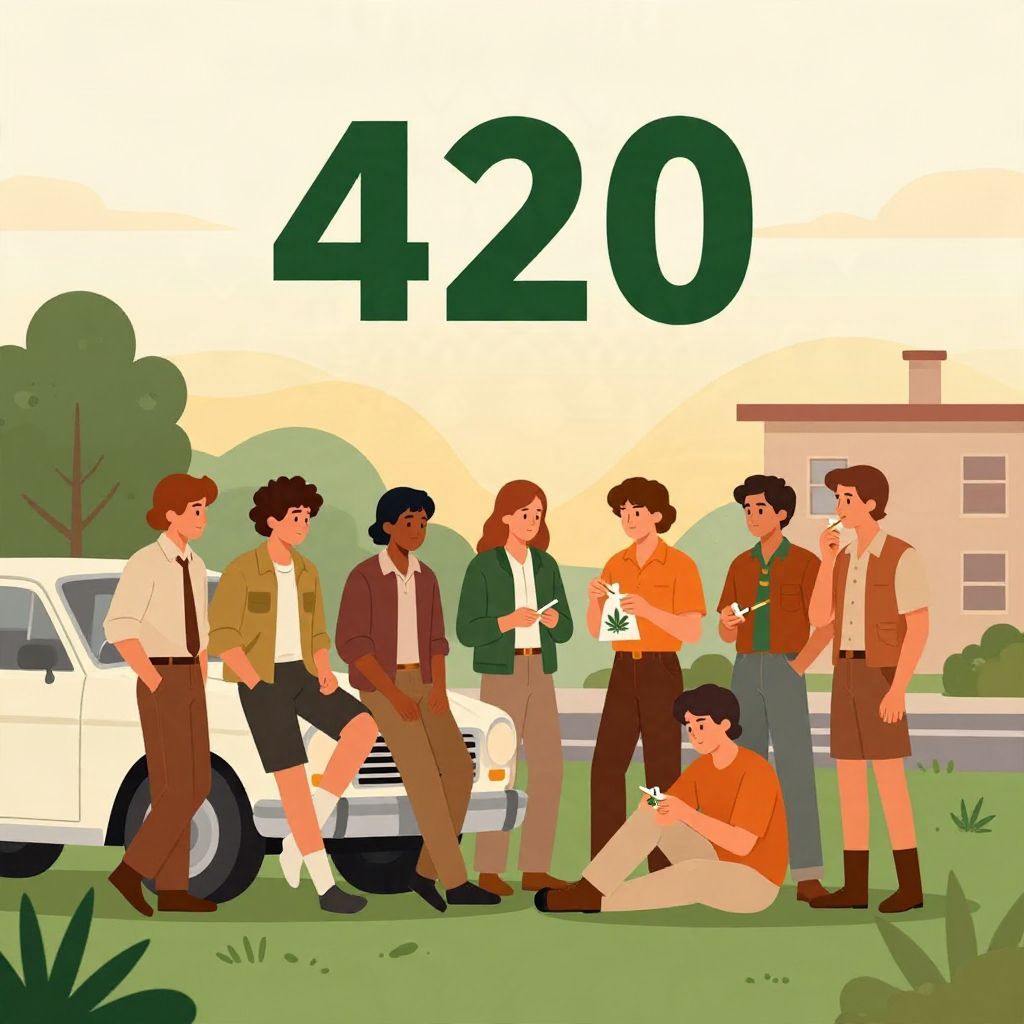
Why is 420 weed day? The short historical answer is that “420” became a cannabis code among a group of California high school students in the early 1970s, then spread through music and counterculture until it turned into a global cannabis holiday. The number did not begin as a government code, police signal, or scientific term.
Its rise shows how slang can become tradition: a local joke, repeated often enough, can take on a life of its own. Over time, April 20—written 4/20 in U.S. date format—became the day many cannabis users and supporters treat as a moment of celebration, protest, and community.
Why Is 420 Weed Day?
420 became “weed day” because a small group of teenagers in Marin County, California, used “420” as a code word for meeting to smoke cannabis, and the phrase later spread through the Grateful Dead fan world and cannabis culture. By the 1990s, “4/20” had become an annual date for gatherings, activism, and public celebration.
The most accepted origin of 420
The best-known and most widely accepted origin story traces 420 to a group of students at San Rafael High School in California around 1971. They reportedly used “420” as shorthand for meeting after school at 4:20 p.m. to search for an abandoned cannabis crop or simply to smoke together, depending on the version of the story. What matters historically is that the term began as insider slang, not a formal holiday.
The Waldos and the local code
The group most often linked to the phrase called themselves the “Waldos.” According to the account associated with them, they heard about a possible cannabis patch near Point Reyes and arranged to meet at 4:20 p.m. near a campus statue. The crop was never found, but the code word remained useful as a discreet way to talk about cannabis without alerting adults.
Historians should be careful here: the Waldos’ story is the strongest documented origin, but it is still a retrospective account. Slang often spreads in messy ways, and it is possible that multiple local uses of “420” existed before the phrase became famous. Even so, the Waldos explanation is the one most often supported by people who have traced the term’s early circulation.
How 420 spread beyond one school
Local slang does not become a national cultural marker by itself. 420 spread because it traveled through social networks connected to the 1970s counterculture, especially the Grateful Dead community. Fans, road crews, and concertgoers helped move the phrase from a schoolyard code into a wider subculture where cannabis use was already part of the social landscape.
From private joke to public code
By the late 1970s and 1980s, “420” was being used more broadly as a cannabis reference. It functioned as a discreet signal, a shared joke, and a way to identify belonging. Like many subcultural terms, it was useful because outsiders often did not understand it. That ambiguity helped it survive.
The phrase’s growth also reflects a larger historical pattern: when a group is marginalized or criminalized, it often develops coded language. In the case of cannabis, that language could be playful, political, or practical. “420” became all three.
Why April 20 became the date
April 20, written 4/20 in the American month-day format, naturally matched the code. The date made the slang easy to remember and easy to turn into a yearly ritual. Once people began gathering on April 20 at 4:20 p.m., the number became both a time and a date associated with cannabis culture.
Time, date, and symbolism
The pairing of 4:20 and 4/20 gave the term unusual flexibility. People could say “420” to mean cannabis in general, “4:20” to mean the daily smoking time, or “4/20” to mean the annual celebration. This layered meaning helped the phrase spread in everyday speech, on posters, in songs, and eventually online.
In countries that use a different date format, the symbolism is less intuitive, but the term still traveled quickly because popular culture, especially American music and film, carried it abroad.
The role of media and popular culture
420 did not become widely known until media exposure amplified it. In the 1990s, cannabis magazines and music culture helped standardize the story and the date. One important turning point was the phrase’s appearance in broader public conversation, which transformed a subcultural code into a recognizable symbol.
How repetition created a holiday
Once the number appeared in print and on merchandise, it became easier for people to repeat and commercialize it. Repetition matters in cultural history: a term becomes tradition when enough people use it as if it already has a shared meaning. By the end of the 20th century, 420 had become a kind of unofficial holiday for cannabis users and advocates.
This did not happen because any single institution declared it a holiday. Rather, it emerged from repeated use, social imitation, and the growth of cannabis-oriented public events. In that sense, 420 is a grassroots cultural observance.
What 420 means in cannabis culture
For many people, 420 means more than smoking marijuana. It can represent community, legalization efforts, remembrance of cannabis prohibition, or simply a social gathering. The meaning depends on context, and that has changed over time as attitudes toward cannabis have shifted.
Celebration and protest
In some places, 420 is festive and commercial, with concerts, festivals, and promotional sales. In others, it carries a political edge, especially where cannabis remains illegal or heavily regulated. For activists, April 20 can be a day to argue for reform, medical access, or the end of punitive drug policies.
That dual character—party and protest—helps explain why 420 has endured. It is not just about intoxication. It also reflects the history of cannabis prohibition and the changing public debate around personal liberty, health, and criminal justice.
Myths and misconceptions about 420
Because 420 is so famous, many false explanations have circulated. Some sound official, but they are not supported by reliable evidence. Sorting fact from folklore is important if we want to understand the term historically.
Common myths
- Police code myth: A popular claim says 420 was a police code for marijuana possession. There is no solid evidence that this is the true origin.
- Bob Marley myth: Some people connect 420 directly to Bob Marley’s birthday or death date, but those dates do not explain the origin of the term.
- Scientific number myth: Others claim 420 refers to a chemical compound or number in cannabis science. That is not how the slang began.
- Hitler myth: A more recent internet rumor links 420 to Adolf Hitler’s birthday. This is a coincidence of dates, not the historical source of the phrase.
These myths persist because people often prefer a neat explanation. But the real story is more ordinary and more believable: a small group of teenagers used a code word, and culture did the rest.
Why the history of 420 matters
The history of 420 is a useful example of how modern traditions form. It shows that holidays do not always begin with governments, religions, or ancient rituals. Sometimes they start with slang, peer groups, and media amplification. A local joke can become a global symbol if it fits a wider social need.
A window into changing attitudes
The rise of 420 also mirrors the broader history of cannabis in the late 20th and early 21st centuries. As public opinion shifted in many places from strict prohibition toward decriminalization, medical legalization, and regulated markets, 420 became less hidden and more public. What was once a coded reference became a mainstream cultural marker.
At the same time, the term still reflects the older era of secrecy and stigma. That tension is part of its historical significance. 420 stands at the intersection of counterculture, law, commerce, and changing social norms.
How 420 is observed today
Today, April 20 is marked in many different ways depending on the country, city, and legal environment. Some people gather in parks or at festivals. Some use the day for advocacy. Others simply recognize it as a familiar date in cannabis culture. In places where cannabis is legal, the day may be openly commercialized; where it is not, it may remain informal or symbolic.
From underground code to mainstream date
The modern visibility of 420 is itself part of the history. What began as a private code now appears in advertising, pop culture, and public events. That visibility does not erase its origins; instead, it shows how subcultures can reshape mainstream language over time.
In historical terms, 420 is a reminder that culture is built not only by institutions but also by ordinary people repeating words, jokes, and habits until they become shared tradition.
So, why is 420 weed day? Because a small California slang term escaped its original circle, spread through counterculture, and became the most recognizable annual symbol of cannabis culture. For readers interested in how customs and celebrations develop, it is a vivid example of cultural history in action. You may also enjoy reading about what cultural divergence means in history and why societies create celebrations.