
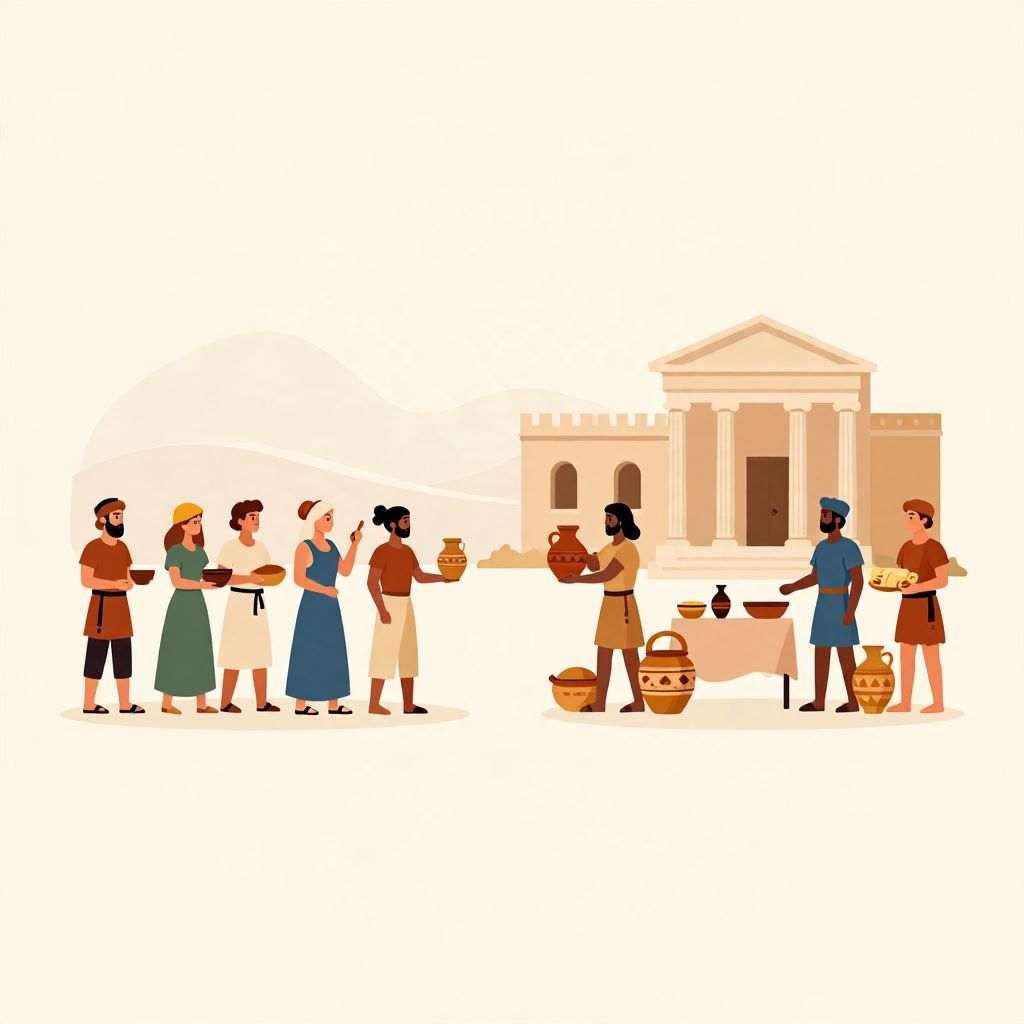
What is acculturation? In history, it is the process by which people or groups come into continuous contact with another culture and begin to adopt some of its language, customs, beliefs, or social practices. It does not usually mean total replacement of one culture by another; more often, it produces mixture, adaptation, and selective change.
Acculturation has shaped empires, migration, trade, colonization, religion, and everyday life for thousands of years. Historians use the term to explain how cultures change when they meet, whether through peaceful exchange, unequal power, or forced assimilation.
What Is Acculturation?
Acculturation is the cultural change that happens when two or more groups maintain contact over time. One group may borrow foods, words, clothing styles, technologies, or religious practices from another, while still keeping parts of its own identity. The result is often a blended or uneven cultural transformation rather than complete cultural replacement.
Background and Historical Meaning
The word “acculturation” is modern, but the phenomenon is ancient. People have always borrowed from neighbors, conquerors, traders, and migrants. Historians and anthropologists use the term to describe these changes more precisely than older, simpler ideas like “civilizing” or “assimilation,” which can hide the complexity of cultural exchange.
How historians use the term
In historical writing, acculturation usually refers to a two-way or multi-directional process. It can happen voluntarily, such as merchants adopting a foreign language to trade more easily, or under pressure, such as colonized peoples being encouraged or forced to adopt the customs of rulers. The term helps distinguish cultural contact from outright conquest or political control.
Acculturation is not the same as assimilation
Acculturation and assimilation are related but not identical. Assimilation implies that one group largely absorbs into another and loses much of its original cultural identity. Acculturation can be partial and selective. A community may adopt new dress or speech while keeping its religion, kinship patterns, or local traditions.
Where Did the Idea Come From?
The term became important in modern scholarship in the late 19th and early 20th centuries, especially as scholars studied indigenous peoples, migration, and colonial contact. In the United States, anthropologists such as John Wesley Powell and later scholars helped develop the concept for studying cultural change. The term gained wider academic use in the 20th century as anthropology and history became more careful about how cultures interact.
Why the concept mattered
Earlier European writers often described cultural contact in hierarchical terms, assuming that some societies were “advanced” and others were “backward.” The concept of acculturation offered a more neutral way to study change. It recognized that cultures are dynamic and that contact can produce adaptation, resistance, borrowing, and hybrid forms all at once.
How Acculturation Happens
Acculturation usually develops through sustained contact rather than a single event. Trade, migration, war, intermarriage, missionary activity, imperial rule, and urban life can all create conditions for cultural borrowing. The process may be gradual, uneven, and different across generations.
Common pathways of acculturation
- Trade: merchants adopt useful words, weights, foods, and commercial customs from other societies.
- Migration: newcomers adjust to local norms while also influencing the host society.
- Conquest and empire: rulers impose some customs, but they also borrow from the people they govern.
- Religion: conversion often brings new rituals, calendars, art forms, and moral ideas.
- Education and administration: schools, laws, and bureaucracies spread the language and values of dominant groups.
Voluntary and forced acculturation
Not all acculturation is equal. In some cases, people choose elements of another culture because they are useful or attractive. In others, power imbalances shape the outcome. Colonized peoples, enslaved populations, and minority communities have often faced strong pressure to change. Historians pay close attention to this difference because it affects how freely cultural exchange occurs.
Acculturation in World History
Acculturation has been a constant feature of world history. It can be seen in ancient empires, medieval trade networks, early modern colonization, and modern globalization. The details differ, but the underlying pattern is the same: contact creates change.
Ancient empires and cultural blending
Large empires such as the Roman Empire, the Persian Empire, and the Han Empire brought diverse peoples into close contact. Local elites often adopted imperial languages, dress, or administrative habits to gain status, while imperial centers absorbed provincial foods, religious cults, and artistic styles. Roman religion, for example, incorporated deities and practices from across the Mediterranean world.
Trade routes and exchange
Long-distance trade was one of the most important engines of acculturation. Along the Silk Roads, in the Indian Ocean world, and across trans-Saharan routes, merchants carried not only goods but also ideas, scripts, technologies, and religious traditions. Buddhism spread across Asia in part through such networks, adapting to local societies as it moved.
Medieval and early modern contact zones
Borderlands and port cities often became places of intense cultural mixing. In the medieval Mediterranean, Latin Christian, Byzantine, Islamic, and Jewish communities influenced one another through commerce, diplomacy, and conflict. Later, European expansion after the 15th century created new and often violent forms of acculturation in the Americas, Africa, and Asia.
Acculturation, Colonization, and Power
Colonial history is one of the clearest examples of acculturation under unequal power. European empires often tried to reshape local societies through language policies, missionary work, schooling, dress codes, and legal systems. Indigenous peoples and colonized communities did not simply passively accept these changes; they adapted, resisted, reinterpreted, and sometimes selectively adopted new practices.
Forced cultural change
In many colonial settings, acculturation was tied to coercion. Children were sent to boarding schools, local languages were discouraged, and traditional ceremonies were restricted. These policies aimed to weaken local identities and create loyalty to imperial systems. Historians now study these efforts as part of broader processes of cultural domination and social disruption.
Resistance and selective borrowing
Even under pressure, communities often retained core traditions or transformed imported customs for their own purposes. A group might adopt a colonizer’s religion but combine it with older beliefs. They might learn a dominant language for survival while preserving their own language at home. Such patterns show that acculturation is rarely one-directional or complete.
Acculturation in Migration History
Migration has always produced acculturation, especially in cities and frontier regions. Newcomers often learn the dominant language, adjust to local laws, and change foodways or dress. At the same time, migrants transform the societies they enter by introducing new cuisines, festivals, business practices, and forms of worship.
Generational change
Acculturation often differs by generation. First-generation migrants may keep many homeland customs, while their children and grandchildren adopt more of the surrounding culture. This does not mean the original culture disappears. Instead, families may develop layered identities, combining inherited traditions with new social realities.
Urban centers as cultural crossroads
Historically, cities have been especially important sites of acculturation because they bring together people from different backgrounds. Ports, market towns, and imperial capitals encourage multilingualism and cultural flexibility. In such places, borrowing can become normal rather than exceptional.
Key Features of Acculturation
To understand acculturation historically, it helps to look at its main features. These are not rigid rules, but they appear often in case studies across time and place.
- Contact: groups must interact over time.
- Change: one or both groups alter practices, beliefs, or habits.
- Selectivity: only some cultural elements are adopted.
- Unequal power: one group may have more social, political, or military influence.
- Adaptation: borrowed elements are often reshaped to fit local needs.
- Persistence: older traditions may survive alongside new ones.
Why Acculturation Matters to Historians
Acculturation helps historians explain change without reducing history to simple conquest or simple blending. It shows how cultures are made through interaction. It also reveals how power works in everyday life: in language, clothing, food, worship, family life, and education. Because of this, acculturation is central to the history of empire, migration, religion, and identity.
It challenges the idea of “pure” cultures
One important historical insight is that cultures are rarely isolated or static. Over centuries, nearly all societies have borrowed from others. Acculturation reminds us that what people often call “traditional” may itself be the product of earlier contact and adaptation.
It helps explain hybrid identities
Many historical communities cannot be understood as belonging entirely to one culture or another. Their languages, rituals, and social customs may reflect long periods of contact. Acculturation is a useful concept for describing these mixed and changing identities without forcing them into rigid categories.
Common Misunderstandings About Acculturation
Because the term is used in many fields, it is sometimes misunderstood. It is not simply the loss of one culture, and it is not always voluntary. It is also not the same as multicultural coexistence, where groups live side by side with limited exchange. Acculturation specifically involves cultural change through contact.
Acculturation is not always equal or harmless
Some people use the word as if all cultural exchange were neutral or beneficial. History shows otherwise. Acculturation can bring opportunity, creativity, and new knowledge, but it can also involve coercion, inequality, and the erosion of local traditions. The historical record includes both enrichment and loss.
Conclusion: The Historical Meaning of Acculturation
Acculturation is the historical process through which cultures change in response to sustained contact with other cultures. It has shaped ancient empires, trade routes, migration patterns, and colonial societies, often in ways that were partial, uneven, and contested. In history, it is best understood not as a single event but as an ongoing process of adaptation, borrowing, and resistance. For related topics, see what is cultural divergence and what is relocation diffusion.