
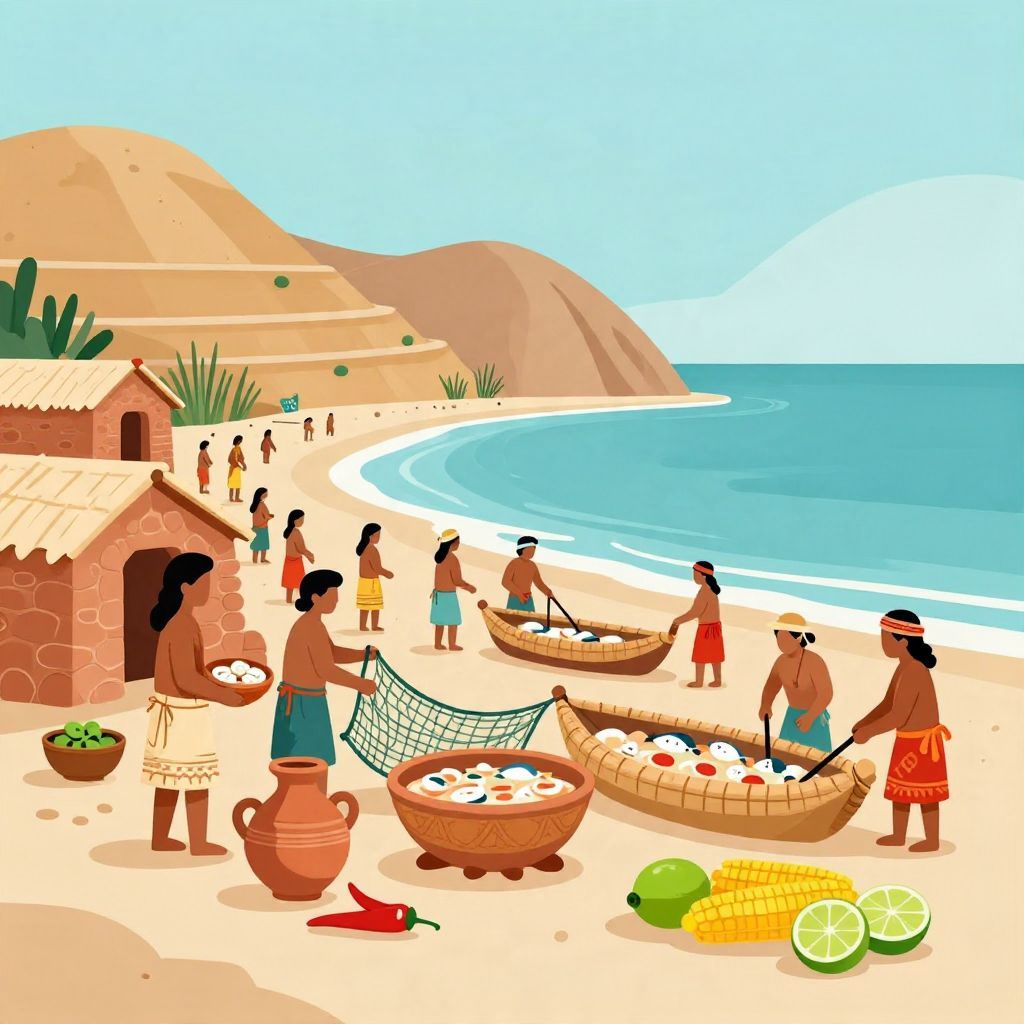
“Where is ceviche from?” is a deceptively simple question. The dish is now associated with many coastal countries, but its deepest historical roots are in the eastern Pacific, especially the Andean coast of present-day Peru. Over time, ceviche spread across Latin America and beyond, changing with local ingredients, trade, and taste.
Its history reaches back to pre-Columbian food traditions, then evolved further after Spanish contact introduced citrus and new seasonings. The result is a dish with a long regional past and a wider modern identity.
Where is ceviche from?
Ceviche is most strongly associated with Peru, where it developed as a coastal dish rooted in Indigenous foodways and later shaped by Spanish ingredients such as lime and onion. Similar preparations exist across Latin America, but Peru is the country most often identified with ceviche’s historical origin and cultural prestige.
The historical roots of ceviche in the Andean coast
The earliest version of ceviche likely began among pre-Columbian peoples living along the Pacific coast of South America, especially in the area that is now Peru. Long before modern ceviche, coastal communities preserved and flavored fish using local acidic ingredients, salt, and chili peppers. These methods were practical in a warm climate and fit a fishing economy.
Historians generally agree that ceviche did not appear fully formed in one moment. Instead, it grew out of older Indigenous practices of preparing raw or lightly cured seafood. The exact first version is unknown, but the dish’s geographic center of gravity has long been the Peruvian coast.
Before citrus: what did early ceviche look like?
In the pre-Hispanic world, people in the Andes did not have lemons or limes. That means the earliest ceviche-like dishes probably used other acidic agents, such as chicha or local fruits, to lightly “cook” or cure fish. Archaeological and historical evidence suggests that coastal societies had sophisticated fishing traditions and a strong knowledge of preservation.
Because written records from those societies are limited, scholars must reconstruct the dish’s early history indirectly. What is clear is that ceviche belongs to a much older culinary landscape than the modern recipe most people know today.
How Spanish contact changed ceviche
The arrival of the Spanish in the 16th century transformed many foods in the Americas, including ceviche. The most important change was the introduction of citrus fruit, especially limes and bitter oranges, which became ideal for marinating fish. Spanish colonial exchange also brought onions and new seasonings that helped shape the dish into its modern form.
This was not simply a European invention imposed on an Indigenous dish. Rather, ceviche developed through cultural blending. Indigenous preparation methods met new ingredients from the Old World, producing a dish that is both local and colonial in its history.
Why citrus mattered
Citrus changed ceviche because it gave the dish a bright, reliable acidity that could denature fish proteins and create the familiar texture and flavor associated with modern ceviche. The technique also made the dish more adaptable. Different regions could use different fish, shellfish, and seasonings while keeping the same basic method.
That is one reason ceviche spread so successfully along the Pacific coast: the idea was portable, but the ingredients could be local.
Peru and the making of ceviche as a national dish
Although ceviche has regional relatives in other countries, Peru is the place where it became most strongly identified as a national dish. Over centuries, Peruvian coastal cuisine absorbed Indigenous, Spanish, African, and later Asian influences. Ceviche developed within that broader food culture and eventually became one of the clearest symbols of Peruvian identity.
By the modern era, ceviche was no longer just a practical seafood preparation. It had become a celebrated dish served in homes, markets, and restaurants, especially in Lima and other coastal cities. Its prestige grew as Peruvians increasingly treated it as a marker of national heritage.
Regional diversity within Peru
Peru itself has many ceviche styles. Coastal versions may use sea bass or other white fish, while other regions favor shellfish, mixed seafood, or local variations in spice and garnish. Some versions are served with sweet potato, corn, or cancha, reflecting the agricultural and culinary diversity of the country.
This internal variety matters because it shows that ceviche was never a single fixed recipe. It was a family of related dishes that adapted to local ecology and taste.
Did ceviche come from one country only?
No. While Peru is the strongest historical answer to “where is ceviche from,” similar dishes developed in other coastal cultures, especially along the Pacific coast of Latin America. Ecuador, Chile, Mexico, and Central American countries all have seafood preparations that resemble ceviche in method or concept. Some use different seafood, different acids, or different seasoning traditions.
That said, these are best understood as related regional cuisines rather than proof of one simple, universal origin. Culinary history often works through exchange, adaptation, and parallel development, not a single origin point.
Related dishes and regional cousins
- Peru: the most historically prominent ceviche tradition, often considered the classic form.
- Ecuador: ceviche often includes tomato-based or brothier preparations.
- Mexico: ceviche commonly uses lime, chili, cilantro, and seafood such as shrimp or fish.
- Chile and Central America: local versions reflect distinct coastal ingredients and serving styles.
How ceviche spread across the Americas
Ceviche spread through coastal trade, migration, and the movement of recipes within Spanish America. Ports were especially important. Sailors, merchants, and workers carried food habits from one place to another, and local cooks adapted them to available fish and produce. Over time, ceviche became a familiar dish in many Latin American coastal communities.
In the 19th and 20th centuries, urbanization and restaurant culture helped standardize and popularize ceviche further. As national cuisines became more visible, countries began to claim and celebrate their own versions. This process sometimes created friendly rivalry over “authentic” ceviche, even though the dish had always been shaped by exchange.
What makes ceviche historically important?
Ceviche is historically important because it shows how food can preserve ancient traditions while absorbing new influences. It connects pre-Columbian coastal life, Spanish colonial exchange, and modern national identity. Few dishes illustrate continuity and adaptation so clearly.
It also reminds us that food history is often regional before it becomes national. Ceviche began as a practical coastal preparation, but its meaning expanded as people attached cultural pride to it. Today, it is both a local tradition and a global dish.
Key historical takeaways
- Its deepest roots are in the Andean Pacific coast, especially present-day Peru.
- Pre-Columbian peoples likely prepared early forms of the dish before citrus arrived.
- Spanish contact helped create modern ceviche by introducing limes, onions, and other ingredients.
- Peru became the main historical center of ceviche’s identity and prestige.
- Other Latin American countries developed related versions, reflecting shared coastal food traditions.
The historical answer in one sentence
Ceviche is most historically associated with Peru, where it emerged from Indigenous coastal food traditions and was later transformed by Spanish-introduced citrus into the dish recognized today.
So, if you are asking where ceviche is from, the best historical answer is Peru and the broader Pacific coast of South America. For more food-history context, you may also enjoy reading about where sushi is from and where curry is from.