
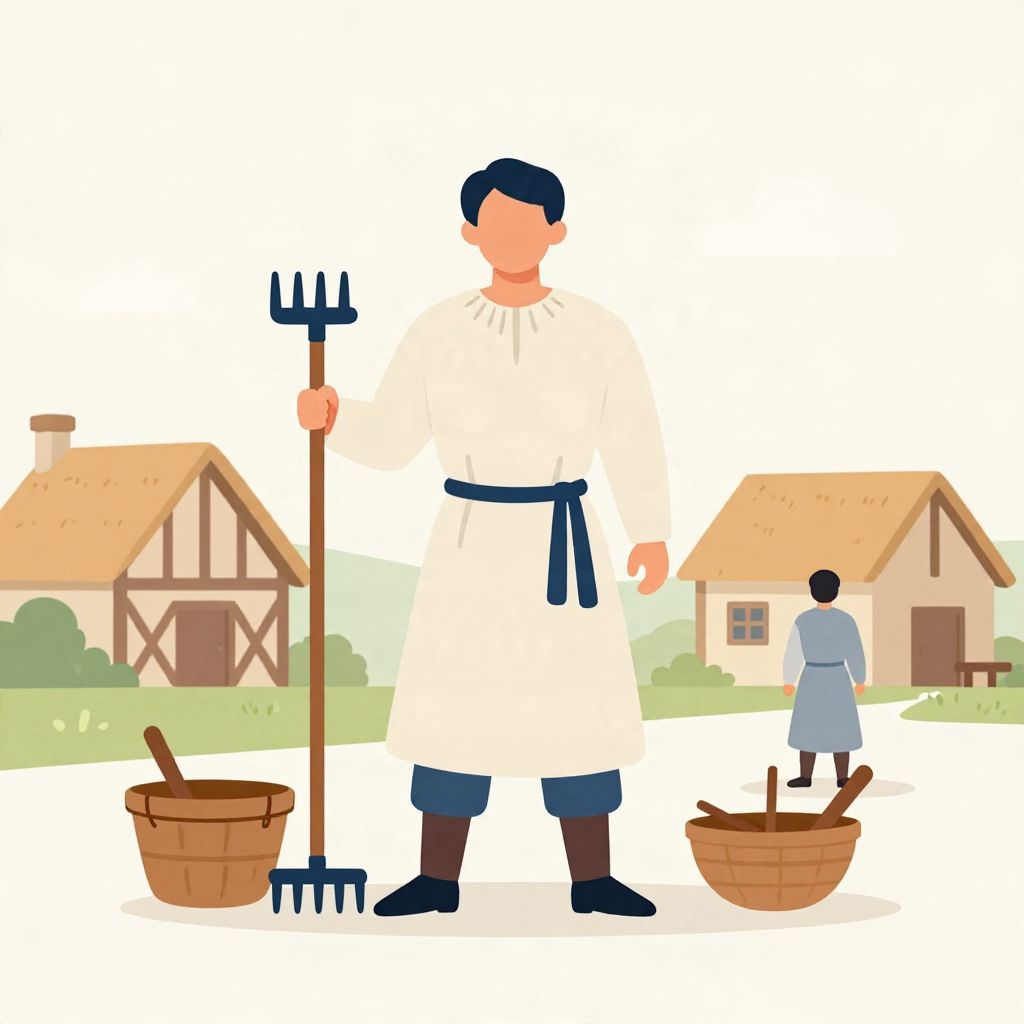
A smock is a loose outer garment, usually made of linen, cotton, or another practical fabric, that was worn over everyday clothes to protect them from dirt, wear, and weather. In historical use, the word can describe several related garments, from workwear for laborers to a child’s dress or an artist’s protective shirt.
The answer depends a little on period and place, because “smock” has changed meaning over time. Historically, it was most often a plain, utilitarian garment associated with rural life, manual work, and domestic labor, especially in Europe from the medieval period onward.
What Is a Smock?
A smock is a simple, loose-fitting garment worn over other clothing to keep them clean or to provide comfort and modesty. In historical Europe, it was especially associated with farm workers, shepherds, and servants, though later versions appeared in children’s wear, women’s dress, and artists’ clothing.
The key idea is function rather than fashion. A smock was designed to be roomy, durable, and easy to put on. It usually had long sleeves, a gathered or loose body, and a practical opening at the neck. In some regions, decorative embroidery turned the smock into a more refined garment, but its origins were firmly utilitarian.
Where Did Smocks Come From?
Smocks developed from older traditions of protective outer clothing used by people who worked outdoors or handled messy materials. Their exact origin is difficult to pin down to one place or date, but by the medieval period they were well established in parts of Europe, especially in England and neighboring regions. They were closely tied to everyday labor and household production.
Medieval and early modern roots
By the later Middle Ages, loose over-garments were common among rural workers. A smock could shield underclothes from mud, animal grease, flour, soot, or sweat. Because linen was widely available and washable, it became a favored fabric for such garments. Over time, the smock became especially associated with agricultural and domestic work.
The smock-frock
In Britain, one of the best-known historical forms was the smock-frock, worn by farm laborers from roughly the 18th and 19th centuries. This version was often beautifully decorated with pleats, embroidery, and smocking stitches, even though it remained a work garment. It shows how practical clothing could also become a marker of regional identity and craftsmanship.
How Was a Smock Used in History?
Historically, smocks served several practical purposes: protecting clothing, signaling occupation, and sometimes marking age or social status. They were especially useful before modern laundering was easy and before people owned many changes of clothes. A smock could extend the life of a person’s best garments by acting as a washable outer layer.
Work and daily life
Farmers, shepherds, market workers, and servants wore smocks because they needed clothing that could handle dirt and movement. In households, women might wear smocks while cooking, cleaning, or washing. In workshops, similar garments protected clothes from dye, clay, flour, or other materials.
Children’s clothing
From the 18th century onward, the word “smock” also came to describe loose garments for children, especially girls. These were often practical dresses with a gathered waist or yoke. In this context, the smock was less about labor and more about ease of movement, growth, and simplicity.
Artists and specialists
Later, the idea of the smock survived in specialized workwear such as the painter’s smock. This preserved the old purpose of covering the body and clothes while allowing freedom of movement. The basic design remained useful long after the original rural smock-frock faded from everyday wear.
What Did a Smock Look Like?
Although styles varied by region and period, most smocks shared a few common features: a loose cut, long sleeves, and a practical opening at the neck. Many were made from light-colored linen or cotton. Some had gussets under the arms for movement, while others were gathered at the neck, cuffs, or waist.
Common features
- Loose fit: allowed easy movement and layering over other clothes.
- Durable fabric: often linen, because it was strong and washable.
- Long sleeves: protected arms during work.
- Simple fastening: ties, buttons, or a slit at the neck.
- Decorative stitching: sometimes used on formal or regional versions.
Smocking versus smock
It is worth separating the garment from the sewing technique called smocking. Smocking is decorative embroidery used to gather fabric into stretchable pleats. It became associated with smocks because many historical smocks used this technique at the neckline, cuffs, or chest. Over time, the decorative method became famous even when the original work garment disappeared.
Why Was the Smock Important Historically?
The smock matters because it reflects how ordinary people dressed, worked, and managed daily life. Unlike court fashion or military uniforms, it belongs to the history of labor and domestic routine. It shows how clothing was shaped by practicality, local materials, and social need rather than by elite style alone.
A garment of labor and class
Smocks were usually associated with working people, especially in rural communities. That association gave them social meaning. In some settings, wearing a smock could signal low status or manual occupation. In others, especially when finely made or embroidered, it could express local pride and skill. Clothing historians often use garments like the smock to understand class divisions in the past.
Protection before modern laundry
Before modern detergents, washing machines, and cheap replacement clothing, a protective outer layer was valuable. The smock helped people keep their better garments clean and presentable. This practical role explains why similar garments appeared in many societies, even when their names differed.
How Did the Smock Change Over Time?
The smock evolved from a broad protective over-garment into several narrower meanings. In some periods it remained a laborer’s garment; in others it became a child’s dress, a woman’s informal garment, or a specialized work shirt. By the 20th century, the traditional rural smock had largely disappeared from everyday dress in many places, surviving mainly in costume, craft, and fashion references.
From everyday wear to historical costume
As industrialization changed work and clothing production, the original smock became less common. Factory-made garments, cheaper fabrics, and changing fashion reduced the need for a loose protective over-garment. Yet the smock did not vanish entirely. It survived in folk costume, reenactment, children’s clothing, and the vocabulary of tailoring.
Influence on later fashion
Designers have periodically borrowed the smock’s loose shape for comfort and style. The idea of an easy, flowing outer layer appears in modern dresses, tunics, and maternity wear. Although these are not always called smocks in the historical sense, they draw on the same basic principle: simple construction and freedom of movement.
Smocks in Different Cultural Contexts
Although the word “smock” is most strongly tied to English and European history, similar garments existed elsewhere. Many cultures developed loose outer layers used for protection, modesty, or work. These are not always the same garment historically, but they serve comparable purposes.
Comparable garments
Examples include tunics, over-shirts, aprons, and robe-like work garments found across Eurasia, Africa, and the Americas. The exact cut and social meaning differ, but the practical logic is similar. In clothing history, the smock belongs to a broad family of garments made to be worn over other clothes.
Why comparisons matter
Comparing the smock with garments such as the sari or the dashiki can be useful, but it is important not to confuse them. A sari is a draped garment with deep cultural and regional meanings in South Asia, while a dashiki is a loose tunic associated with West African and African diasporic dress. A smock is different in origin and function, even if all three can express identity and practicality.
Key Facts About the Smock
- The smock was originally a practical outer garment worn over other clothes.
- It was especially common in rural and working contexts in Europe.
- Smocks were often made from washable fabrics such as linen.
- The garment helped protect clothing from dirt, wear, and weather.
- Historical smocks could be plain workwear or decorated with embroidery.
- The term later expanded to include children’s garments and artists’ clothing.
- Smocking, the embroidery technique, is historically linked to the garment’s design.
So, What Is a Smock in Historical Terms?
In historical terms, a smock is a loose, practical over-garment that emerged from everyday labor and domestic life, especially in Europe. It began as protective clothing, became associated with rural work and social class, and later influenced children’s wear, craft traditions, and modern fashion. Its history is a reminder that ordinary clothing can tell a rich story about work, status, and daily life.
If you are interested in how garments carry cultural meaning across history, you may also enjoy reading about what a sari is and what a dashiki is.