
What happened to Jimmy Hoffa remains one of the most famous unsolved mysteries in modern American history. The labor leader vanished on July 30, 1975, after going to a meeting in the Detroit area, and he was never found. Over the decades, investigators, journalists, and amateur sleuths have proposed many theories, but no definitive public evidence has resolved the case.
Hoffa’s disappearance mattered because he was not just any missing person: he was a powerful and controversial union boss whose career was tied to labor politics, organized crime allegations, and the high-stakes world of mid-20th-century American labor.
What happened to Jimmy Hoffa?
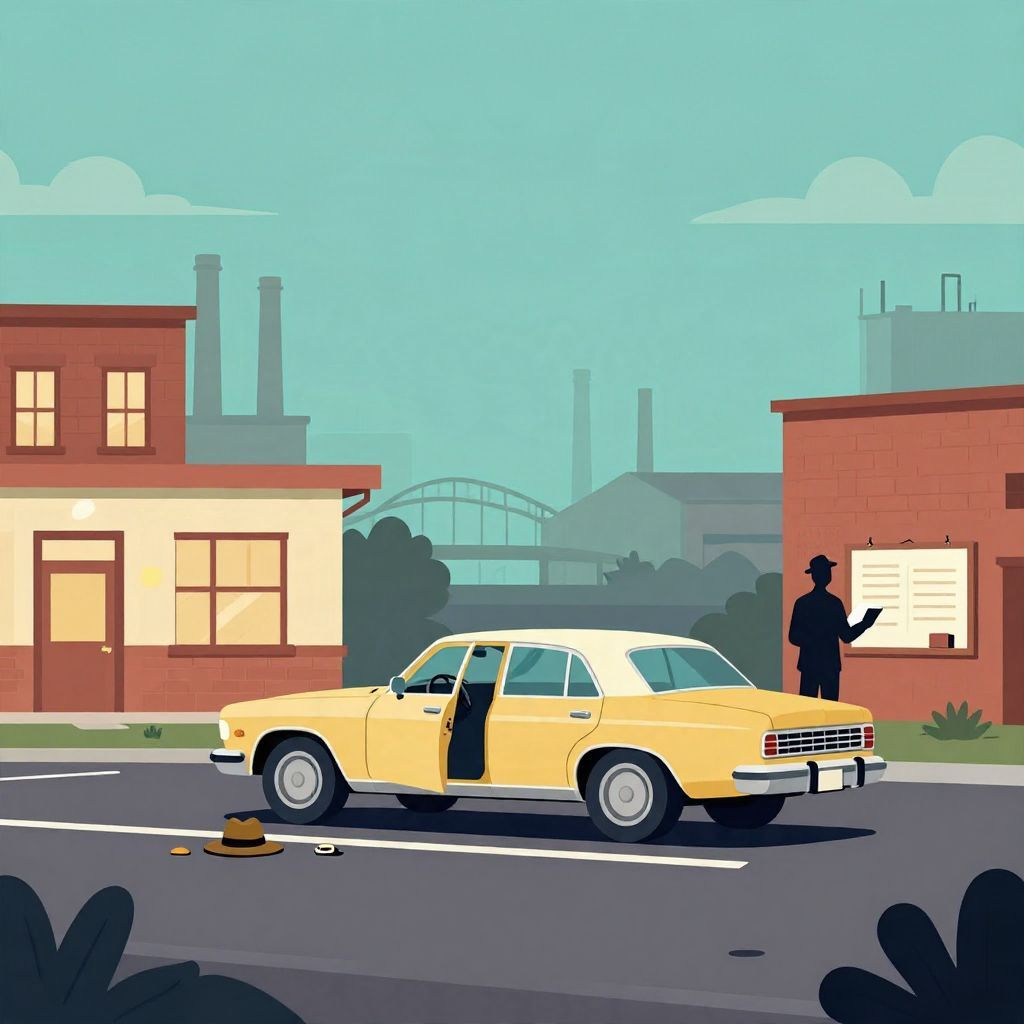
Jimmy Hoffa disappeared on July 30, 1975, after traveling to the Machus Red Fox restaurant in Bloomfield Township, Michigan, for a meeting that never occurred. He was last seen in the parking lot, and despite decades of investigation, his body has never been found. The most accepted conclusion is that he was murdered, but the exact killers, motive, and burial site remain unproven.
Who was Jimmy Hoffa?
James R. Hoffa was the longtime leader of the International Brotherhood of Teamsters, one of the most powerful labor unions in the United States. He rose from a rough working-class background to become a national figure by organizing truck drivers and building union strength in the 1940s and 1950s. By the 1960s, Hoffa was both admired by many workers and deeply controversial because of corruption allegations and his links to organized crime figures.
His influence was enormous. The Teamsters represented a huge share of the American freight and trucking workforce, and the union’s pension fund gave Hoffa and other leaders major financial leverage. That power also drew government scrutiny. Hoffa was convicted in 1964 of jury tampering, fraud, and conspiracy, though he continued to shape union politics while appealing his sentence.
The events leading up to his disappearance
Hoffa’s last years were marked by legal trouble, political rivalry, and a struggle to regain control of the Teamsters. After President Richard Nixon commuted his prison sentence in 1971, Hoffa was barred from union office for a period of time. He wanted back in, but his return threatened men who had taken over the union in his absence, including figures with their own connections to organized crime and labor politics.
By 1975, Hoffa was trying to reassert influence, and that effort placed him in a dangerous position. He had enemies, unsettled business, and a reputation that made rumors easy to believe. In that environment, his disappearance quickly became a national obsession.
The final known timeline
- July 30, 1975, early afternoon: Hoffa left his home in the Detroit area.
- About 2:00 p.m.: He arrived at the Machus Red Fox restaurant, where he expected to meet union figures Anthony “Tony Jack” Giacalone and Anthony “Tony Pro” Provenzano.
- Shortly after 2:30 p.m.: Hoffa phoned his wife and told her he had been stood up and was waiting outside.
- Later that afternoon: He was last seen in the restaurant parking lot.
- That evening: When Hoffa failed to return home, concern grew quickly.
- Within days: The case became a major missing-person and suspected homicide investigation.
The details of the meeting itself are important. Hoffa believed he was there to talk about union business, but the men he expected to see denied arranging any meeting. That contradiction has fueled suspicion ever since. Whether Hoffa was lured there deliberately or whether the meeting was a misunderstanding that turned deadly remains unresolved.
Why is Jimmy Hoffa’s disappearance so famous?
Hoffa’s case became legendary because it combined power, crime, politics, and mystery. He was a public figure with a dramatic rise and fall, and his disappearance seemed to fit the era’s anxieties about corruption and mob influence. Unlike many missing-person cases, this one involved a nationally known labor leader whose enemies and associates were both difficult to separate and easy to speculate about.
The case also endured because no body was found. In criminal investigations, a missing body can make prosecution difficult and leaves room for theories. Hoffa’s fate became a kind of American folklore, repeated in jokes, films, and political commentary. Yet beneath the mythology is a real historical event: a man vanished, and the evidence never produced a final answer.
What theories explain what happened?
Most historians and investigators agree that Hoffa was likely murdered, but the exact story is disputed. Over time, several theories have emerged, some more plausible than others. None has been proven in court or confirmed by physical evidence.
The organized crime theory
The most widely accepted explanation is that Hoffa was killed by people tied to organized crime, possibly with help from union insiders. This theory fits the power struggles of the time and Hoffa’s long, complicated relationship with mob-linked figures. It also matches the pattern of intimidation and violence that sometimes surrounded labor and racketeering investigations in mid-century America.
The union power struggle theory
Another interpretation is that Hoffa’s disappearance was connected less to a single mob order and more to a broader fight over union control and influence. Hoffa had enemies inside and outside the Teamsters, and his return threatened established arrangements. In this view, his death was the result of a political and criminal alliance that saw him as a liability.
The burial-site legends
Over the years, many alleged burial sites have been suggested: under stadiums, in landfills, beneath roads, and in other places around Michigan and beyond. These claims have generated headlines, but none has been verified. The sheer number of rumors is one reason the story remains famous; each new lead briefly revives the hope that the mystery might finally be solved.
What investigators found — and what they did not
The FBI and other investigators spent years pursuing leads, interviewing suspects, and searching likely locations. Some individuals later claimed knowledge of the crime, but many of those claims were inconsistent, self-serving, or impossible to verify. The lack of a body, reliable witnesses, or conclusive forensic evidence has kept the case open in the public imagination even when official progress stalled.
One reason the investigation remained frustrating is that the people most likely to know the truth often had reasons to lie. Fear, loyalty, self-protection, and the code of silence associated with organized crime all made testimony unreliable. As a result, the historical record is full of competing stories but short on proof.
The aftermath of Hoffa’s disappearance
Hoffa was declared legally dead in 1982, seven years after he vanished. His disappearance ended one chapter of Teamsters history but not the union’s troubles. The case intensified public suspicion about labor corruption and organized crime, and it contributed to a broader image of the 1970s as a decade of institutional mistrust.
For the Teamsters, the loss of Hoffa removed a dominant and polarizing figure, but it did not erase the union’s internal struggles. For American politics, the case became a symbol of how power could operate in the shadows. For the public, it became one of those enduring mysteries that blur the line between history and legend.
Why the mystery still matters
Hoffa’s disappearance is still discussed because it sits at the intersection of labor history, criminal history, and media culture. It reveals how powerful unions were in the mid-20th century, how vulnerable public institutions could be to corruption, and how a single unsolved case can outlive the era that produced it. The question is not only what happened to Jimmy Hoffa, but why his story captured so much of America’s imagination.
What is the most historically grounded conclusion?
The most careful historical answer is that Jimmy Hoffa was almost certainly killed on or around July 30, 1975, after being lured to a meeting in the Detroit area. However, the exact circumstances remain unproven. No publicly accepted evidence identifies the killers with certainty or confirms where his body was hidden. The mystery survives because the available evidence supports suspicion, not final proof.
In other words, the historical record points strongly toward murder, but it does not settle the case. That uncertainty is why Jimmy Hoffa remains one of the most discussed missing-person cases in American history. If you’re interested in other famous disappearances and unresolved cases, you may also want to read about what happened to the Playboy Mansion and what happened to John Walsh’s son.