
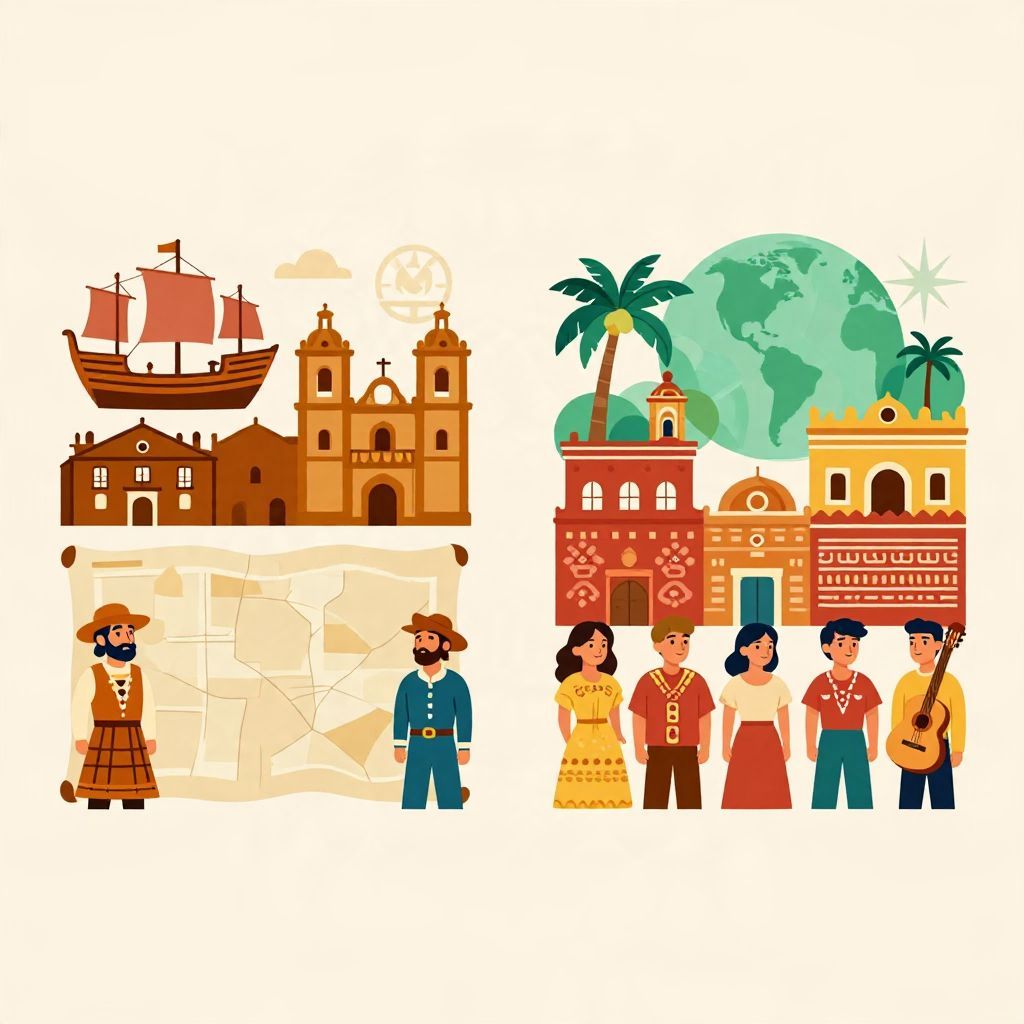
People often use Hispanic and Latino as if they mean the same thing, but historically they developed from different ideas. One centers on language and Spain’s imperial legacy; the other centers on geography and the nations of Latin America. The overlap is real, but the terms are not identical.
Understanding the difference matters because both words were shaped by migration, empire, census categories, and identity politics in the modern Americas. Their meanings have shifted over time, and in everyday use they can vary by country, community, and personal preference.
What Is The Difference Between Hispanic And Latino?
In the simplest historical sense, Hispanic usually refers to people connected to Spanish language or Spanish-speaking cultures, while Latino usually refers to people from Latin America. That means someone can be Latino but not Hispanic, Hispanic but not Latino, both, or neither, depending on ancestry, language, and self-identification.
The basic distinction
- Hispanic = linked to the Spanish language or to Spanish-speaking heritage.
- Latino = linked to Latin America as a place of origin or ancestry.
- Overlap = many people from Spanish-speaking Latin American countries fit both terms.
- Not identical = Brazil is Latino but not Hispanic; Spain is Hispanic but not Latino.
Quick examples
- A person from Mexico is usually both Hispanic and Latino.
- A person from Puerto Rico is often considered both, though identity can vary.
- A person from Brazil is Latino, but not Hispanic, because Brazil’s main language is Portuguese.
- A person from Spain is Hispanic, but not Latino, because Spain is in Europe, not Latin America.
Where Did These Terms Come From?
The words did not arise together, and they did not always mean what they do today. Their modern use grew in the 19th and 20th centuries, especially in the United States, as governments, scholars, and communities tried to classify people with ties to Spanish- and Portuguese-speaking worlds.
Hispanic: language, empire, and Spain
Hispanic comes from Hispania, the Roman name for the Iberian Peninsula. Over time, it became associated with Spain and the Spanish language. In modern usage, the term often points to a shared connection to Spanish-speaking culture, especially in the Americas and the United States.
Historically, this reflects Spain’s long imperial reach. From the late 15th century onward, Spanish conquest and colonization spread the Spanish language across large parts of the Americas. That colonial history is one reason “Hispanic” can feel both cultural and political: it refers not just to language, but to a history shaped by empire.
Latino: Latin America and geography
Latino is short for latinoamericano, meaning a person from Latin America. The term points to geography and regional identity rather than language alone. Latin America generally includes countries in the Americas where Romance languages derived from Latin—especially Spanish and Portuguese—are dominant.
That is why Brazil is usually included as Latino: Portuguese is a Romance language, and Brazil is part of Latin America. France’s Caribbean territories can create edge cases, but in common U.S. usage, “Latino” usually refers to people from Latin American countries in the Americas rather than every place with a Latin-derived language.
How History Shaped the Meaning of Hispanic
The meaning of Hispanic cannot be separated from Spanish colonization. Between the late 1400s and the 1800s, Spain built a vast transatlantic empire in the Americas, bringing Spanish language, Catholic institutions, legal systems, and new social hierarchies. The result was a broad Spanish-speaking world that stretched from Mexico and the Caribbean to South America.
But “Hispanic” as a modern identity label is much newer than the empire itself. For centuries, people in the Spanish Americas usually identified by colony, region, caste, class, religion, or local nation rather than by a single pan-ethnic label. The modern category became more useful later, especially in the United States, where census and civil rights politics encouraged broader group labels.
Why the term became common in the United States
In the 20th century, U.S. institutions needed a way to describe people with roots in Spanish-speaking countries. Federal agencies increasingly used “Hispanic” in the 1970s, especially after the U.S. government sought standardized ethnic categories for census and administrative purposes. The label was never perfect, but it became widely used in official settings.
At the same time, many people preferred more specific national identities—Mexican American, Cuban American, Puerto Rican, Dominican, and others—because those names reflected real historical differences in migration, class, race, and political experience. So even when “Hispanic” was used broadly, it did not erase more local identities.
How History Shaped the Meaning of Latino
Latino emerged from a different historical logic. Instead of focusing on Spain, it points to Latin America, a region whose name itself is tied to 19th-century ideas about language, race, and imperial rivalry. The phrase “Latin America” became more common in the 1800s, especially as intellectuals and politicians used it to distinguish the region from Anglo America.
The term “Latin” suggested a shared heritage among peoples speaking Spanish and Portuguese, both Romance languages descended from Latin. It also helped frame the region as culturally distinct from English-speaking North America. Over time, “Latino” became a convenient identity term for people from those countries, especially in the United States.
Why “Latino” can include Brazil
Because Brazil is in Latin America, Brazilians are generally considered Latino. This often surprises people who assume Latino means Spanish-speaking. Historically, however, the term was never limited to Spanish alone. It refers to the broader Latin American world, which includes Portuguese-speaking Brazil.
That distinction is one of the clearest ways to separate the two terms:
- Hispanic follows the Spanish language and Spain’s historical influence.
- Latino follows Latin American geography and regional identity.
Why the Terms Overlap So Often
The overlap exists because many Latin American countries were colonized by Spain and now speak Spanish. Mexico, Colombia, Peru, Chile, Argentina, and many others are both Spanish-speaking and Latin American. For people from those places, both terms may apply.
That overlap is also why the words are often used interchangeably in casual speech, even though they are not historically identical. In the United States, many institutions and media outlets have blurred the distinction, and some people simply use the term they feel best fits their identity or community.
Why some people reject both labels
Not everyone likes either term. Some prefer national identities such as Salvadoran, Cuban, or Peruvian. Others prefer Latinx or Latine, newer gender-inclusive alternatives that have emerged in recent decades, especially in activist and academic contexts. These newer terms are not universally accepted, which shows that identity language is still evolving.
There is also criticism that both “Hispanic” and “Latino” can flatten very different histories into one category. A Mexican American family, a Puerto Rican family, and a Brazilian immigrant family may share broad regional ties, but their histories of colonization, migration, race, and citizenship can be very different.
How Governments and Census Categories Influenced the Debate
The modern confusion around Hispanic and Latino is partly a product of bureaucracy. Governments like broad categories because they make counting easier, but people’s identities are more complex than any single label. In the United States, the federal government has treated “Hispanic/Latino” as an ethnic category rather than a race, which further complicates how people describe themselves.
This matters historically because official labels can shape public perception. Once a term appears in census forms, school records, or civil rights reporting, it can become normalized in everyday language. But official use does not mean universal agreement. Many people continue to debate whether “Hispanic” or “Latino” is more accurate, more respectful, or more inclusive.
Race, ethnicity, and identity
One reason the terms are confusing is that they do not describe race in a simple way. People who identify as Hispanic or Latino can be Indigenous, Black, white, Asian, mixed, or any combination of these. The categories describe cultural and historical affiliation, not a single racial background.
That reality reflects the history of the Americas themselves: conquest, slavery, Indigenous survival, African diaspora, migration, and intermarriage produced diverse populations long before modern labels existed. The words “Hispanic” and “Latino” are attempts to name that diversity, not to reduce it to one ancestry.
Side-by-Side Historical Comparison
Seen historically, the difference becomes clearer when placed side by side.
| Term | Historical focus | Core idea | Example |
|---|---|---|---|
| Hispanic | Spain and the Spanish language | Language and Spanish cultural heritage | Mexico, Puerto Rico, Spain |
| Latino | Latin America | Geography and regional identity | Mexico, Puerto Rico, Brazil |
This comparison shows why the terms are related but not interchangeable. One is rooted more in language and Iberian history; the other is rooted more in the modern idea of Latin America. Both are shaped by colonial history, but they emerged from different historical needs.
Common Misunderstandings
“Hispanic means race”
No. Hispanic is not a race. It is a cultural and linguistic label tied to Spanish-speaking heritage.
“Latino means Spanish-speaking”
Not exactly. Latino refers to Latin America, which includes Portuguese-speaking Brazil and excludes Spain.
“Everyone from Latin America is Hispanic”
Not true. Brazilians are Latino, but not Hispanic. Haitians are generally neither Hispanic nor Latino in the usual U.S. sense, though regional and personal usage can vary.
“The terms have always meant the same thing”
They have not. Their meanings developed over time, especially in the 20th-century United States, where official categories and community politics shaped how people used them.
Why the Difference Still Matters Today
The distinction matters because language shapes history. These terms are not just labels; they reflect centuries of conquest, migration, empire, and identity-making. Using them carefully shows respect for the different histories of Spanish-speaking and Latin American peoples.
At the same time, no single label can capture every person’s background. Some people embrace Hispanic, some Latino, some both, and some neither. The historically responsible approach is to understand the terms, use them accurately, and let people define themselves whenever possible.
Bottom line: Hispanic usually points to Spanish language and heritage, while Latino usually points to Latin American origin. They overlap often, but they are not the same. If you want to explore the historical background further, see why Latin America was called Latin America and Puerto Rican identity in historical context.