
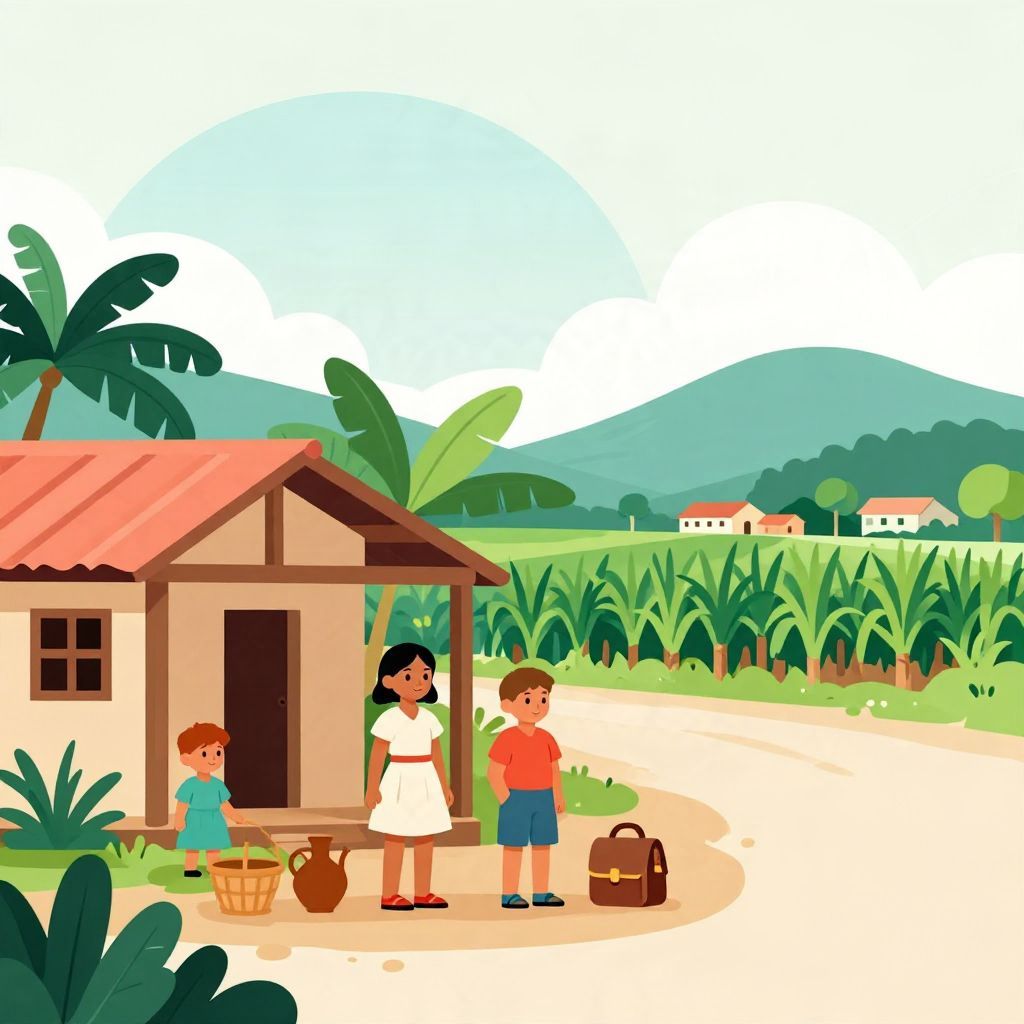
When I Was Puerto Rican is a memoir by Esmeralda Santiago, first published in 1993, that tells the story of her childhood in Puerto Rico and her family’s later migration to New York City. It is not a work of fiction, but a personal historical account shaped by memory, family experience, and the social realities of mid-20th-century Puerto Rican life.
The book is widely read in classrooms because it helps explain migration, identity, language, poverty, and cultural change through one girl’s experience. To understand it historically, it helps to know the Puerto Rico Santiago describes, the migration wave that brought many Puerto Ricans to the mainland, and the memoir’s place in U.S. and Caribbean history.
What is When I Was Puerto Rican?
When I Was Puerto Rican is a memoir by Esmeralda Santiago about growing up in Puerto Rico in the 1950s and moving to New York as a child. It combines personal memory with social history, showing how colonial rule, economic hardship, and migration shaped Puerto Rican family life and identity.
The historical setting of the memoir
The memoir is set in Puerto Rico during the mid-20th century, a period of major social change. Puerto Rico had been under U.S. control since 1898, after the Spanish-American War. By the time Santiago was a child, the island was still a U.S. territory, and many families lived with limited economic opportunity, especially in rural areas and working-class neighborhoods.
Puerto Rico in the mid-1900s
Puerto Rico’s economy was shifting from agriculture toward industrialization during the decades after World War II. That transformation did not benefit everyone equally. Many rural families experienced poverty, unstable housing, and limited access to education and healthcare. These conditions form the background of Santiago’s childhood memories.
The memoir also reflects the cultural complexity of Puerto Rico: Spanish language, Catholic traditions, extended family networks, and local customs all shaped daily life. At the same time, U.S. political control affected schools, labor patterns, and migration opportunities.
Why does When I Was Puerto Rican matter historically?
The memoir matters because it captures the human side of a larger historical process: Puerto Rican migration to the mainland United States. It shows how colonial status, poverty, and family decisions pushed many people to move in search of work and stability. It also reveals the emotional cost of migration, especially for children who had to adapt to a new language and culture.
Migration and the Puerto Rican diaspora
Large-scale Puerto Rican migration to New York accelerated after World War II. Better transportation, labor recruitment, and economic pressures on the island encouraged movement to the mainland. By the 1950s and 1960s, New York had become a major center of Puerto Rican life in the United States.
Santiago’s story fits this broader pattern. Her family’s move was not unusual; it was part of a wider historical shift that created what historians often call the Puerto Rican diaspora. The memoir helps readers understand that migration was not just a statistic. It was a family experience marked by uncertainty, adaptation, and loss.
Who was Esmeralda Santiago?
Esmeralda Santiago is a Puerto Rican writer, actress, and memoirist born in 1948 in San Juan. She spent her early childhood in Puerto Rico and later moved to New York with her family. Her memoir draws from those years and from her later reflections as an adult writer looking back on childhood.
Memory and autobiography
Because the book is a memoir, it should be read as a remembered life story rather than a strict archival record. Memory can be selective, emotional, and shaped by later understanding. That does not make the book less valuable historically; instead, it means the memoir offers insight into how one person experienced the era, rather than a complete social survey of all Puerto Ricans.
Historians often use memoirs like this alongside census data, migration records, oral histories, and scholarship to build a fuller picture of the past. Santiago’s narrative is especially useful for understanding childhood, gender roles, family structure, and the experience of cultural displacement.
What historical themes does the memoir explore?
When I Was Puerto Rican addresses several major historical themes: poverty, family instability, gender expectations, language, colonial power, and migration. These themes were not unique to Santiago’s family, but her memoir makes them vivid and personal.
1. Poverty and uneven development
The memoir shows how poverty shaped everyday life. Food insecurity, crowded housing, and financial instability affected many families in Puerto Rico during this period. Economic hardship often influenced family relationships, education, and children’s futures.
2. Gender and family roles
Santiago’s childhood also reflects the gender norms of the time. Girls and boys were often expected to behave differently, and women’s lives were shaped by marriage, motherhood, and household labor. The memoir shows how these expectations could restrict girls’ opportunities while also creating strong bonds among women in the family.
3. Language and identity
Language is one of the memoir’s most important historical concerns. Santiago moves from Spanish-speaking Puerto Rico into English-dominant New York schools. That transition reflects a broader challenge faced by many immigrants and migrants: learning a new language while preserving a sense of self and family belonging.
The title itself signals identity. “Puerto Rican” is not only a nationality or ethnic label in the book; it is also a lived identity shaped by place, memory, and movement between islands and cities.
4. Colonial history
Puerto Rico’s political status is essential to understanding the memoir. After 1898, the island became a U.S. possession, and later a Commonwealth in 1952. Although that arrangement gave Puerto Rico some local self-government, it did not make the island an independent nation. This colonial relationship influenced migration, economic policy, and the political identity of Puerto Ricans.
How does the memoir portray childhood?
The book presents childhood as both vulnerable and formative. Santiago remembers confusion, fear, curiosity, and resilience. Her perspective matters because children often experience historical change differently from adults. They may not understand the causes of poverty or migration, but they feel its effects directly in school, home life, and relationships.
Childhood as historical evidence
Historians value childhood memoirs because they reveal how larger social forces are lived at the household level. In Santiago’s case, the memoir shows how a child interpreted adult conflict, changing family arrangements, and the shock of relocation. It also highlights the emotional labor required to adapt to new environments.
At the same time, readers should remember that childhood memory is not complete or neutral. It is shaped by the adult narrator’s later understanding. That tension is part of what gives memoirs their power and their limits.
What was happening in Puerto Rico at the time?
To place the memoir in context, it helps to look at Puerto Rico’s mid-century history. The island was undergoing rapid political and economic change after decades of U.S. rule. Government programs promoted industrial development, while many agricultural jobs disappeared or became less secure. These changes contributed to migration from rural areas to cities and from the island to the mainland.
Key background developments
- 1898: The United States took control of Puerto Rico after the Spanish-American War.
- 1917: Puerto Ricans were granted U.S. citizenship under the Jones-Shafroth Act.
- 1940s–1950s: Industrialization and migration accelerated, especially to New York.
- 1952: Puerto Rico became a Commonwealth, a political status that remains debated.
These developments did not erase older cultural traditions. Instead, they created a society where modern political structures, colonial dependency, and local customs existed side by side.
Why is the memoir often taught in schools?
The book is frequently assigned because it is accessible, personal, and historically rich. Students can connect with Santiago’s voice while learning about migration, identity, and the Puerto Rican experience in the United States. It also encourages discussion about how history is remembered from the inside rather than only through official records.
Educational value
Teachers often use the memoir to discuss:
- the Puerto Rican migration to New York
- the effects of colonialism on everyday life
- the challenges of bilingual or multilingual identity
- family structure and gender expectations
- the difference between memory and historical documentation
Because it is a memoir, the book invites students to think carefully about perspective. It is one voice, not the whole story of Puerto Rican history, but it is a powerful entry point into that history.
What should readers keep in mind when reading it as history?
Readers should treat When I Was Puerto Rican as a historically informed personal narrative. It is reliable for understanding Santiago’s experience and broadly consistent with known historical patterns, but it is not meant to replace scholarly history. Some details reflect family memory, emotional truth, and literary shaping rather than documentary precision.
Memoir versus history book
A memoir asks readers to understand the past through one person’s life. A history book usually compares many sources to build a broader interpretation. Both are valuable, but they do different jobs. Santiago’s memoir is especially strong at showing how historical forces feel from within a family.
That is why the book remains important: it turns large-scale history into lived experience. It reminds readers that migration and colonialism are not abstract processes; they shape childhoods, relationships, and the language people use to describe themselves.
Conclusion
When I Was Puerto Rican is both a personal memoir and a historical window into Puerto Rican life in the mid-20th century. It explains how colonial rule, economic change, and migration shaped one girl’s childhood and the wider Puerto Rican experience. For readers interested in identity and diaspora, it pairs well with related histories such as America Is in the Heart and broader studies of political and cultural change in the Americas.