
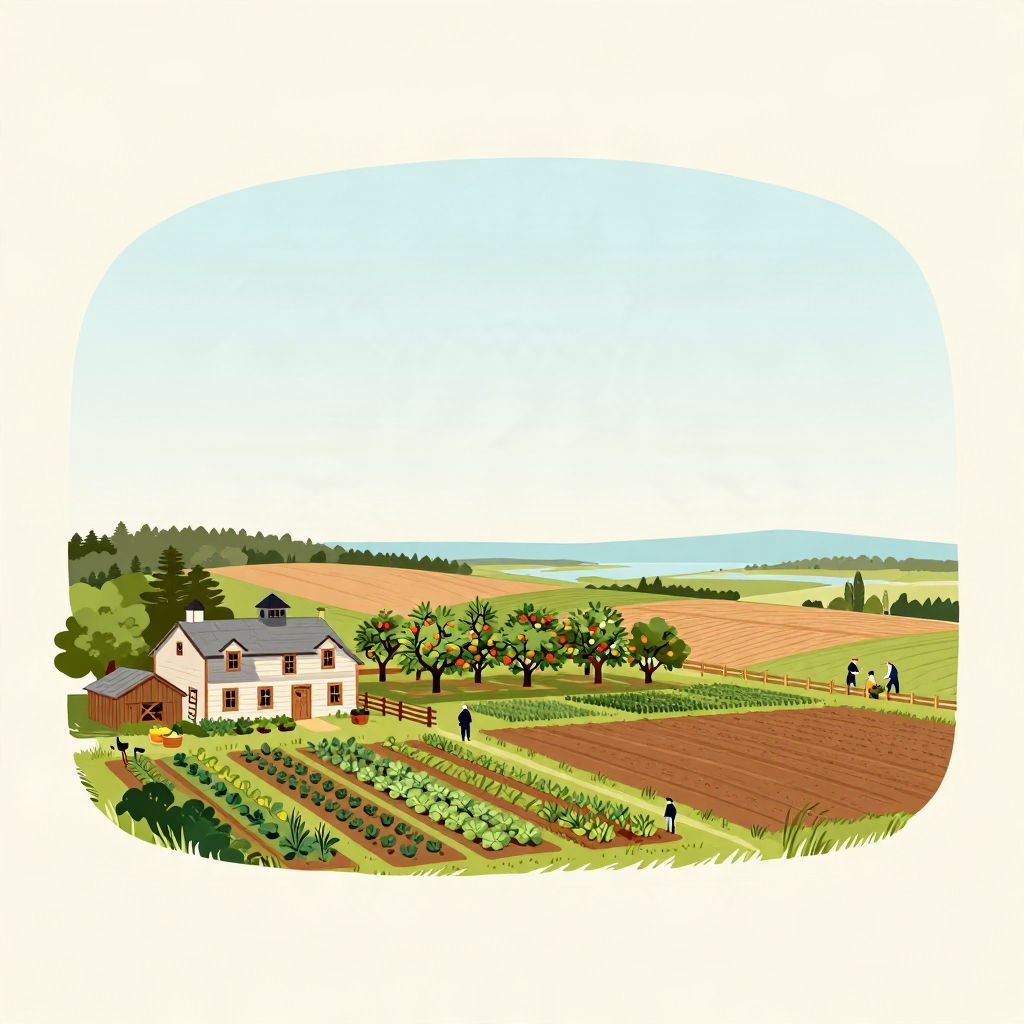
Why is New Jersey called the Garden State? The short answer is that the nickname reflects the state’s long agricultural importance, especially its fertile farms, orchards, and market gardens in the 18th and 19th centuries. It does not mean New Jersey was once covered by gardens in the modern decorative sense; rather, it was known for producing food for nearby cities and markets.
The phrase became popular in the 19th century and later stuck as a proud shorthand for the state’s identity, even as New Jersey became one of the most urbanized and industrialized places in the United States.
Why Is New Jersey Called the Garden State?
New Jersey is called the Garden State because its soils, climate, and location made it a major agricultural producer for much of its history. In the 1800s, the state supplied vegetables, fruit, dairy, and flowers to Philadelphia and New York. The nickname emphasized farming abundance, not ornamental landscaping.
The Agricultural Roots of the Nickname
Long before New Jersey became associated with highways, suburbs, and industry, it was a place of farms, orchards, and small market gardens. Its position between two large urban centers gave farmers a ready customer base. Produce could be grown and transported relatively quickly, making the state a vital food supplier.
The term “garden” in this context referred to productive land. In early American usage, a “garden” could mean a cultivated plot or a region known for rich harvests. New Jersey’s reputation grew from this practical meaning. It was a state where agriculture was not just present, but economically central.
Why the Land Supported Farming
New Jersey’s geography helped shape its agricultural identity. The state contains diverse soils, from the coastal plain in the south to more varied terrain in the north and west. Much of the coastal plain was well suited to truck farming, orchards, and nursery crops. The climate also allowed a long growing season compared with more northern states.
By the 19th century, farmers in New Jersey were growing a wide range of crops for nearby cities. This included peaches, cranberries, tomatoes, asparagus, blueberries, and other fruits and vegetables. The state also became known for dairy farming and flower cultivation. Its agricultural variety strengthened the “garden” image.
How the Nickname Became Popular
The exact first use of “Garden State” is not perfectly documented, and historians generally treat it as a nickname that developed gradually rather than being invented on one specific date. It was in use by the mid-19th century, and it became more widely associated with New Jersey through speeches, newspapers, and public references over time.
One commonly cited moment is a speech by Abraham Browning in 1876, in which he described New Jersey as “a barrel tapped at both ends” and praised it as a garden. This quotation is often repeated in explanations of the nickname, though it should be treated carefully: it is part of the nickname’s popular history, but the phrase itself had already been circulating before then. In other words, Browning helped popularize an existing image rather than inventing it from nothing.
From Local Reputation to State Identity
By the late 1800s, New Jersey’s agricultural reputation had become part of its public identity. The nickname was useful because it countered stereotypes that the state was merely a corridor between larger neighbors. “Garden State” suggested fertility, productivity, and a distinctive contribution to the region.
That identity mattered even as the state changed. Railroads, factories, shipyards, and dense towns transformed New Jersey in the 19th and early 20th centuries. Yet the nickname endured because it captured an older and still meaningful part of the state’s economy and landscape.
What “Garden” Meant in Historical Context
To understand the nickname, it helps to think historically about the word “garden.” Today, people often imagine flowers, lawns, and decorative spaces. In earlier centuries, however, “garden” could mean cultivated land that produced food. A “garden state” was therefore a state of productive cultivation, not simply a scenic one.
This broader meaning fits New Jersey well. The state’s farms supplied fresh produce to urban markets at a time when transportation was improving but refrigeration was limited. Being close to consumers gave New Jersey farmers an advantage, especially for perishable crops. The nickname reflected that practical relationship between countryside and city.
Market Gardening and Truck Farming
New Jersey became famous for market gardening, a form of intensive agriculture focused on selling fresh produce directly to nearby markets. This was especially important in the 19th century, when cities demanded large quantities of vegetables, fruit, and dairy products. Truck farming, the production of crops for sale rather than subsistence, also expanded.
The state’s farms were not all small family plots, and not all were equally prosperous. But as a whole, New Jersey became known for agricultural specialization. That specialization helped create the “Garden State” image that still survives today.
New Jersey’s Agriculture and Its Changing Economy
The nickname is rooted in a real historical era, but New Jersey’s economy did not remain agricultural. Over time, industrialization, suburban growth, and transportation networks reshaped the state. Factories, ports, rail lines, and later highways changed land use and population patterns dramatically.
Even so, agriculture did not disappear. New Jersey remains notable for certain crops, especially blueberries, cranberries, tomatoes, peaches, and nursery products. The state’s farms became fewer as development expanded, but the agricultural legacy remained strong enough to support the nickname.
Why the Nickname Survived Industrialization
Nicknames often outlast the conditions that created them. New Jersey’s “Garden State” label survived because it offered a positive and memorable identity. It connected the modern state to its older landscape and reminded people that New Jersey was more than factories or commuter towns.
In the 20th century, the state government and public institutions embraced the nickname more formally. That helped turn a historical description into an official symbol. Today, the phrase appears on license plates and in tourism branding, reinforcing the state’s long-standing association with agriculture and cultivation.
Common Misunderstandings About the Name
One misconception is that New Jersey was named “Garden State” because it has more parks or ornamental gardens than other states. That is not the historical basis of the nickname. Another misconception is that the phrase came from a single official act or a single famous quotation. In reality, it developed gradually from widespread use.
It is also worth noting that state nicknames often simplify history. New Jersey was never only a farming state, and it was never uniformly rural. From colonial times onward, it contained towns, trade routes, and varied communities. The nickname highlights one important part of its past, not the whole story.
Why the Nickname Still Matters
The endurance of “Garden State” says something important about historical memory. A nickname can preserve an older identity even when the landscape changes. For New Jersey, the phrase recalls a time when agriculture shaped daily life, regional trade, and the state’s public image.
It also reflects pride. Rather than seeing itself as a pass-through between New York and Philadelphia, New Jersey claimed a distinct role: a productive, fertile, and valuable state in its own right. That sense of identity helped the nickname stick.
Conclusion: The Historical Meaning of “Garden State”
New Jersey is called the Garden State because its fertile land, productive farms, and market-garden economy made agriculture central to its identity in the 18th and 19th centuries. The nickname grew out of real economic history, not mere symbolism, and it survived as the state modernized. If you enjoy state nickname history, you may also like reading about why Kentucky is called the Bluegrass State and why Tennessee is the Volunteer State.