
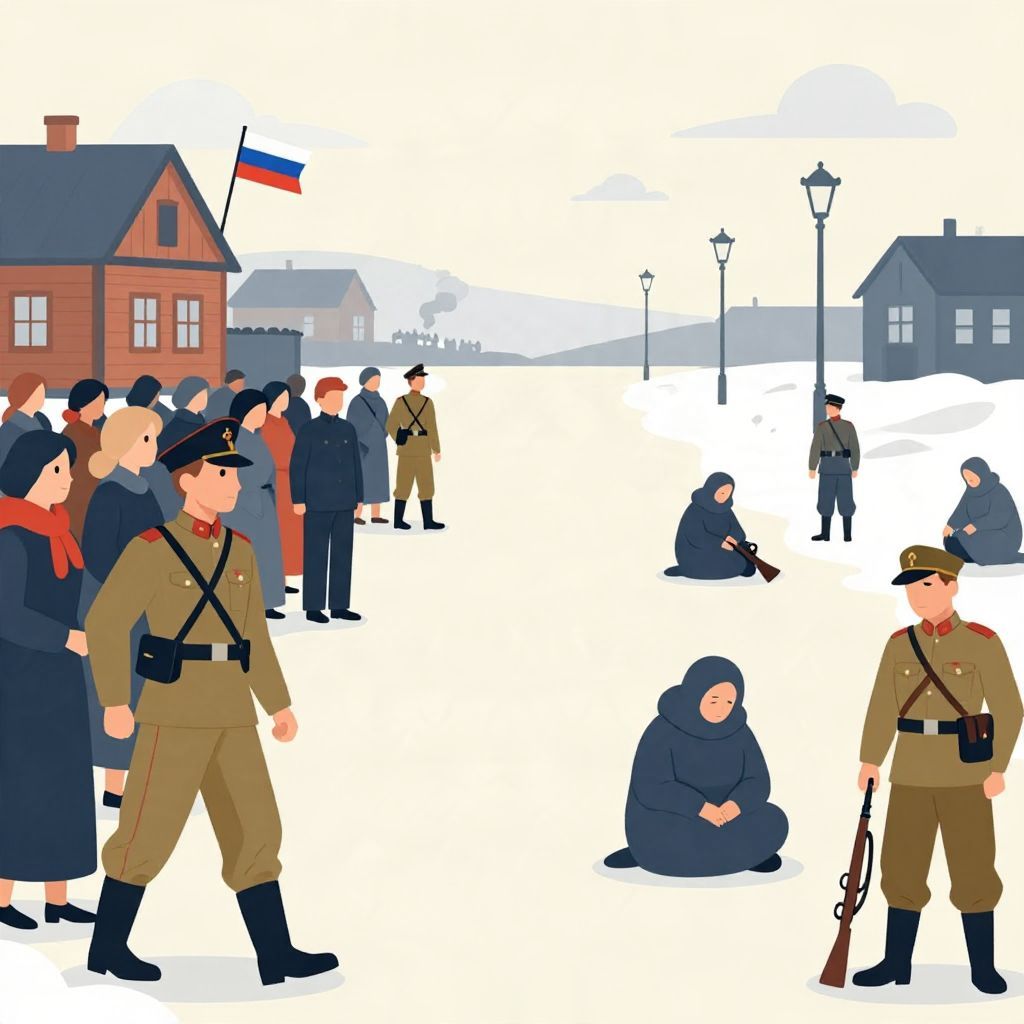
As World War I dragged on, Russian opinion shifted dramatically. In 1914, many Russians greeted the war with patriotic enthusiasm, but by 1916 and early 1917, exhaustion, hunger, military defeats, and distrust of the tsarist government had turned widespread support into anger and despair. For many ordinary people, Russia’s participation came to seem less like a noble national duty and more like a disastrous burden.
This change in attitude helped undermine the Romanov regime and set the stage for revolution. The Russian case shows how war weariness can transform public loyalty, especially when the state cannot supply food, stability, or victory.
As Time Went On, How Did The Russian People View Their Country’s Participation In World War I?
Russian views changed from initial patriotism to deep disillusionment. Early enthusiasm in 1914 gave way to grief over casualties, anger at shortages, and resentment toward the tsarist leadership. By 1917, many soldiers, workers, and peasants believed the war was pointless or ruinous, and they increasingly wanted peace at almost any cost.
Why Many Russians Supported the War at First
When war broke out in August 1914, the mood in many cities was patriotic and emotionally charged. Russia entered the conflict against Germany and Austria-Hungary partly to defend Serbia and partly to protect its status as a great power. In the first weeks, crowds in some places cheered, and the government used nationalist language to encourage unity.
Patriotism and the “defense of the nation”
Like other European powers, Russia initially framed the war as a test of national strength. The monarchy, the Orthodox Church, and many newspapers presented participation as a duty to the motherland. Some educated Russians and urban elites believed the war might strengthen the state and restore Russia’s prestige after earlier setbacks, especially the humiliation of the Russo-Japanese War of 1904–1905.
Why early enthusiasm was limited
Even at the start, support was uneven. Many peasants had little sense of international politics and cared more about harvests, taxes, and conscription than about Balkan diplomacy. Still, once mobilization began, millions of men were drawn into the army, and the first wave of patriotic feeling was real enough to sustain the opening months of the war.
How Military Defeats Changed Public Opinion
As the war continued, Russian enthusiasm collapsed under the weight of battlefield losses. The Russian army suffered major defeats in 1914 and 1915, and these reverses shattered confidence in the government’s ability to lead the country. Instead of a short, victorious war, Russians faced a long and costly struggle.
Heavy casualties and the collapse of confidence
By 1915, millions of soldiers had been killed, wounded, captured, or displaced. Defeat at the front was not just a military problem; it reached into every village and city through letters, rumors, and returning soldiers. Families saw sons, husbands, and brothers sent away with little hope of return. The war began to feel less like sacrifice for glory and more like a senseless drain on Russian life.
The “Great Retreat” and its psychological impact
In 1915, Russian forces were forced into a massive retreat from parts of Poland and other western territories. This retreat damaged morale badly. People saw that the empire was losing land as well as lives, and many blamed poor leadership, corruption, and incompetence. The image of a powerful empire defending itself gave way to the reality of a state struggling to hold together its front and rear areas.
Home Front Hardship and Growing Resentment
As the war went on, daily life became harder for civilians. Food shortages, inflation, transportation failures, and industrial disruption made the war increasingly unpopular in towns and cities. The Russian people did not turn against the war for one single reason; rather, they came to see it as the source of their suffering.
Food shortages and inflation
War strained the railway system and disrupted the movement of grain and fuel. Cities such as Petrograd and Moscow experienced worsening shortages. Prices rose faster than wages, so even when food existed, many people could not afford enough of it. Long bread lines became symbols of a state that could not feed its own population.
Women, workers, and urban unrest
Women often felt the pressure most sharply, since they were responsible for securing food for families. Workers faced long hours, poor conditions, and declining real wages. Strikes and protests increased as people connected their hardship to the war effort and to the government’s inability to manage the economy. For many urban Russians, the war no longer seemed patriotic; it seemed destructive and unfair.
Peasant frustration
Peasants formed the majority of the population, and many were conscripted into the army. Villages lost laborers needed for planting and harvesting, while requisitions and inflation made survival more difficult. Peasants often did not follow high politics closely, but they could see that the war removed men from the fields and brought little benefit in return. Their loyalty to the state weakened as the war dragged on.
The Soldiers’ View: From Duty to Disillusionment
Russian soldiers were central to the changing public mood. At first, many obeyed orders out of duty, patriotism, or fear of punishment. Over time, however, trench warfare, poor supplies, and incompetent command made many soldiers cynical about the war and the officers leading it.
Bad equipment and poor leadership
Russian troops often lacked rifles, boots, ammunition, and adequate food. Some units were sent into battle with too little training or support. Soldiers could see that the army’s problems were not caused only by the enemy; they were also caused by the state’s weaknesses. This made trust in the government decline sharply.
Why soldiers became politically important
By 1917, millions of armed men had experienced the war firsthand and had lost faith in the tsarist system. Their anger mattered because soldiers were not only fighting abroad; they were also part of the social and political crisis at home. Once soldiers began to refuse orders, desert, or support revolutionary change, the war effort became much harder to sustain.
What Russians Thought by 1917
By early 1917, many Russians had moved from reluctant support to active hostility toward continued participation in the war. This did not mean everyone thought the same way. Some still believed in fighting Germany or feared chaos more than defeat. But the dominant mood in much of society was now one of exhaustion, anger, and a desire for peace.
Peace became more attractive than victory
As suffering deepened, the idea of continuing the war for honor or alliance commitments lost appeal. For many Russians, survival mattered more than imperial prestige. The war had become associated with hunger, death, and state failure. In this sense, public opinion shifted from “we must endure” to “this must end.”
Blame focused on the tsarist government
People increasingly blamed Nicholas II and his ministers for the disaster. The tsar’s decision to take personal command of the army in 1915 made him more directly responsible in the public eye for military failures. Meanwhile, the influence of the tsarina and the scandal surrounding Grigori Rasputin further damaged confidence in the monarchy. The war and the regime’s legitimacy became inseparable in many Russians’ minds.
How the War Helped Cause Revolution
The collapse of support for the war was one of the major forces behind the Russian Revolution. War weariness did not alone create revolution, but it intensified every other problem: food shortages, labor unrest, political anger, and military breakdown. When the February Revolution began in 1917, the war was already deeply unpopular.
February 1917 and the fall of the tsar
Strikes and demonstrations in Petrograd grew rapidly in late February and early March 1917. Bread shortages and frustration with the war helped spark the unrest. As soldiers in the capital refused to suppress the crowds and instead joined them, the tsarist government collapsed. Nicholas II abdicated soon afterward.
The Provisional Government and the war question
The Provisional Government that replaced the tsar chose to keep Russia in the war, hoping to honor alliances and preserve national standing. But this decision was deeply unpopular. Many Russians wanted peace, not another offensive. The gap between government policy and public feeling widened, making the new regime vulnerable.
The Bolsheviks and the Promise of Peace
The Bolsheviks gained support in part because they spoke directly to war exhaustion. Their promise of “peace” appealed to soldiers, workers, and peasants who wanted an immediate end to the bloodshed. Whatever one thinks of their broader program, their antiwar message matched the mood of many Russians in 1917.
Why peace slogans mattered
In a country where the war had become synonymous with suffering, a party that promised to end it had a powerful advantage. The Bolsheviks did not create war weariness, but they were able to use it. Their rise shows how public opinion on the war had shifted far from the patriotic hopes of 1914.
Lasting Effects of Russia’s War Experience
The Russian people’s changing view of World War I had consequences that lasted far beyond 1918. The war helped destroy the Romanov dynasty, contributed to the Bolshevik Revolution, and shaped the Soviet Union’s political culture. It also left a deep memory of sacrifice, chaos, and state failure.
Political consequences
The collapse of support for the war weakened the old regime beyond repair. Once the monarchy lost legitimacy, Russia entered a period of revolution, civil war, and radical transformation. The war was one of the main reasons the empire could not survive in its old form.
Social and cultural consequences
Families across Russia carried the memory of loss. Veterans returned to a country in upheaval, while widows, orphans, and displaced people faced hardship. The experience of World War I also helped shape later Soviet narratives, which often portrayed the tsarist government as incompetent and indifferent to ordinary people’s suffering.
Conclusion
As time went on, the Russian people came to view their country’s participation in World War I with increasing bitterness. What began in 1914 as patriotic support and loyalty to the empire became, by 1917, a widespread conviction that the war was ruining Russia. That shift in public opinion helped bring down the tsar and changed Russian history forever. For more on the revolutionary crisis, see what happened in 1917 and why Russia left World War I.