
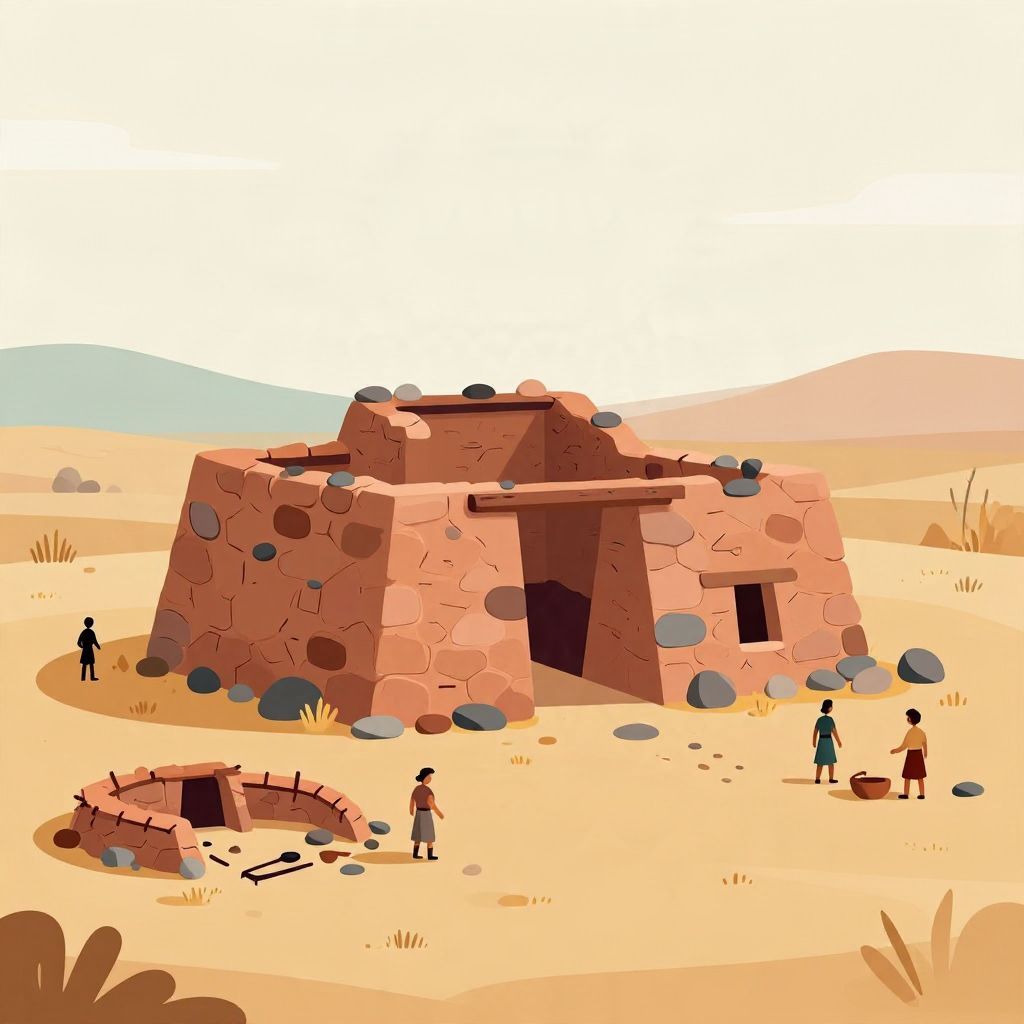
What is the oldest building in the world? The answer depends on how “building” is defined, because the oldest surviving human-made structures are not always enclosed houses or temples. Archaeologists usually point to the earliest large, permanent stone structures in the prehistoric Near East, especially in Turkey and the Levant, where settled communities began building long before written history.
If the question means the oldest surviving building-like structure, candidates such as Göbekli Tepe and other Neolithic sites are among the earliest known. If it means the oldest still-standing habitable building, the answer changes again. The evidence is fragmentary, and the oldest surviving structure is not a single universally agreed-upon monument.
What Is The Oldest Building In The World?
The oldest surviving building in the world is not easy to name with certainty. For monumental architecture, Göbekli Tepe in southeastern Turkey, begun around 9600 BCE, is among the earliest known. For intact domestic buildings, the title is often debated among Neolithic houses in the Near East, where preservation is uneven and dates are approximate.
Why There Is No Single Definitive Answer
The phrase “oldest building” sounds simple, but historians and archaeologists use different standards. Some count only enclosed structures with walls and roofs. Others include temples, shrines, tombs, or even partially preserved foundations. A building may also be older in origin than in its surviving form, because later repairs can obscure the original date.
Different definitions produce different answers
- Oldest surviving structure: may include walls, foundations, or ceremonial enclosures.
- Oldest building: usually implies a roofed, constructed space made for human use.
- Oldest inhabited building: requires continuous or recent occupation, which is much harder to prove.
- Oldest monumental building: often refers to ceremonial architecture rather than homes.
Because of these differences, any claim to the “oldest building in the world” should be read as a best-supported historical judgment, not an absolute fact. The earliest surviving architecture comes from prehistory, when people left no written records to explain exactly how or why they built.
The Strongest Candidate: Göbekli Tepe
Göbekli Tepe is often called the world’s oldest known monumental temple complex. Built by hunter-gatherer communities before the full development of agriculture, it features massive T-shaped limestone pillars arranged in circular enclosures. Radiocarbon dating places its earliest phases around 9600 BCE, making it extraordinarily ancient.
Why Göbekli Tepe matters
Göbekli Tepe changed how historians think about early society. For a long time, scholars assumed that organized religion and large-scale construction came after farming and settled village life. Göbekli Tepe suggests that communal ritual building may have helped encourage social cooperation even before fully agricultural economies took hold.
It is important, however, to be precise: Göbekli Tepe is not a house, palace, or city building in the later historical sense. It is a ceremonial site. So while it is one of the oldest known built structures, it is not necessarily the oldest domestic building ever found.
Other Very Early Contenders
Several prehistoric sites compete in discussions of the oldest buildings in the world. These sites are generally later than the earliest phases of Göbekli Tepe, but they may better fit the everyday meaning of “building” because they include homes, storage spaces, and village structures.
Neolithic houses in the Levant and Anatolia
Early settled communities in places such as the Levant and central Anatolia built mud-brick or stone houses thousands of years ago. Sites associated with the Pre-Pottery Neolithic period, including parts of Jericho and Çatalhöyük, preserve evidence of early domestic architecture. These settlements demonstrate the shift from mobile foraging to permanent or semi-permanent habitation.
Jericho is especially famous because its ancient levels include early defensive walls and towers. Yet the surviving remains are not a single intact building from one exact moment in time. Instead, they represent multiple phases of construction, rebuilding, and decay over millennia.
Stone houses and reconstructed remains
In archaeology, a structure may survive only as foundations, postholes, or low walls. Reconstructing a “building” from those traces requires interpretation. That is why some sites are celebrated as the oldest known houses, while others are described more cautiously as the oldest known built enclosures or architectural remains.
What Counts as the Oldest Habitable Building?
If the question is narrowed to the oldest surviving habitable building, the answer becomes even more uncertain. Many ancient structures have been restored so heavily that their current appearance is not original. Others were abandoned, buried, or rebuilt repeatedly. A building can be ancient in origin but modern in fabric.
Why habitability is hard to prove
- Continuous occupation is difficult to document over thousands of years.
- Later repairs may replace most of the original material.
- Some buildings were reused for different purposes across centuries.
- Written records rarely survive for the prehistoric period.
As a result, historians usually avoid claiming that one specific house is the oldest still lived in by people today unless the evidence is exceptionally strong. In most cases, the safer answer is that the oldest surviving building depends on whether one means monumental, domestic, or continuously inhabited architecture.
How Early Buildings Were Made
The earliest buildings were shaped by available materials and local needs. In the prehistoric Near East, builders used stone, mud brick, timber, and plaster. Construction methods were simple but effective: stacking stones, shaping mud bricks in the sun, and using wooden supports for roofs or ceilings.
Materials and techniques
Early builders did not have metal tools, mortar in the modern sense, or architectural blueprints. Instead, they relied on repeated practical knowledge. Communities learned how to stabilize walls, manage drainage, and create spaces for storage, cooking, ritual, and shelter. Buildings were often repaired or rebuilt in the same place, creating deep archaeological layers.
This repeated rebuilding is one reason the oldest buildings are so hard to identify. What survives today is usually only the durable core of a much larger and more complex structure that once included roofs, doors, plaster, and organic materials long since vanished.
From Prehistory to Civilization
The oldest buildings belong to a world before cities, kings, and writing. Their importance lies in what they reveal about human social development. Permanent architecture shows that people were learning to settle, cooperate, store food, and organize labor on a larger scale than before.
What these buildings tell us about early societies
- Settlement: people were living in fixed places for long periods.
- Cooperation: large structures required shared labor and planning.
- Symbolism: some buildings had ritual or communal meaning beyond shelter.
- Complexity: architecture reflects growing social organization.
In this sense, the oldest buildings are not just old objects. They are evidence of one of the most important transitions in human history: the move from small mobile groups to more settled communities capable of shaping the landscape with lasting construction.
Common Misconceptions About the Oldest Building
Popular lists sometimes present a single “oldest building in the world” as if the answer were settled. In reality, the title depends on evidence and definition. Some claims also confuse the oldest surviving building with the oldest famous building, which may be much younger but better preserved or more visually impressive.
What the oldest building is not
- It is not necessarily the oldest famous monument.
- It is not always the oldest intact structure.
- It is not always the oldest inhabited structure.
- It is not always a “building” in the modern architectural sense.
That is why careful historians prefer qualified language. The oldest surviving built structures are prehistoric and often fragmentary, so certainty is limited. The best answer is a range of candidates rather than a single universally accepted winner.
So, What Should You Remember?
The most responsible answer to What Is The Oldest Building In The World is that there is no single undisputed choice. Göbekli Tepe is among the oldest known monumental built sites, dating to around 9600 BCE, while early Neolithic houses and enclosures in the Near East represent some of the oldest domestic architecture. The oldest building depends on how the question is defined.
What matters most is not just the title, but the story behind it: the first great experiments in permanent construction, community life, and symbolic space. If you want to keep exploring ancient history, you may also enjoy reading about when the Pyramids of Giza were built and the oldest building in the United States.