
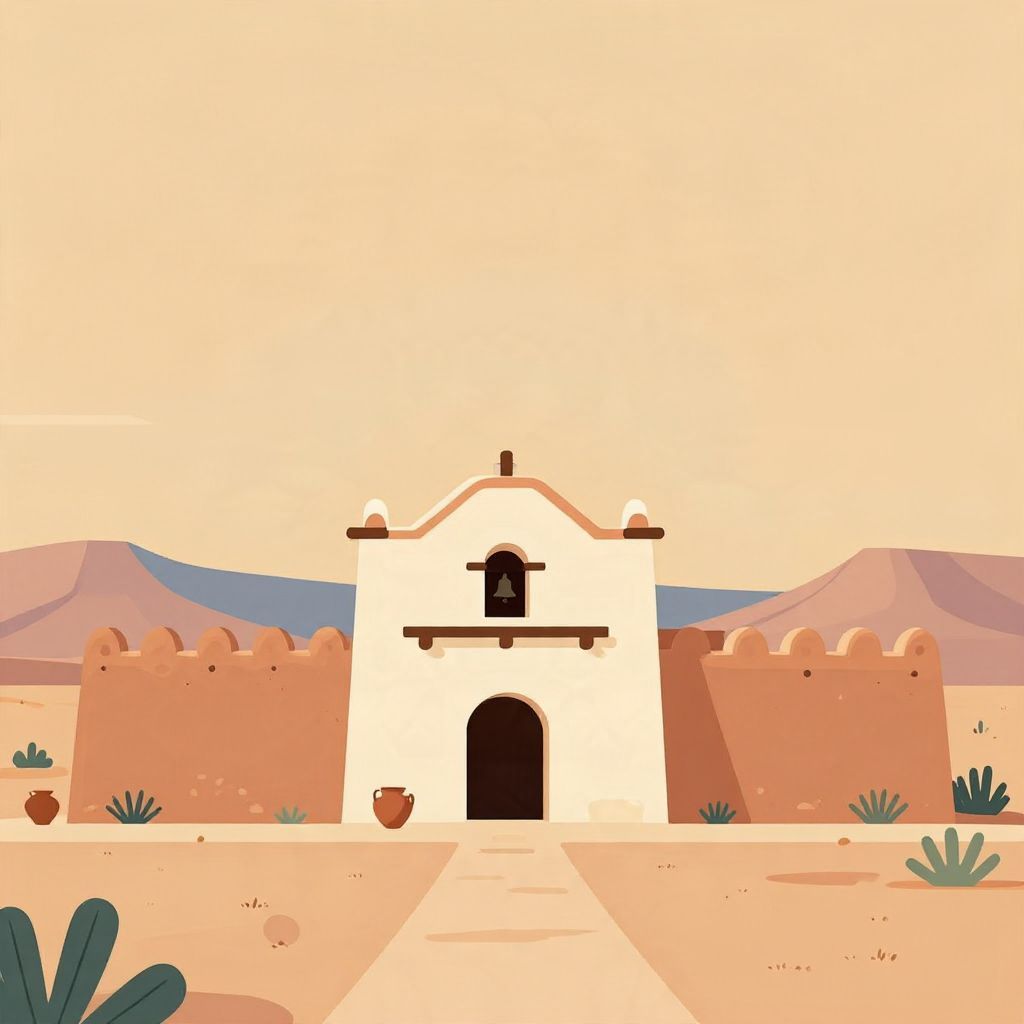
When people ask, “What is the oldest building in the United States?” the answer depends on how you define “oldest.” If you mean the oldest surviving structure built by Europeans that is still standing, the strongest candidate is the San Miguel Mission in Santa Fe, New Mexico, usually dated to the early 1600s, with parts rebuilt over time. If you include Indigenous architecture, the answer changes dramatically.
That distinction matters because the United States contains buildings from very different historical traditions, and many of the oldest have been altered, repaired, or rebuilt. A careful answer has to separate original construction from later reconstruction and also recognize that Native American dwellings predate European colonization by centuries or even millennia.
What Is the Oldest Building In the United States?
The most commonly cited oldest standing building in the United States is San Miguel Mission in Santa Fe, New Mexico, with origins generally placed around 1610 to 1626. However, the exact date is debated because the church was damaged, rebuilt, and restored over time. If “oldest” means the earliest surviving Indigenous structure, then sites such as cliff dwellings in the Southwest are far older.
Why the Answer Depends on Definition
“Oldest building” is not a single fixed category. Historians usually ask first: oldest by original construction, oldest still standing, oldest continuously used, or oldest in the modern United States within current borders? Those questions can produce different answers, especially in a country whose territory expanded long after many of its oldest structures were built.
European-built versus Indigenous-built structures
Many popular discussions focus only on buildings made after European settlement. That narrows the field to colonial-era churches, homes, forts, and missions. But the lands that became the United States were already home to complex Indigenous societies that built pueblos, dwellings, and ceremonial spaces long before Europeans arrived. In that broader sense, the oldest “building” in the United States is not a colonial church at all.
Original structure versus later reconstruction
Another complication is survival. A building may have ancient foundations but a much later roof, walls, or façade. Fires, wars, weather, and renovations often changed early structures so extensively that historians must decide whether to date the original site, the earliest surviving fabric, or the current visible form.
The Strongest Candidate: San Miguel Mission in Santa Fe
San Miguel Mission is widely regarded as the oldest surviving church structure in the contiguous United States. Spanish colonists established a mission in Santa Fe in the early 17th century, and the church’s core is usually dated to around 1610–1626. Although repeatedly repaired, it remains one of the clearest links to the earliest European settlement period in what is now the United States.
How the mission began
Santa Fe was founded by Spanish colonists in 1610 as the capital of New Mexico, then part of Spain’s northern frontier in North America. Mission churches were central to Spanish colonial life because they supported religious conversion, community organization, and imperial control. San Miguel emerged from that colonial world as one of the earliest church buildings in the region.
What survives today
The mission is not a perfectly untouched 17th-century building. Like many adobe structures in the Southwest, it has been repaired many times after damage and decay. Still, the building’s historical importance lies in its long continuity: it preserves a physical connection to the earliest Spanish colonial settlement in the region, even if parts of the current structure are later than the original walls.
Other Early Contenders in the United States
Several other buildings are often mentioned in “oldest building” discussions. Some are older than San Miguel in one sense but younger in another, while others are older only if one counts reconstructed elements or surviving foundations. The best-known contenders are clustered in the Southwest and in the earliest English colonies of the East Coast.
Acoma Pueblo and other Indigenous sites
Acoma Pueblo in New Mexico is often described as one of the oldest continuously inhabited communities in North America. Its buildings and settlement history stretch back many centuries, with roots far older than European colonization. Because pueblo architecture was continually repaired and rebuilt, historians usually treat it as a living settlement rather than a single fixed building with one construction date.
Other Indigenous sites, including cliff dwellings and pueblos in the Southwest, can be much older than colonial structures. However, they are often archaeological sites rather than single surviving “buildings” in the modern sense. Their age is undeniable, but the question of “oldest building” becomes less straightforward when the structure is partly ruins or a settlement complex.
Fairbanks House in Massachusetts
In New England, the Fairbanks House in Dedham, Massachusetts, is often cited as the oldest surviving timber-frame house in the United States. It is usually dated to about 1637. This makes it one of the oldest intact English colonial homes, but it is still younger than San Miguel Mission and much younger than Indigenous structures in the Southwest.
Jamestown and early colonial remains
Early English settlements such as Jamestown, Virginia, produced some of the earliest European-built structures in the Atlantic colonies. Yet many of those buildings did not survive in complete form. Archaeology has revealed important remains, but surviving above-ground buildings from the earliest years are rare. That is why later but better-preserved houses and churches often dominate the “oldest building” conversation.
How Historians Judge Age and Authenticity
Dating an old building is not as simple as reading a plaque. Historians and architectural scholars compare written records, construction techniques, dendrochronology, archaeological evidence, and restoration history. A building may be old in origin but younger in visible form, especially if it has undergone repeated rebuilding.
Written records
Colonial records sometimes mention the construction of missions, forts, or homes, but those records may be incomplete or ambiguous. A church might be first referenced in one year, rebuilt after a fire decades later, and then restored again in the 20th century. As a result, the “date” attached to the building can refer to the first structure on the site rather than the exact materials standing today.
Material evidence
Architectural historians study adobe layers, timber framing, nails, mortar, and tool marks to separate original sections from later additions. This is especially important in the Southwest, where adobe buildings require regular maintenance. In some cases, the oldest part of a building may be a wall or foundation rather than the whole visible structure.
Why the Southwest Often Comes Up First
The oldest standing buildings in the United States are often found in the Southwest because Spanish colonization began there earlier than in many other regions and because adobe architecture can survive for centuries when maintained. The region’s colonial past also overlaps with long Indigenous building traditions, creating a layered historical landscape.
Spanish colonial settlement
Spain established settlements, missions, and presidios in the area long before the United States existed. Santa Fe, founded in 1610, is older than most English colonial towns farther east. That is why sites in New Mexico and nearby regions frequently appear in discussions of the nation’s oldest surviving buildings.
Adobe and durability
Adobe is vulnerable to erosion but can last a very long time if regularly repaired. This means old adobe buildings may survive in modified form while many early timber structures in wetter climates disappear entirely. The material itself helps explain why some of the oldest standing structures in the country are in the arid Southwest.
So What Is the Best Answer?
If the question is asked in the most common historical sense—oldest surviving European-built building in the United States—the best answer is San Miguel Mission in Santa Fe, New Mexico, usually dated to the early 17th century. If the question includes Indigenous architecture, then the oldest building or built site in the United States is much older and must be sought among Native American structures and archaeological remains.
A simple way to remember it
- Oldest commonly cited European-built structure: San Miguel Mission, Santa Fe, New Mexico
- Oldest surviving timber-frame house often cited: Fairbanks House, Dedham, Massachusetts
- Oldest broader Indigenous built sites: far older than colonial buildings, but often not a single “building” in the narrow sense
Why This Question Still Matters
Questions like this are more than trivia. They reveal how the history of the United States stretches across different peoples, empires, and building traditions. They also remind us that “oldest” is not always a simple fact but often a historical judgment shaped by definitions, survival, and the evidence available.
The oldest building in the United States is therefore best understood as a layered answer: San Miguel Mission is the leading candidate for the oldest surviving European-built structure, while Indigenous architecture in the United States is far older still. For readers interested in the broader historical setting, see also what is the oldest city in America and when New Mexico was founded.