
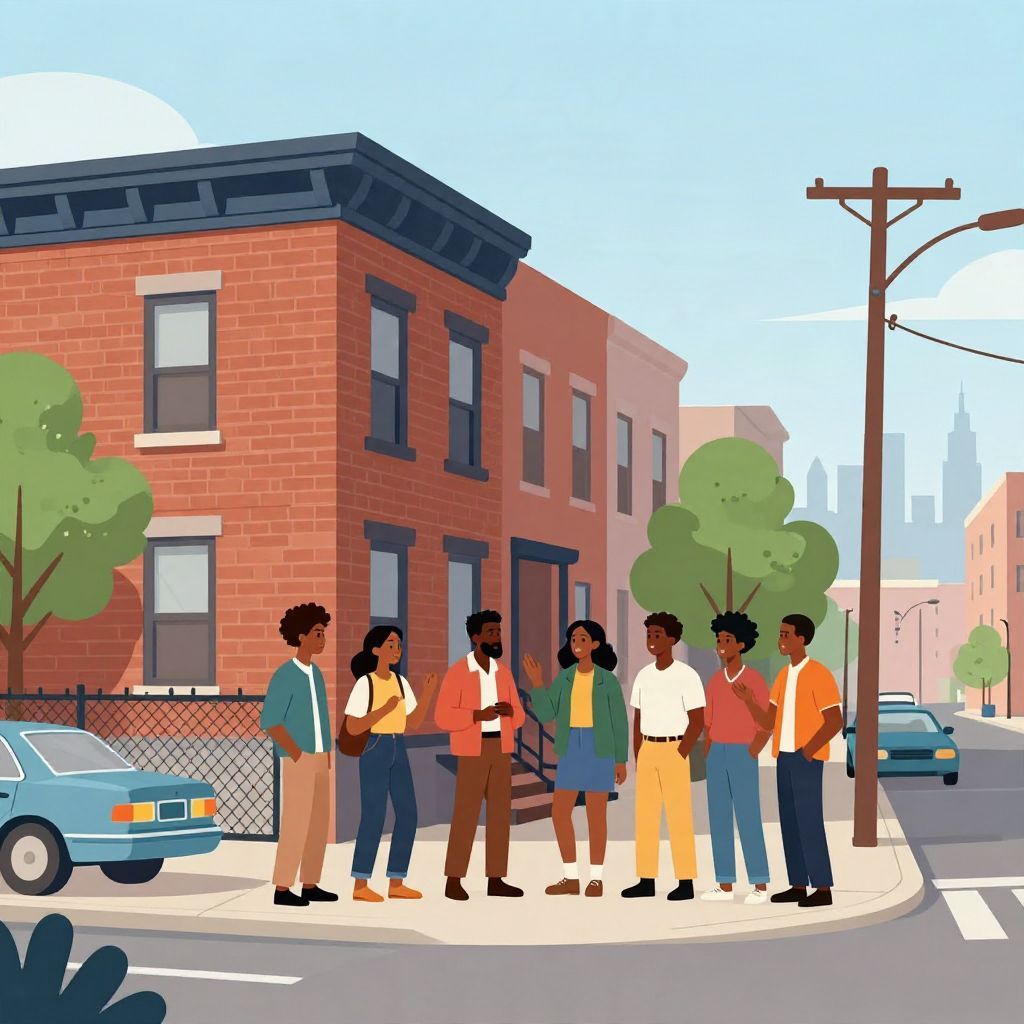
“What up doe” is not an ancient phrase or a formal historical term. It is a modern regional greeting, most strongly associated with Detroit and parts of the broader Great Lakes area, where it developed in everyday speech as a friendly, local way to say hello or ask what is happening.
Its history belongs to urban slang, migration, music, and neighborhood identity rather than to kings, wars, or empires. To understand it, you have to look at how African American speech, Midwestern city life, and popular culture shaped a phrase that became a recognizable marker of place and belonging.
What Up Doe Means and Where It Came From
“What up doe” is a colloquial greeting meaning “what’s up?” or “what’s going on?” The word doe is usually understood as a regional pronunciation or spelling of “though,” used for emphasis rather than its standard meaning. The phrase is most closely tied to Detroit speech, especially among African American communities, and it spread through music and social media.
The basic meaning
In everyday use, “what up doe” functions like a casual hello. It can express friendliness, recognition, or local pride. The phrase is not formal English, and its spelling varies because it reflects speech more than standard grammar. People may write it as “what up doe,” “wud up doe,” or similar versions.
Why “doe” matters
The “doe” in the phrase is generally not about an animal. In this context, it is a phonetic rendering of a spoken filler or emphasis word similar to “though.” Linguistically, that kind of variation is common in slang. It gives the phrase a distinct sound and helps mark it as local and informal.
How “What Up Doe” Became Associated with Detroit
“What up doe” is widely recognized as a Detroit-area expression, though it is not limited to one exact neighborhood or one precise moment of origin. Like many regional slang terms, it likely developed gradually in local speech before becoming widely noticed outside the city. Its strong association with Detroit reflects the city’s cultural influence, especially in music and street culture.
Urban speech and local identity
Detroit has long been a place where language, migration, and working-class culture intersected. The city’s growth in the 20th century brought together people from the American South, the Midwest, and elsewhere. In such settings, new slang often emerges from shared community life and spreads through schools, streets, workplaces, and music scenes.
The role of African American Vernacular English
Many features of “what up doe” fit patterns found in African American Vernacular English, a well-studied variety of English with its own grammar, sound patterns, and expressive style. It is important not to reduce the phrase to a stereotype or treat it as “incorrect” English. Instead, it should be understood as part of a living linguistic tradition with deep historical roots.
When Did the Phrase Become Popular?
There is no single documented “first use” of “what up doe” that historians can point to with certainty. The phrase appears to have circulated locally for years before gaining broader attention in the late 20th and early 21st centuries. Its rise in popularity is tied less to one inventor than to repeated use in daily conversation and media.
From neighborhood speech to wider recognition
Regional slang often becomes visible only after it is repeated in songs, interviews, comedy, or online posts. That seems to be the path for “what up doe.” Once people outside Detroit heard it often enough, it became recognizable as a Detroit phrase, even for listeners who had never used it themselves.
Social media and the internet
In the internet era, local expressions can travel far beyond their original communities. Memes, short videos, and captions helped turn “what up doe” into a phrase people could identify instantly. That exposure made it both a greeting and a symbol of Detroit pride, especially among younger users.
What Up Doe in Music and Popular Culture
Popular culture played a major role in spreading the phrase. Detroit rappers, local performers, and online creators helped make “what up doe” a recognizable cultural marker. In that sense, the phrase is part of a larger history in which hip-hop and regional identity shape modern American slang.
Hip-hop and regional language
Hip-hop has often amplified local speech patterns. Words and phrases that begin in one city can become nationally known when artists use them in lyrics, interviews, or performances. “What up doe” fits this pattern: it signals authenticity, local roots, and familiarity with Detroit culture.
More than a catchphrase
For many speakers, the phrase is not just a joke or slogan. It can express solidarity, neighborhood pride, and a sense of belonging. That is one reason it has lasted. Slang survives when it does more than sound catchy; it carries social meaning.
What the Phrase Reveals About Language History
“What up doe” may seem small, but it offers a useful window into how language changes over time. It shows how speech develops in communities, how pronunciation becomes identity, and how local expressions can travel through larger cultural networks.
Language change is social history
Historians of language pay attention to slang because it reflects real life: who lives where, who interacts with whom, and which cultural forms become influential. A phrase like “what up doe” can reveal patterns of migration, youth culture, and urban belonging better than a formal document sometimes can.
Why spellings vary
Because the phrase began as spoken language, there is no single authoritative spelling. Different writers try to capture the sound in different ways. That variation is normal in slang and dialect writing. It also reminds us that many expressions enter print only after being used for years in conversation.
Common Misunderstandings About “What Up Doe”
Because the phrase is informal and strongly regional, people sometimes misunderstand it. Some assume it is simply a misspelling of “what’s up, though,” while others treat it as a novelty phrase with no real history. Both views miss the larger point: it is a meaningful part of regional speech with social and cultural roots.
It is not a formal slogan with a single origin
Unlike a political motto or a coined advertising phrase, “what up doe” was not created in one documented moment. It emerged through ordinary use. That makes its history harder to trace precisely, but no less real. Many important cultural expressions begin this way.
It is not limited to one age group
Although younger speakers and online culture helped popularize it, the phrase is not restricted to teenagers or internet users. People across generations may use it, especially in Detroit and nearby communities, where it can function as a familiar local greeting.
Why “What Up Doe” Matters Historically
The historical importance of “what up doe” lies in what it shows about American cultural history. It reflects the power of local speech, the influence of African American language traditions, and the way cities create recognizable identities through everyday expression. In that sense, it is a small phrase with a larger story.
Detroit as a cultural producer
Detroit has contributed far more to American culture than cars and industry. It has also produced music, style, and language that travel widely. “What up doe” belongs to that history. It is one of the many ways the city’s voice has reached beyond its borders.
Identity in a few words
People often use slang to signal where they are from, who they know, and how they want to be heard. “What up doe” does that efficiently. It can sound welcoming, confident, humorous, or proudly local, depending on context. That flexibility helps explain its staying power.
Conclusion: A Modern Phrase with Real Cultural History
“What up doe” is best understood as a modern regional greeting rooted in Detroit speech and shaped by African American language, urban life, and popular culture. It does not belong to ancient history, but it does have a real history: one built through community use, cultural exchange, and local pride. For related cultural history, see what an upside-down American flag means and what an upside-down flag means.