
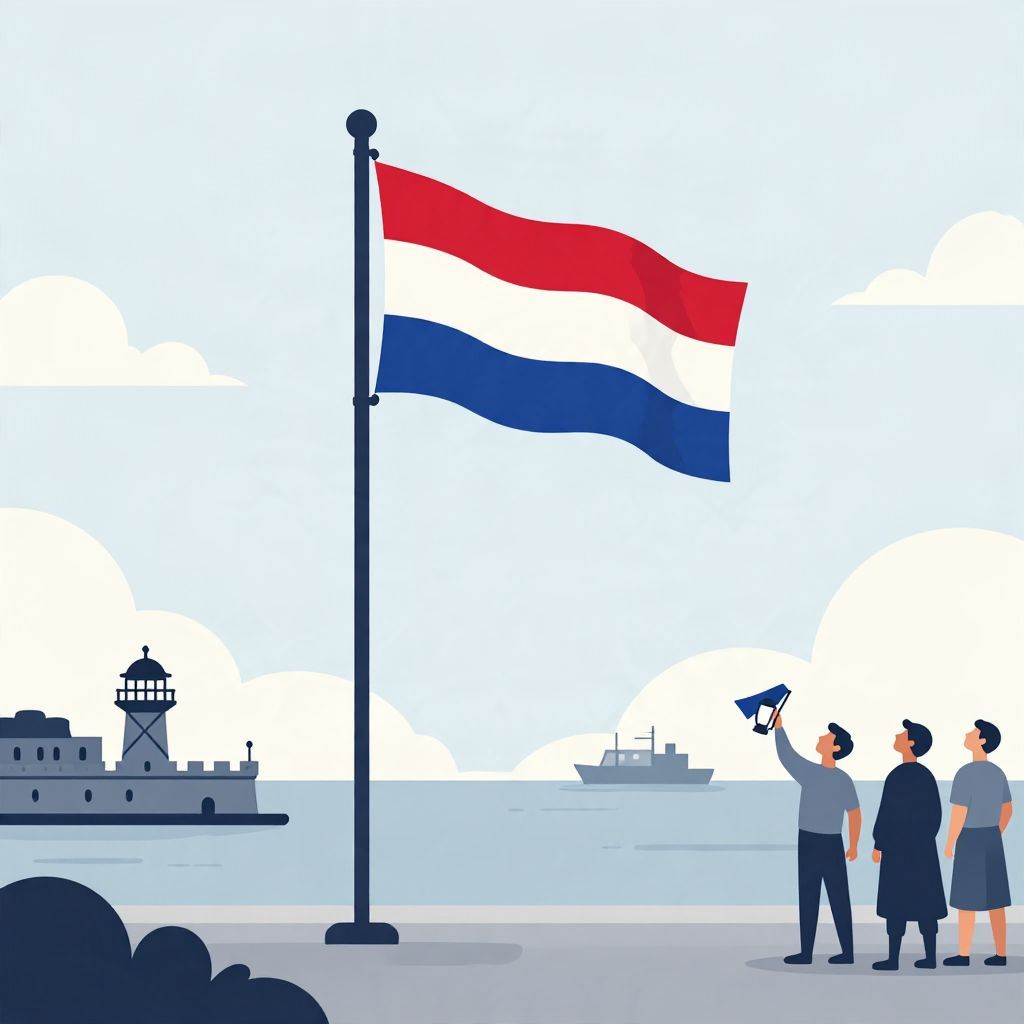
What does an upside down flag mean? In most modern contexts, it is a signal of distress or severe trouble. The meaning is especially associated with naval tradition, where an inverted flag could indicate a ship or crew in danger and in need of help.
On land, the same gesture has also been used to express protest, emergency, or political discontent. Its meaning depends on the country, the flag, and the setting, which is why the symbol can be powerful but also controversial.
What Does an Upside Down Flag Mean?
An upside down flag usually means distress, emergency, or protest. Historically, it began as a recognized signal of serious danger, especially at sea. In modern use, people may also fly a flag inverted to show dissatisfaction with government, institutions, or a current crisis.
The Historical Origins of the Upside Down Flag
The strongest historical roots of the upside down flag lie in maritime practice. Sailors needed simple visual signals that could be seen from a distance, and an inverted flag became a clear way to communicate that a vessel was in trouble. This tradition developed before modern radios and emergency systems made communication easier.
Why ships used flags for distress
For centuries, ships relied on flags, lanterns, cannons, and other visible signals to communicate. At sea, where words could not carry far, a reversed flag was an efficient warning that something was wrong. It could mean the ship was under attack, disabled, sinking, or otherwise unable to continue safely.
Connection to maritime law and custom
Not every navy or merchant fleet used the same exact system at every moment in history, but the general idea was widely understood: an inverted flag indicated an abnormal and urgent situation. Over time, this custom became part of broader maritime symbolism, reinforcing the idea that the upside down flag was a cry for assistance rather than a decorative choice.
How the Meaning Changed on Land
As flags became central symbols of nations, the upside down flag took on new meanings beyond the sea. In civilian and political life, people began using it as a form of protest. The gesture still suggested distress, but now the “distress” could refer to the state of the country, a policy decision, or a public crisis.
From emergency signal to political statement
Flying a national flag upside down can be a way of saying that the nation is in serious trouble. Supporters of the gesture often see it as a symbolic alarm bell. Critics may see it as disrespectful, especially when the flag is treated as a sacred national emblem or protected by etiquette rules.
Why the gesture can be controversial
The same symbol can be read in different ways. Some people interpret an upside down flag as a legitimate form of free expression. Others view it as an insult to the nation, its military, or the memory of those who served under that flag. Because flags carry emotional and political weight, the same act can provoke very different reactions.
When Is an Upside Down Flag Appropriate?
Traditionally, an upside down flag is appropriate only in a genuine emergency or as a deliberate protest. In many countries, flag etiquette discourages casual or decorative use of an inverted national flag. The key issue is intent: a distress signal should communicate real danger, not be used carelessly.
Common situations where it may appear
- Distress or emergency: used to signal immediate danger or a serious problem.
- Political protest: used to express opposition to a government, law, or public condition.
- Symbolic mourning or alarm: sometimes used to show grief, crisis, or national concern.
What it does not usually mean
An upside down flag does not automatically mean disrespect in every case. In historical and practical terms, its meaning is often tied to distress first. However, because national flags are powerful symbols, many observers will still read the act as provocative unless the context clearly shows an emergency or protest purpose.
Upside Down Flags in U.S. History
In the United States, the upside down flag has a long association with distress and, later, political expression. American flag etiquette and law have often treated the flag as a symbol of national unity, but the inverted flag has also appeared in moments of crisis, dissent, and public controversy.
Distress and the American flag tradition
American flag customs reflect older maritime habits, where inversion signaled trouble. Over time, this meaning entered civilian life. During periods of war, unrest, or political tension, some Americans have used the upside down flag to say that the country itself is in distress.
Free speech and protest
In the modern United States, flying a flag upside down can be protected as symbolic speech in many circumstances, though the exact legal situation depends on context and property rights. Historically, this has made the symbol part of broader debates about patriotism, dissent, and the boundaries of protest.
How Other Flags and Traditions Compare
The upside down flag is not the only flag-related signal with a historical meaning. Different cultures and institutions have developed their own flag customs, and the same visual change can mean different things depending on the system in use. That is why context matters so much.
Flags as coded communication
Before modern communication, flags were often part of a larger code. A change in color, position, or arrangement could convey military orders, warnings, or requests. The upside down position worked because it was simple, visible, and hard to mistake for normal display.
Why context matters more than the image alone
A flag turned upside down at a shipwreck, a protest, or a rally does not mean exactly the same thing in every case. The historical meaning may be distress, but the social meaning can shift with time and place. That is one reason historians and flag experts always look at context before judging intent.
Misunderstandings About the Upside Down Flag
One common misunderstanding is that an upside down flag always means hatred of a country. Historically, that is too simple. The symbol began as a distress signal, not necessarily as an expression of contempt. Another misunderstanding is that it is always illegal; in many places, the issue is etiquette or protest rather than criminal law.
Distress is not the same as disrespect
People sometimes use the inverted flag to say, “Something is wrong.” That may be a plea for help, a political warning, or a public expression of alarm. It can still offend observers, but offense and historical meaning are not the same thing. The original logic of the symbol was urgent communication, not insult.
Why people still disagree
Because flags represent identity, nationhood, sacrifice, and memory, they are unusually sensitive symbols. A gesture that one person sees as an emergency signal may be seen by another as an attack on shared values. That tension has helped keep the upside down flag in public debate for generations.
The Lasting Significance of the Upside Down Flag
The upside down flag has endured because it is simple, dramatic, and historically rooted. It remains one of the clearest examples of how a practical signal can become a political symbol. Its meaning has expanded over time, but the core idea has stayed recognizable: something is wrong, and attention is needed.
That is why the upside down flag still matters today. It connects maritime history, protest culture, and national symbolism in one image. If you want to explore related flag symbolism, see what it means when a neighbor flies the flag upside down and what a black flag means.