
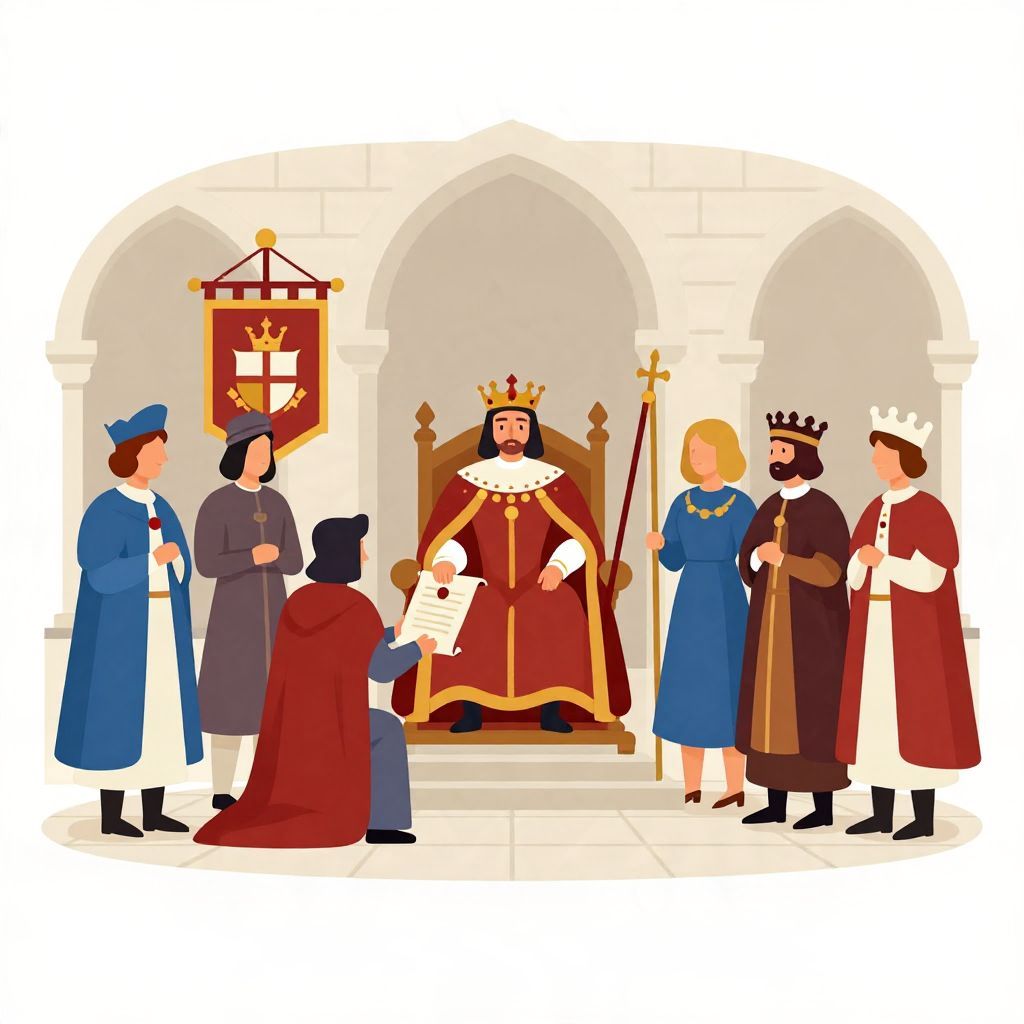
What is a royal title? In history, it is a formal rank, style, or designation used for members of a monarchy or for people granted authority by a monarch. Royal titles helped define who could rule, inherit, advise, or represent the crown, and they carried real political and social power.
Across different eras and kingdoms, royal titles have marked status, legitimacy, and succession. Some were inherited, some were granted, and some changed over time as monarchies evolved from personal rule into ceremonial institutions. Understanding royal titles helps explain how kingdoms organized power and identity.
What Is A Royal Title?
A royal title is an official designation connected to a monarchy, such as king, queen, prince, princess, duke, or count. It identifies a person’s rank within royal or noble hierarchy and often signals legal status, inheritance rights, territorial authority, or courtly precedence.
What the term means in practice
In simple terms, a royal title tells people where someone stands in relation to the crown. A king or queen usually rules as sovereign. A prince or princess may be a child or close relative of the monarch. Other titles, such as duke, earl, or marquess, often belong to the nobility rather than the immediate royal family, though they still form part of a wider aristocratic system.
Royal titles are not all the same
The meaning of a title depends on the country and period. In some monarchies, a prince is a ruler’s son or daughter; in others, it can be a ruling sovereign in a smaller territory. A duke might be a powerful landholder in one realm, while in another the title is mostly honorific. That is why royal titles must always be understood in their historical and geographic context.
Where Did Royal Titles Come From?
Royal titles emerged in early states when rulers needed recognized ways to express authority, inheritance, and hierarchy. Ancient kingdoms in Mesopotamia, Egypt, China, India, and the Mediterranean all developed formal styles for rulers and elites. These titles were not merely labels; they were part of the political language of kingship.
Ancient origins of royal rank
In many early civilizations, rulers used titles to present themselves as chosen by gods, heirs of dynasties, or masters of territory. Ancient Egyptian pharaohs, for example, held a sacred kingship that combined political and religious authority. In Mesopotamia, titles such as “king” or “great king” reflected both military power and diplomatic standing. Similar systems developed elsewhere as states became more complex.
Medieval Europe and the shaping of modern royal language
Much of the royal vocabulary familiar today took shape in medieval Europe. Latin, Germanic, and feudal traditions blended to create titles such as king, queen, prince, duke, count, and baron. These titles often reflected landholding and military service. Over time, as monarchies centralized, titles became more standardized and hereditary, especially among ruling dynasties.
How Were Royal Titles Used Historically?
Royal titles were tools of government. They established who could inherit a throne, command armies, collect tribute, administer land, or sit in court. They also helped monarchs reward loyalty, bind noble families to the crown, and display the structure of the realm to subjects and foreign powers.
Titles and succession
One of the most important functions of a royal title was to clarify succession. The heir apparent might hold a special title, such as prince of Wales in Britain or dauphin in France. These titles signaled who was expected to inherit, reducing uncertainty, though not always preventing disputes. When succession was unclear, royal titles could become central to civil wars, rival claims, and dynastic conflict.
Titles and territorial rule
Some royal titles were tied to specific lands. A duke might govern a duchy; a count might oversee a county; a prince might rule a principality. In many cases, the title originally meant actual authority over a territory. Later, especially in more centralized states, the title could remain even after real governing power had shifted to the monarch or the state.
Titles and court hierarchy
Royal courts depended on rank. Titles determined who stood nearest the ruler, who had access to audiences, and who ranked above whom in ceremonial order. This mattered because court precedence was not just symbolic. It could influence patronage, marriage alliances, military appointments, and political influence.
Common Royal Titles and What They Mean
Royal and noble titles vary by country, but several are especially common in European history and in monarchies influenced by European models. Their meanings have shifted over time, so the list below gives broad historical usage rather than a universal rule.
- King / Queen — the sovereign ruler of a kingdom.
- Emperor / Empress — a ruler of an empire, often claiming authority over multiple peoples or kingdoms.
- Prince / Princess — usually a child or close relative of a monarch, though sometimes a ruling sovereign in a smaller state.
- Duke / Duchess — a high-ranking noble title, historically linked to major territories or military command.
- Earl / Count / Countess — noble titles associated with regional authority in medieval Europe.
- Marquess / Marchioness — a rank often connected to borderlands or frontier defense.
- Baron / Baroness — a lower noble title, though still significant in feudal and aristocratic systems.
Why titles differ from one country to another
The same title can mean different things in different monarchies. For example, a duke in the British system is a very high noble rank, but in some continental traditions the title carried different legal and territorial implications. Likewise, “prince” may mean a royal child in one kingdom and a sovereign ruler in another. Historians therefore avoid assuming that titles are identical across cultures.
The Difference Between Royal Titles and Noble Titles
Royal titles belong to the monarchy or the ruling house, while noble titles belong to the aristocracy beneath the sovereign. The distinction is important, but it has not always been rigid. In many societies, royals were also nobles, and noble families could be closely tied to royal power through marriage, office, or landholding.
Royal family versus aristocracy
The royal family is the immediate family of the monarch and those recognized as part of the dynasty. The aristocracy includes titled elites who may serve the crown but do not normally inherit the throne. A duke may be among the highest nobles, yet still not be royal unless the monarch specifically grants that status or the title is part of a royal house.
How the distinction changed over time
In early and medieval states, the boundary between royal and noble could be blurry because power was personal and land-based. As monarchies became more bureaucratic, titles became more regulated. In modern constitutional monarchies, many royal titles are ceremonial, while noble titles may survive as social honors rather than political offices.
How Royal Titles Were Granted or Inherited
Royal titles could be inherited by birth, granted as a reward, or created by a sovereign. The rules varied widely, but heredity was central to most dynastic systems. Monarchies relied on bloodline to preserve continuity, even though adoption, election, conquest, and marriage sometimes altered the line of succession.
Inheritance
Many royal titles passed from parent to child, especially within ruling dynasties. Primogeniture, the practice of favoring the eldest child or eldest son, became common in parts of Europe because it reduced fragmentation of power. Yet inheritance was never completely simple. Gender, legitimacy, religion, and political support could all affect who actually received a title.
Creation and reward
Monarchs also created titles to reward service or secure loyalty. A king might elevate a trusted noble to duke, or grant a lesser title to a military commander or court official. Such grants could strengthen the crown by tying ambitious families to royal favor. They could also create rival power centers if the grantee became too influential.
Marriage and dynastic politics
Marriage was one of the most important ways royal titles spread across Europe and beyond. Royal marriages linked kingdoms, settled disputes, and created claims to thrones. Because inheritance could pass through marriage, titles often became part of international diplomacy. This is one reason royal genealogy mattered so much in premodern politics.
Royal Titles in Different Historical Periods
Royal titles did not remain fixed. Their meaning changed as states changed. What began as a practical marker of rule could become a ceremonial badge of heritage. The history of royal titles is therefore also the history of monarchy itself.
Ancient and classical worlds
In ancient states, royal titles often carried sacred authority. Rulers were expected to embody divine favor, cosmic order, or imperial unity. Titles could be grand and elaborate, especially in empires that ruled many peoples. The title itself was part of state ideology, not just a personal honor.
Medieval monarchies
During the Middle Ages, royal titles were tied to feudal relationships, land tenure, and military service. Kings ruled through networks of lords, bishops, and vassals. Titles helped define that hierarchy. Disputes over titles could trigger wars because a title was evidence of lawful authority, not just a name.
Early modern and modern monarchies
From the sixteenth century onward, many monarchies became more centralized. Royal titles increasingly reflected dynastic prestige and national identity rather than direct territorial administration. In the nineteenth and twentieth centuries, constitutional monarchy reduced the political power of many royal titles, though their symbolic importance often remained strong.
Why Royal Titles Mattered So Much
Royal titles mattered because they organized power. They told people who could command, who could inherit, and who deserved obedience. In societies where monarchy shaped law and politics, a title could affect taxation, military service, diplomacy, marriage, and even religious legitimacy.
Titles as symbols of legitimacy
A ruler without a recognized title could be seen as a usurper. That is why claimants to thrones often fought to secure not only the crown but also the language of rightful rule. Titles gave legitimacy a visible form. They allowed monarchs to present authority as lawful, hereditary, and continuous.
Titles as social identity
Royal titles also shaped identity. They distinguished insiders from outsiders and created a visible hierarchy at court and in society. Even today, when many monarchies are constitutional, royal titles continue to symbolize tradition, national continuity, and public ceremony.
Common Misunderstandings About Royal Titles
People often assume royal titles are universal, fixed, or purely decorative. Historically, none of those assumptions is fully correct. Titles changed across time, differed by region, and often carried concrete political meaning. A title that seems ceremonial today may once have represented real governing power.
Not every title means the same thing everywhere
“Prince,” “duke,” and “count” are especially prone to misunderstanding because their meanings vary by country. A title may indicate blood relation to a monarch, a territorial ruler, or a noble rank below the crown. The historical context is essential.
Not all royal titles are inherited in the same way
Some titles are hereditary, some are life honors, and some depend on marriage or special grant. In some monarchies, a person may hold a title only while married to a royal or while occupying a particular office. The rules are shaped by law, custom, and political need.
The Lasting Significance of Royal Titles
Royal titles remain important because they preserve the language of monarchy, even where monarchs no longer govern directly. They connect modern ceremonial life to older systems of rule, inheritance, and statecraft. Their endurance shows how deeply titles are tied to memory, identity, and political tradition.
So, what is a royal title? It is a historically rooted designation that marks rank, authority, and dynastic status within a monarchy. From ancient kingship to modern constitutional courts, royal titles have helped define who ruled, who inherited, and how power was displayed. For related reading, see what a duke is in royalty and what a royal advisor is.