
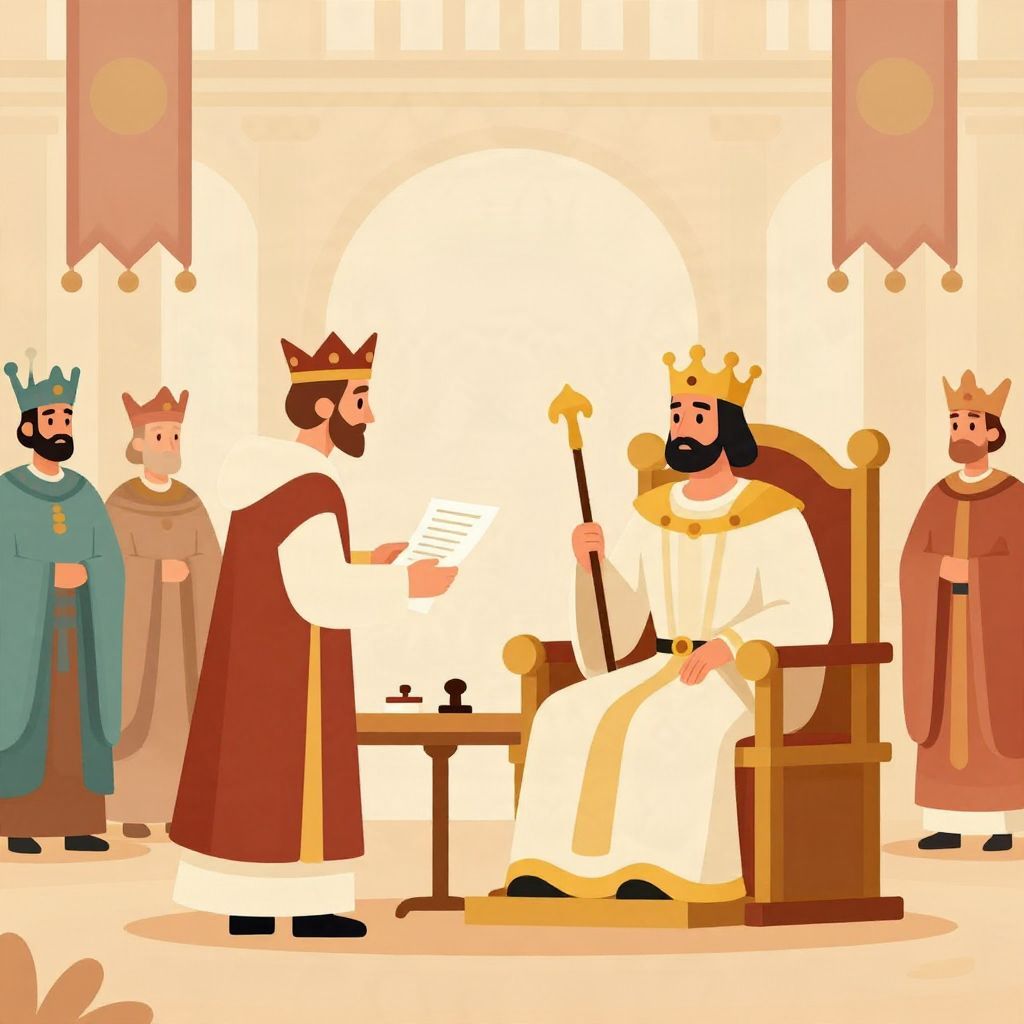
A royal advisor was a trusted person who counseled a king, queen, emperor, or ruling court on government, war, diplomacy, finance, religion, and succession. The role existed in many societies, but it was never identical from one kingdom to another. Some advisors were nobles, priests, or ministers; others were administrators, favorites, or scholars who gained influence through access to the ruler.
Because monarchies concentrated power in one person, advice mattered enormously. A royal advisor could shape policy, calm disputes, or help a ruler govern a large and complex realm. At the same time, advisors could be blamed for bad decisions, become targets of court rivalry, or even be executed when politics turned against them.
What Is a Royal Advisor?
A royal advisor is someone who formally or informally counsels a monarch on matters of state. In practice, the title could cover many roles: chief minister, chamberlain, courtier, counselor, vizier, secretary, or trusted companion. The key feature was proximity to power, not a single universal office.
In some kingdoms, royal advisors held official posts with defined duties. In others, they were influential courtiers whose advice carried weight because the ruler trusted them. A royal advisor might draft laws, negotiate treaties, oversee taxes, command armies, manage households, or interpret religious and ceremonial expectations.
Where Did Royal Advisors Come From?
Royal advising is as old as monarchy itself. Once rulers governed beyond what one person could oversee alone, they needed helpers. Early states in Mesopotamia, Egypt, China, India, and later Europe all developed systems of counsel around the throne. These arrangements emerged not from one origin point, but from the practical demands of kingship.
Early ancient examples
In ancient Egypt, pharaohs relied on high officials such as viziers to supervise administration and justice. In Mesopotamia, kings used scribes, priests, and senior officials to manage records, taxation, and ritual obligations. In ancient China, imperial rulers depended on ministers and scholars who advised on law, bureaucracy, and moral governance. These figures were not always called “royal advisors,” but they performed that function.
Advice as a political necessity
Monarchs ruled through court systems that gathered information from across a realm. Advisors helped transform local reports into policy. They also served as buffers between the ruler and the wider elite, filtering petitions, calming rival factions, and explaining consequences. A strong advisor could make a monarchy more effective; a weak or manipulative one could distort it.
What Did Royal Advisors Actually Do?
Royal advisors performed a wide range of tasks depending on the period, culture, and ruler. Their work often combined administration, strategy, and personal counsel. In many courts, the most important advisors were those who could solve immediate problems and also anticipate future ones.
- Governance: drafting laws, issuing orders, supervising officials, and coordinating administration.
- Finance: advising on taxation, expenditure, tribute, and the royal treasury.
- War: planning campaigns, assessing threats, and recommending alliances or peace terms.
- Diplomacy: negotiating with foreign envoys and interpreting international developments.
- Religion and ceremony: advising on sacred legitimacy, rituals, and court protocol.
- Succession and faction management: helping manage heirs, noble rivalries, and court politics.
Because monarchs were often expected to embody authority, they might not publicly appear uncertain. Advisors therefore became essential behind the scenes. They could speak frankly in private, draft responses, and sometimes absorb blame for unpopular decisions.
How Did Royal Advisors Gain Power?
Royal advisors gained influence through several routes. Some were born into aristocratic families and inherited access to the court. Others rose through education, service, or personal trust. A few became powerful because they controlled information, managed the royal household, or had a ruler’s confidence in moments of crisis.
Nobility and lineage
In many medieval and early modern monarchies, noble birth opened the door to advising the crown. Great lords expected to counsel the ruler because they possessed land, military resources, and political standing. Their advice was tied to status, and their influence could be limited by competition from other nobles.
Education and bureaucracy
In bureaucratic states, literacy and expertise could matter more than noble rank. Scholars, scribes, and civil servants advised rulers because they understood law, records, finance, or foreign affairs. This was especially important in empires with large administrative systems, where practical knowledge could outweigh aristocratic prestige.
Personal trust and access
Some of the most famous royal advisors were not the highest-ranking officials but the people closest to the ruler’s daily life. A chamberlain, favorite, confessor, or household servant might gain extraordinary influence simply by being present. This kind of power could be unstable, since it depended on the ruler’s affection and the hostility of rivals.
Royal Advisors in Medieval Europe
In medieval Europe, royal advisors were often drawn from the nobility, the clergy, and the royal household. Kings ruled through councils, assemblies, and household officers, so advice was usually collective rather than the work of one person alone. Over time, some advisors became more specialized and more bureaucratic.
Important offices included chancellors, treasurers, justiciars, and chamberlains. Clergy were especially influential because they were often educated and literate. Monastic and church networks also provided administrative skills that secular nobles might lack. In many kingdoms, bishops and abbots advised rulers on law, legitimacy, and diplomacy.
By the later Middle Ages, royal councils became more formal in some places. England, France, and other monarchies developed institutions that helped standardize advice and administration. Yet even then, personal relationships still mattered. A ruler could elevate a favorite, sideline a council, or rely on a small inner circle when politics demanded it.
Royal Advisors in Other Monarchies
The idea of royal advising was global, but the names and structures differed widely. Comparing societies shows that “advisor” is a broad historical category rather than a single office.
Islamic worlds
In many Islamic empires and sultanates, rulers relied on viziers, secretaries, judges, and scholars. The vizier often served as a chief minister, coordinating administration and communicating the ruler’s will. Court scholars and religious authorities could also advise on law and legitimacy, especially where political authority and religious learning were closely connected.
Imperial China
Chinese emperors governed with the help of ministers and a large bureaucracy. Scholar-officials, selected through examination systems in later periods, advised on policy, ritual, taxation, and law. The ideal advisor was not merely loyal but morally and intellectually capable, reflecting the Confucian belief that good government required informed counsel.
South Asia
In South Asian kingdoms and empires, rulers depended on councils of ministers, advisers, priests, and military leaders. Courtly advice could be shaped by religious traditions, regional politics, and the needs of empire. Texts on statecraft often emphasized that a ruler needed wise counselors to maintain order and protect the realm.
African and other royal courts
Across African kingdoms and chiefdoms, rulers also relied on advisors, elders, ministers, and ritual specialists. These roles varied widely, but the principle was similar: kingship required consultation. Advice could come from councils of elders, lineage heads, palace officials, or religious authorities who helped sustain political legitimacy.
Why Were Royal Advisors So Important?
Royal advisors mattered because monarchy concentrated decision-making in a single court. A ruler might be brilliant, but no monarch could personally manage every military, financial, diplomatic, and ceremonial issue. Advisors expanded the ruler’s reach and helped connect the center of power to the wider realm.
They were also important because monarchy depended on perception. A successful advisor could make a ruler appear wise, stable, and decisive. A failed advisor could make the court look divided or corrupt. In many cases, the public did not separate the monarch from the inner circle; blame and praise often attached to the whole regime.
Advisors therefore shaped history in indirect but powerful ways. They influenced succession crises, peace settlements, taxation, religious policy, and military campaigns. Sometimes they preserved stability. Sometimes they encouraged overreach, factionalism, or repression. Their impact was often greatest when rulers were young, inexperienced, ill, or politically isolated.
Famous Types of Royal Advisors
Historians use several terms for royal advisors, and each one suggests a slightly different role. The exact meaning depended on the culture and period.
- Chief minister: a top administrator who coordinated government.
- Vizier: a senior adviser or minister, especially in Islamic and some older Near Eastern contexts.
- Courtier: a person who attended the royal court and could influence the ruler through proximity and etiquette.
- Chancellor: often responsible for documents, seals, or administration.
- Confessor or spiritual adviser: a religious counselor who advised on conscience and legitimacy.
- Favorite: a trusted companion whose influence rested on personal closeness rather than formal office.
These categories sometimes overlapped. One person could be both a household officer and a political strategist, or both a religious counselor and a diplomatic intermediary. That flexibility is one reason royal advising was so central to monarchy.
What Were the Risks of Being a Royal Advisor?
Royal advisors lived close to power, and that made them vulnerable. If policy failed, they could become scapegoats. If they grew too influential, nobles might accuse them of corruption or manipulation. If the ruler died, a new monarch might dismiss or punish the previous circle of favorites and ministers.
Court politics could be deadly. Advisors were often caught between competing factions, each trying to control access to the ruler. Their fortunes could rise quickly and fall just as fast. In some cases, a powerful advisor’s downfall became a public lesson about the dangers of overmighty subjects or unchecked favoritism.
How Did the Role Change Over Time?
Over the centuries, royal advising shifted from personal counsel toward more formal institutions in many places. As states became larger and more bureaucratic, rulers increasingly depended on councils, ministries, and written administration. The advisor’s role became less about private influence alone and more about organized government.
At the same time, personal power never disappeared entirely. Even in highly structured courts, access to the monarch remained valuable. Modern constitutional monarchies reduced the political power of royal advisors, but in earlier periods they could shape the fate of kingdoms and empires. Their history shows how monarchy worked in practice: through a mix of authority, expertise, and trust.
Why the Term Still Matters
Today, “royal advisor” is often used broadly to describe anyone who counseled a monarch in history. The phrase helps explain how kingship functioned beyond the throne itself. Monarchs ruled through networks of people, and advisors were among the most important of those networks.
Understanding royal advisors also helps explain larger historical patterns: why courts became centers of power, why factions formed around rulers, and why some monarchies were more stable than others. In that sense, the royal advisor was not just a supporting figure. In many eras, the advisor was one of the engines of government.
In short: a royal advisor was a person who helped a monarch govern, whether through formal office, expert knowledge, or personal trust. Their influence could be constructive or dangerous, but across history they were essential to how royal power actually worked. For related reading, you may also want to explore What Is A Duchy and What Is A Royal Colony.