
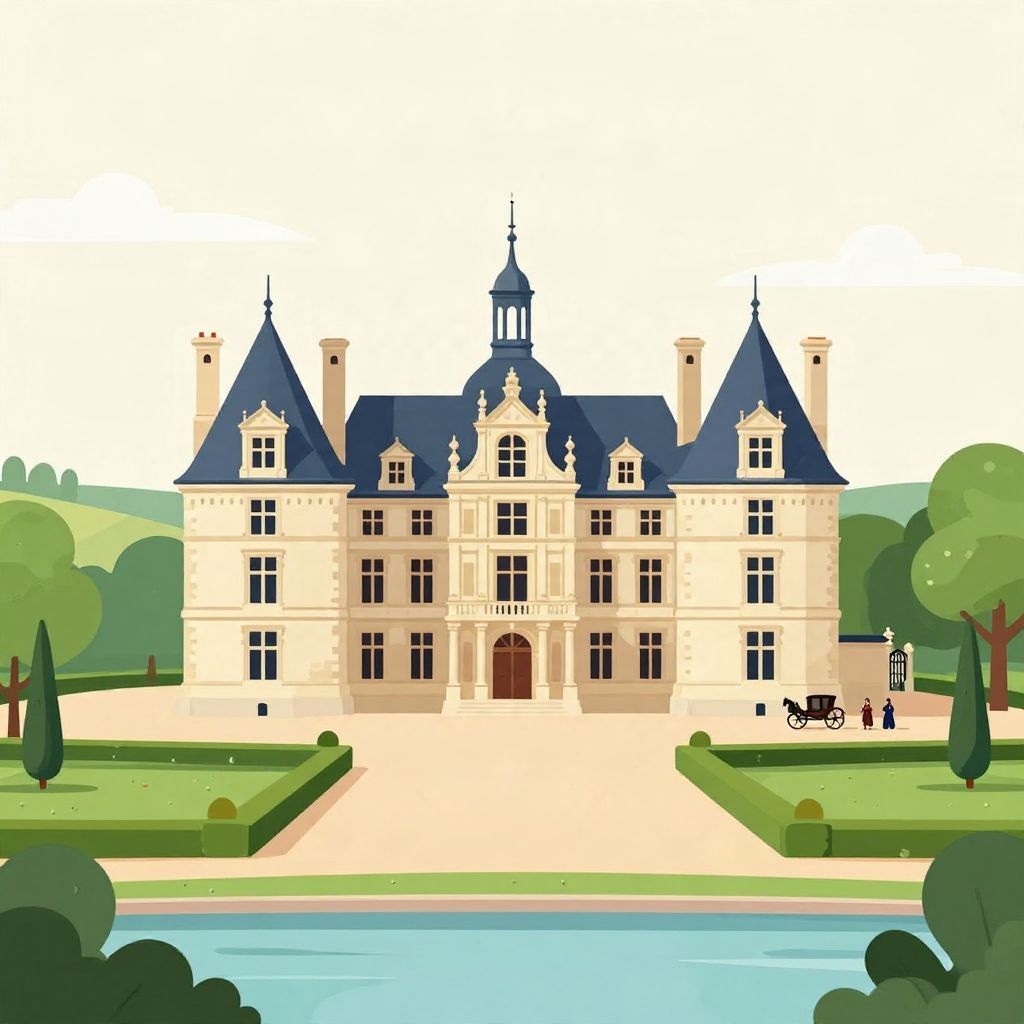
A chateau is a French term for a large country house, manor, or castle-like residence, usually associated with the nobility, wealthy landowners, or royal power. The word can describe anything from a fortified medieval stronghold to an elegant Renaissance estate, so its meaning depends on context and period.
In history, chateaux mattered because they were more than homes: they were centers of landholding, administration, defense, and prestige. Understanding what a chateau is means tracing how French aristocratic life changed from the Middle Ages to the modern era.
What Is a Chateau?
A chateau is a French residence of status, often set on an estate and built for an elite family. In English, it may be translated as “castle,” “manor house,” or “stately home,” but none of those fits every case. Some chateaux were fortified; others were designed mainly for comfort, display, and social rank.
Where Did the Word Chateau Come From?
The word chateau comes from the Latin castrum, meaning a fortified place or military camp. Over time, the term evolved in Old French into forms used for castles and major residences. This linguistic history helps explain why a chateau can refer both to a defensive fortress and to a grand noble house.
From fortification to residence
In the early medieval period, many elite homes in France were built for protection as much as for living. Lords needed strongholds to control territory, collect dues, and resist rivals. As warfare, architecture, and political authority changed, many of these sites became less military and more residential.
How Is a Chateau Different from a Castle or Manor?
The distinction is not always exact, because French usage is broader than English. A castle usually implies fortification; a manor suggests a landed estate; a palace implies royal or princely splendor. A chateau may overlap with all three, but it is not defined by one feature alone. Its key trait is its association with elite status and an estate.
Common differences in practice
- Castle: usually defensive, with walls, towers, and military functions.
- Manor house: the residence of a landed lord, often less fortified.
- Palace: a grand residence for royalty or very high-ranking rulers.
- Chateau: a flexible French term covering fortified and non-fortified elite residences.
What Was the Historical Role of a Chateau?
Historically, a chateau was often the seat of local power. It could serve as a family home, an administrative center, a symbol of authority, and sometimes a military post. In feudal society, the owner’s residence was closely tied to land, labor, justice, and political influence.
Power, land, and hierarchy
Medieval and early modern France was shaped by landed elites who held rights over villages, fields, forests, and rents. A chateau often stood at the center of that system. It was where the lord or noble family received guests, oversaw estate management, and displayed rank through architecture, gardens, and ceremonial rooms.
How Did Chateaux Develop in French History?
Chateaux changed over many centuries. Their form and purpose shifted as France moved from a fragmented feudal world to a more centralized monarchy. The same word could describe very different buildings across time, which is why historians pay close attention to date, region, and function.
Medieval chateaux
In the Middle Ages, many chateaux were fortified. Thick walls, moats, keeps, and towers reflected a world of local warfare and unstable authority. These buildings were often built by nobles, bishops, or kings to secure strategic places such as river crossings, borders, and trade routes.
Renaissance chateaux
From the 15th and 16th centuries, especially in the Loire Valley, many French chateaux became more elegant and less defensive. Influenced by Renaissance art and Italian ideas, they featured larger windows, decorative facades, formal gardens, and refined interiors. Power was still present, but it was expressed through beauty and ceremony as much as through defense.
Classical and early modern chateaux
By the 17th and 18th centuries, aristocratic life increasingly emphasized comfort, etiquette, and display. Some chateaux were rebuilt or expanded into luxurious country residences. Others remained symbols of older noble privilege even as royal authority grew stronger and centralized administration reduced the political independence of local lords.
Why Are Chateaux Important in French History?
Chateaux reveal how power worked in France. They show the relationship between landownership and authority, the transformation of warfare, and the rise of elite culture. They also help explain the social world of the French nobility, who used architecture to project lineage, wealth, and legitimacy.
Symbols of aristocratic identity
A chateau was not just a building; it was a statement. Its size, location, and design communicated the owner’s rank. Reception halls, formal gardens, chapels, and portrait galleries all helped stage noble identity. Even when a chateau was no longer militarily useful, it could remain politically and culturally meaningful.
What Are Some Famous Examples of Chateaux?
France has many famous chateaux, and they vary widely in style and purpose. Some are medieval fortresses, while others are celebrated for Renaissance architecture or royal association. A few became famous because they were linked to major political events or influential dynasties.
Well-known examples
- Château de Chambord: a grand Renaissance chateau in the Loire Valley, associated with royal ambition and architectural experimentation.
- Château de Chenonceau: known for its elegant design spanning the River Cher and its association with powerful women of the French court.
- Château de Versailles: originally a hunting lodge, later transformed into a vast royal residence and political center under Louis XIV.
- Château de Vincennes: a major fortified site near Paris that reflects the military and royal uses of the term.
Did All Chateaux Belong to Nobles?
Not always. Many chateaux were owned by nobles, but some belonged to the crown, the church, or wealthy non-noble families, especially in later periods. In modern usage, the term can even be applied more loosely to large countryside houses or vineyards, though that is a later cultural extension rather than the original historical meaning.
Regional and social variation
French regional traditions matter. In some areas, a chateau might be a fortified lordly residence; in others, it could be a refined estate house. The social meaning also shifted over time, especially after the French Revolution, when noble privilege was challenged and many aristocratic properties were sold, damaged, or repurposed.
What Happened to Chateaux After the French Revolution?
The French Revolution changed the fate of many chateaux. Some were seized as national property, sold, abandoned, or destroyed because they symbolized the old regime. Others survived by adapting to new owners, new uses, or changing tastes. In the 19th century, some were restored as heritage monuments or romanticized as part of France’s past.
From aristocratic seat to heritage site
Over time, many surviving chateaux became museums, historic houses, hotels, or private estates. Their meaning shifted from active centers of lordship to preserved reminders of earlier social orders. This makes them important not only as architecture but also as evidence of changing ideas about history, class, and national identity.
What Should You Look For in a Chateau?
If you are trying to identify a chateau, look for clues about function, date, and setting. A true historical chateau is usually tied to an estate and to elite residence. Its appearance may include towers, formal gardens, long facades, or a mixture of defensive and decorative features depending on when it was built.
Key features to notice
- Location: often in the countryside or on a large estate.
- Architecture: may combine medieval, Renaissance, or later styles.
- Function: residence, administration, prestige, and sometimes defense.
- Historical context: the term means different things in different centuries.
Why the Word Chateau Can Be Confusing Today
Modern tourism, wine marketing, and popular culture have broadened the word’s use. In English, people may call almost any impressive French house a chateau, even when historians would use a more precise term. That flexibility makes the word familiar, but it can blur important distinctions between a fortress, a manor, and a noble residence.
So, What Is a Chateau in Historical Terms?
Historically, a chateau is a French elite residence tied to land, status, and authority. It may be fortified or luxurious, medieval or Renaissance, royal or aristocratic. The best way to understand it is not as one fixed building type, but as a long-lived expression of French social and political history.
In short, a chateau reflects the changing world of French power: from armed lordship to courtly display, and from private estate to historical monument. If you want to explore related topics, you may also find it useful to read about what a duchy is and what a royal colony is.