
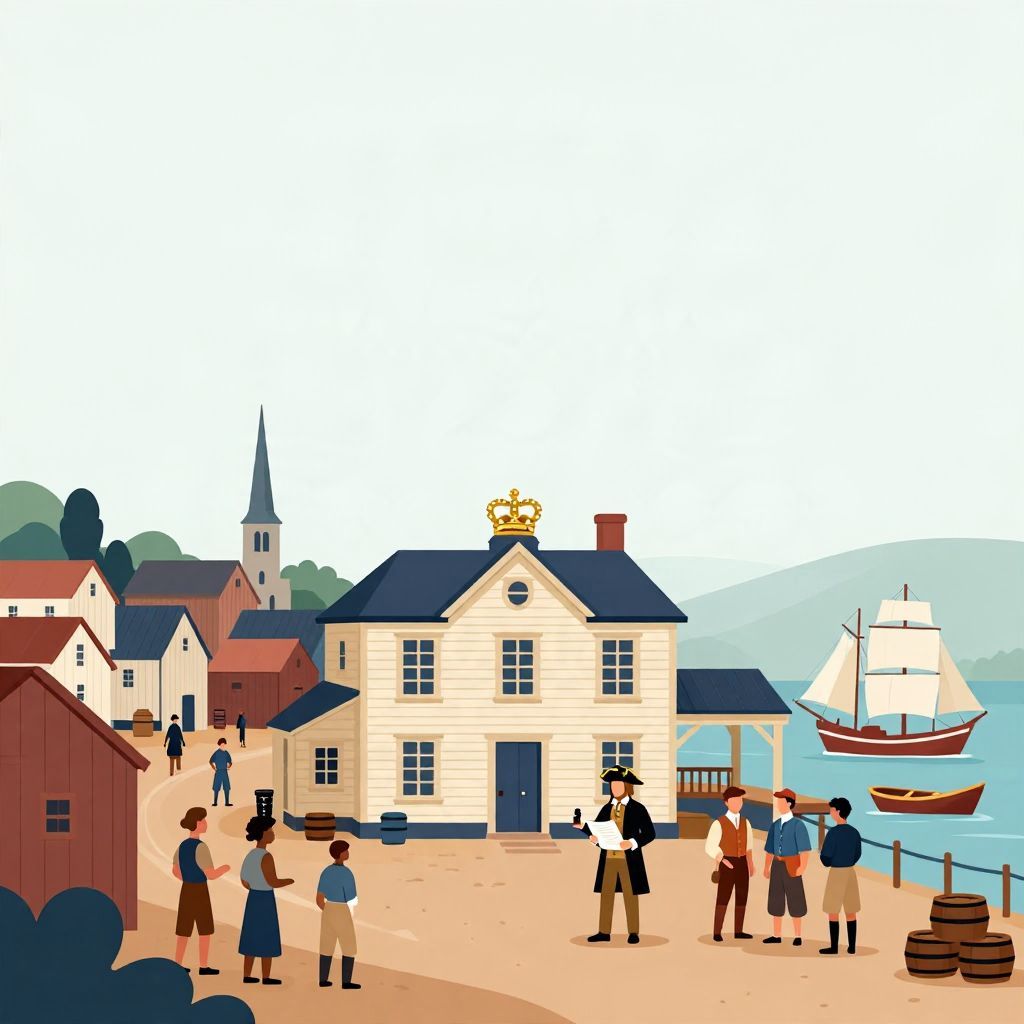
A royal colony was a colony ruled directly by the monarch of the imperial power, usually through a governor appointed by the crown. In British North America, this meant the king or queen had the strongest formal control over the colony’s government, especially compared with colonies run by proprietors or by local corporate groups.
Royal colonies were an important part of early modern empire-building. They helped European states tighten political control, collect revenue, and manage territory overseas, but they also became places where colonists developed local political habits that later shaped demands for self-government.
What Is A Royal Colony?
A royal colony is a colony administered in the name of the crown, with the monarch appointing the governor and often influencing lawmaking, defense, and trade. In practice, local assemblies might still exist, but ultimate authority rested with royal officials rather than with colonists themselves.
How Royal Colonies Worked
Royal colonies were part of the broader imperial system used by European powers from the 1500s onward. They were not all identical, but they usually shared a common structure: a governor, a council, and some form of representative assembly. The governor represented royal authority, while the assembly often handled local taxation and legislation.
The basic governing structure
- Governor: appointed by the monarch or crown authorities to enforce imperial policy.
- Council: an advisory body that often helped govern and could act as an upper chamber.
- Assembly: elected locally in many British colonies, though its powers varied.
- Colonial laws: usually had to fit within imperial rules and could be reviewed or rejected.
This arrangement created a balance that was never perfectly stable. The crown wanted obedience and revenue; colonists wanted local control over taxes, land, and trade. That tension became one of the most important political forces in colonial history.
Origins of Royal Colonies
Royal colonies emerged from the growth of European overseas empires in the early modern period. As England, France, Spain, and other states expanded across the Atlantic and beyond, rulers increasingly wanted colonies to serve state interests rather than private ventures alone. Direct royal rule offered a way to centralize power and reduce the influence of proprietary owners or independent trading companies.
Why monarchs favored royal control
There were several reasons a colony might become royal:
- Political control: the crown could enforce imperial policy more directly.
- Revenue: royal administration could support customs collection and trade regulation.
- Security: direct oversight helped defend colonies against rival empires and internal unrest.
- Administrative order: monarchs often preferred a more uniform imperial system.
In the British Empire, a colony could become royal if a charter expired, if a company failed, if a proprietor lost favor, or if the crown decided to reorganize administration. That process did not always happen quickly or smoothly, and local resistance was common.
Royal Colonies in British North America
The phrase “royal colony” is used most often for the British Atlantic world, especially the thirteen colonies that later became the United States. In that context, a royal colony was one of several colonial forms. Others included charter colonies, where a charter granted a degree of self-government, and proprietary colonies, where a private owner or group held governing rights.
Examples of royal colonies
Several well-known British colonies were royal colonies for much of their existence, including Virginia after 1624, New York after 1685, Massachusetts after the revocation of its charter in 1684 and the creation of a royal province in 1691, and South Carolina after 1729. Many colonies changed status over time, so the label depends on the period being discussed.
It is important not to treat colonial status as fixed. Some colonies shifted from proprietary to royal rule, and others experienced temporary interruptions, mergers, or reorganizations. The exact dates can vary depending on whether historians mean formal legal change, practical administrative control, or the beginning of a new charter arrangement.
How royal rule affected daily life
For ordinary settlers, royal rule did not always mean constant interference from London. Many colonists still managed local affairs through county governments, town meetings, or elected assemblies. But royal oversight mattered in major areas such as land policy, trade restrictions, military defense, and appointments to office. The governor could veto legislation, dissolve assemblies, or enforce imperial instructions.
That meant royal colonies were both controlled and locally negotiated spaces. Colonists were not passive subjects in every sense; they often used assemblies, petitions, and local alliances to protect their interests. This habit of bargaining with authority became one of the defining political experiences of British America.
Royal Colonies Versus Proprietary and Charter Colonies
To understand what a royal colony is, it helps to compare it with other colonial systems. The differences were mainly about who held governing authority and how much independence local settlers had.
Royal colony
Directly governed in the monarch’s name. The governor was typically appointed by the crown, and imperial oversight was strongest.
Proprietary colony
Granted to one or more proprietors, often as a reward or business venture. Proprietors had broad rights to govern, though they still owed loyalty to the crown.
Charter colony
Governed under a charter that allowed colonists significant self-rule, especially through elected assemblies and local institutions.
These categories were legal and political ideals, not perfectly neat realities. In practice, all colonies had to deal with imperial expectations, local powerholders, and the realities of distance. But the category still matters because it shaped who made decisions and who could challenge them.
Why Royal Colonies Mattered in Imperial History
Royal colonies were not simply administrative labels. They were tools of empire. By placing colonies under crown control, European states tried to extract wealth, regulate trade, and strengthen their geopolitical position. Royal colonies also became laboratories for colonial governance, where imperial power met local society.
Trade and mercantilism
In the 1600s and 1700s, many European governments followed mercantilist ideas, which held that colonies should enrich the mother country. Royal colonies were easier to fold into this system because the crown could more directly enforce trade laws, navigation rules, and customs duties. In theory, colonies supplied raw materials and served as markets for imperial goods.
Defense and empire rivalry
Royal administration also mattered in wartime. Colonial borders were unstable, and European empires competed in North America, the Caribbean, Africa, and Asia. A royal colony could be mobilized more directly for defense, though local cooperation was still necessary. Governors often had to balance imperial military demands with colonial resistance to taxation and conscription.
Royal Colonies and the Road to Revolution
In British North America, royal colonies helped create the political tensions that led to the American Revolution. Colonists had long experience with elected assemblies and local self-government, even under royal oversight. When Britain later tried to tighten imperial control and raise revenue more aggressively after the Seven Years’ War, many colonists saw it as a threat to rights they believed they already possessed.
From imperial control to colonial protest
The conflict was not caused by royal colonies alone, but royal administration made the issue of authority especially visible. Governors represented the crown, and colonial assemblies often clashed with them over taxes, appointments, and enforcement of imperial law. As resistance grew in the 1760s and 1770s, many colonists argued that they should not be taxed without representation.
That argument drew strength from the colonial experience itself. Even in royal colonies, local institutions had taught settlers to expect a voice in government. The Revolution did not emerge from absolute political passivity; it grew from a long history of negotiation, frustration, and competing ideas about sovereignty.
Common Misunderstandings About Royal Colonies
One common mistake is to assume that a royal colony was ruled directly from Europe in a fully centralized way. In reality, distance, communication delays, and local elites limited imperial power. Governors could be powerful, but they were not all-powerful.
Another misunderstanding is to imagine that royal colonies had no local autonomy. Many did. Elected assemblies, town governments, and colonial courts often handled everyday matters. The crown’s authority was strongest in principle, but local power could be substantial in practice.
A third misconception is that “royal colony” always means the same thing across empires. The term is most often used in British colonial history, but similar direct-rule arrangements existed in other imperial systems under different names and legal traditions.
Key Facts About Royal Colonies
- They were colonies governed in the name of the monarch.
- The governor was usually appointed by the crown.
- They were common in the British Empire, especially in North America and the Caribbean.
- They often had assemblies, but those bodies had limited authority compared with the crown.
- They were created or reorganized to strengthen imperial control, trade regulation, and defense.
- They played a major role in the political development of the American colonies.
Lasting Significance
Royal colonies helped shape the modern history of empire, constitutional conflict, and colonial resistance. They show how imperial governments tried to rule distant territories through appointed officials while still relying on local cooperation. That tension between central authority and local self-rule became one of the defining political problems of the Atlantic world.
So, what is a royal colony? It is a colony under direct crown authority, with a governor appointed by the monarch and imperial oversight over major political decisions. In the British world, royal colonies became central to the story of colonial government and, eventually, to the struggle that led to independence. For related background, you may also want to read about what a duchy is and American imperialism.