
Do Mexicans celebrate Cinco de Mayo? Yes, but not in the simple way many people in the United States assume. In Mexico, Cinco de Mayo is a regional historical commemoration, not a major nationwide holiday on the scale of Independence Day.
The date marks the Mexican victory over French forces at the Battle of Puebla on May 5, 1862. Over time, the celebration has taken on different meanings in Mexico and abroad, especially in the United States, where it has become a broader celebration of Mexican heritage.
Do Mexicans Celebrate Cinco de Mayo?
Yes, Mexicans do celebrate Cinco de Mayo, but mostly in the state of Puebla and in communities that choose to honor the Battle of Puebla. It is not Mexico’s Independence Day, and it is generally a smaller, more localized observance than many outsiders expect.
In Mexico, the holiday remembers a military victory during the French intervention, not the founding of the nation. That distinction matters. The date is historically important, but it is not the country’s biggest patriotic celebration, and in many parts of Mexico it passes with little public attention.
What Cinco de Mayo Actually Commemorates
Cinco de Mayo commemorates the Battle of Puebla, fought on May 5, 1862, when Mexican troops under General Ignacio Zaragoza defeated a better-equipped French army. The battle was surprising and symbolically powerful, even though it did not end the wider war.
The French campaign was part of a larger political crisis in Mexico. After years of internal conflict and foreign debt, President Benito Juárez’s government suspended debt payments, which helped trigger intervention by European powers. France, led by Napoleon III, pursued a larger imperial project in Mexico, hoping to establish influence in the Americas.
Why the Battle of Puebla mattered
The Mexican victory at Puebla did not drive the French out of the country immediately. French forces returned with greater strength and later occupied Mexico City. Still, the battle became a powerful symbol of resistance against foreign invasion and of Mexican determination in the face of a stronger army.
That symbolic meaning is one reason the date endured. Historical memory often preserves moments that are not decisive in a military sense but are meaningful in national identity. Cinco de Mayo is one of those dates: a victory that mattered more for morale and symbolism than for the final outcome of the war.
How Cinco de Mayo Is Celebrated in Mexico
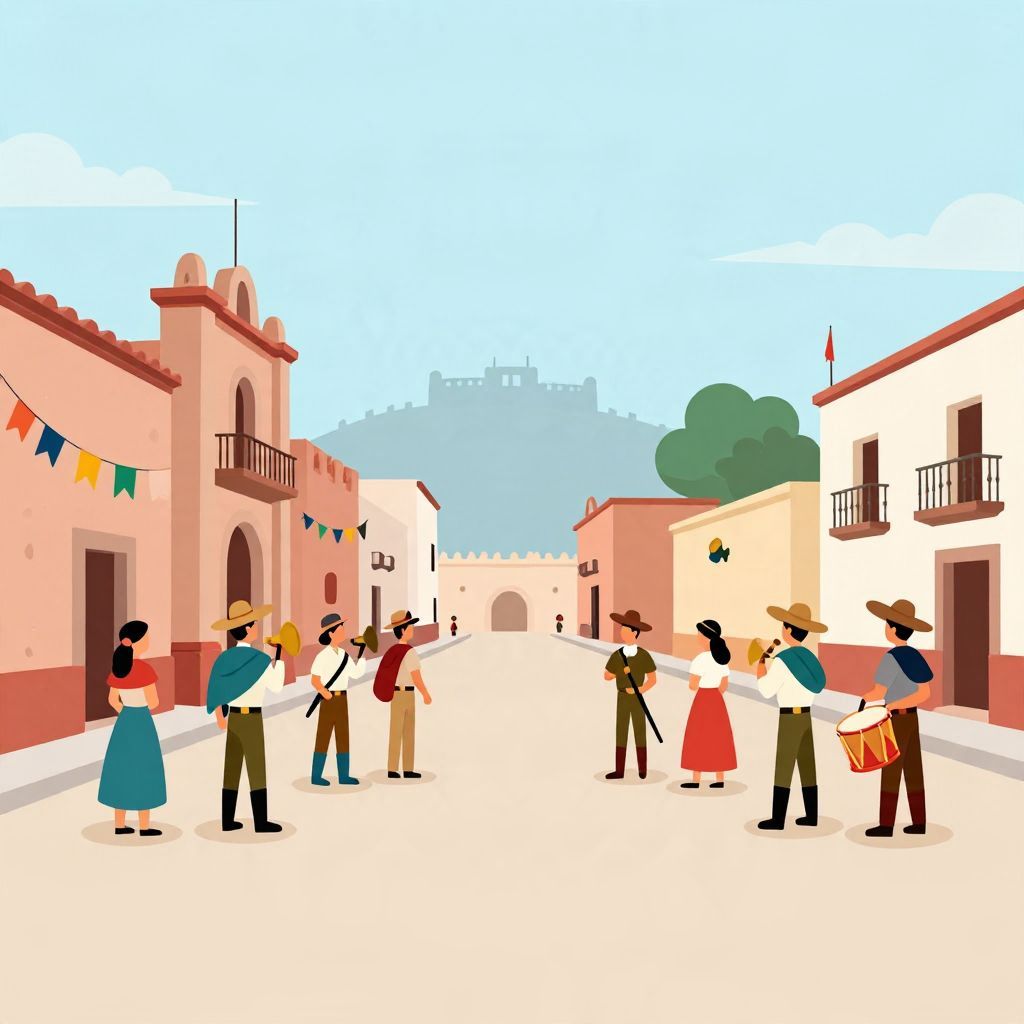
In Mexico, Cinco de Mayo is celebrated most visibly in Puebla, where parades, reenactments, civic ceremonies, and cultural events often take place. Schools, local governments, and community groups may mark the day with speeches, dances, music, and displays of regional pride.
Outside Puebla, the observance can be modest or even barely noticed. Many Mexicans treat it as a day of historical remembrance rather than a major national holiday. Businesses may remain open, and daily life often continues normally, especially in areas far from the battle’s location.
Typical forms of observance
- Military and civic parades in Puebla
- School events teaching the history of the Battle of Puebla
- Cultural performances, music, and folkloric dance
- Official speeches honoring Mexican resistance and national sovereignty
- Local festivals connected to regional identity
These celebrations are rooted in history, but they are not uniform across the country. Like many holidays, Cinco de Mayo is shaped by local traditions, regional pride, and the way schools and governments choose to present the past.
Why Many People Confuse Cinco de Mayo with Mexican Independence Day
One of the most common misunderstandings is that Cinco de Mayo is Mexico’s Independence Day. It is not. Mexico’s Independence Day is September 16, which commemorates the start of the independence movement in 1810 with the Grito de Dolores.
This confusion is understandable because both dates are patriotic and both are associated with Mexican identity. But historically they refer to very different events separated by more than 50 years. Independence Day celebrates the beginning of the struggle against Spanish rule; Cinco de Mayo remembers resistance to French intervention.
Two different national memories
- September 16 — Mexico’s Independence Day, a major national holiday
- May 5 — the Battle of Puebla, a more limited historical commemoration
In Mexico, September 16 is generally the more important national celebration. It includes civic ceremonies, public festivities, and a strong sense of national unity. Cinco de Mayo, by contrast, is more regional and more historical in tone.
How Cinco de Mayo Became Bigger in the United States
Although Cinco de Mayo has real historical roots in Mexico, its large-scale popularity in the United States developed for different reasons. Over time, Mexican American communities and later commercial marketing helped turn the date into a broader celebration of Mexican culture, food, music, and identity.
In the U.S., the holiday grew especially in the 20th century and became widely commercialized in the late 20th century. For many Americans, it became associated with parties, restaurant promotions, and general Hispanic or Mexican-themed festivities, sometimes with little understanding of the battle itself.
Why the U.S. version differs
The American celebration reflects a different historical context. Mexican Americans used the date to express pride in Mexican heritage, especially in places where community identity needed public recognition. Later, businesses adopted the holiday because it was easy to market and culturally recognizable.
That commercial growth helped spread awareness, but it also blurred the historical meaning. As a result, many people now know the date as a festive occasion without knowing that it commemorates a specific 1862 battle in Puebla.
The Historical Background: France, Mexico, and the 1860s
To understand Cinco de Mayo, it helps to know the political crisis that led to the Battle of Puebla. In the early 1860s, Mexico was weakened by years of civil conflict, financial strain, and political instability. Juárez’s liberal government faced serious challenges at home and abroad.
When Mexico suspended payments on foreign debts, France used the situation as an opening for intervention. Britain and Spain also had claims, but they eventually withdrew. France, however, stayed and pursued a more ambitious plan: creating a French-backed monarchy in Mexico under Maximilian of Habsburg.
The road to the battle
- Mexico struggled with debt and political division after years of conflict
- President Benito Juárez suspended debt payments in 1861
- European powers intervened to demand repayment
- France expanded its role beyond debt collection into imperial occupation
- Mexican forces resisted at Puebla on May 5, 1862
The Battle of Puebla was therefore part of a much larger struggle over sovereignty. The victory did not end the French threat, but it showed that Mexican resistance was possible and politically meaningful.
What the Battle Meant for Mexican National Identity
Cinco de Mayo became important because it symbolized defense of the nation against foreign domination. In the 19th century, Mexico was still shaping its identity after independence from Spain. Victories like Puebla helped create a narrative of resilience, especially against outside powers trying to influence Mexican politics.
The battle also elevated figures such as General Ignacio Zaragoza, who became associated with courage and leadership. Yet the holiday is less about one heroic person than about collective resistance. That broader meaning helped the date survive in public memory, even when the war itself continued beyond 1862.
Symbolism versus military outcome
Historically, the Battle of Puebla was not the final turning point of the French intervention. The French later advanced, and Mexico experienced further hardship before the intervention collapsed. But symbolic victories can matter deeply in national memory. Cinco de Mayo represents that kind of victory: brief, inspiring, and nationally meaningful.
So, Is Cinco de Mayo a Big Holiday in Mexico?
For most of Mexico, Cinco de Mayo is not among the biggest holidays. It is important historically, but it is not celebrated nationwide with the same intensity as Independence Day, Christmas, or Day of the Dead. Its strongest observance is in Puebla, where the battle took place and where local pride keeps the memory especially alive.
This is why the answer to the question is nuanced. Mexicans do celebrate Cinco de Mayo, but the scale and style of celebration vary greatly. In many places it is a civic remembrance; in Puebla it is a lively local holiday; and in the United States it has become a much larger cultural event.
Common Myths and Misunderstandings
Myth 1: Cinco de Mayo is Mexico’s national independence day
This is false. Mexico’s Independence Day is September 16, not May 5.
Myth 2: Everyone in Mexico celebrates Cinco de Mayo the same way
Also false. Celebration is strongest in Puebla and much less prominent elsewhere.
Myth 3: Cinco de Mayo is mainly about food and drinking
That idea comes mostly from commercialized celebrations outside Mexico. Historically, the date is about military resistance and national memory.
Myth 4: The Battle of Puebla ended the French intervention
It did not. The battle was an important victory, but the conflict continued for years afterward.
Why the Holiday Still Matters Today
Cinco de Mayo remains relevant because it connects history, identity, and memory. It reminds people that national celebrations are not always about the biggest military victories or the most famous political events. Sometimes a single battle becomes meaningful because it captures a larger story of endurance.
For Mexicans, especially in Puebla, the day honors resistance and local pride. For Mexican Americans, it can also serve as a celebration of heritage and cultural visibility. The holiday’s different meanings show how history changes as it moves across borders and generations.
So, do Mexicans celebrate Cinco de Mayo? Yes, but mainly as a historical commemoration, especially in Puebla, rather than as Mexico’s main national holiday. If you want to understand the date fully, it helps to compare it with what Cinco de Mayo is actually celebrating and to see how cultural traditions are expressed differently in Mexico, much as they are in other festive observances such as how people celebrate Christmas.