
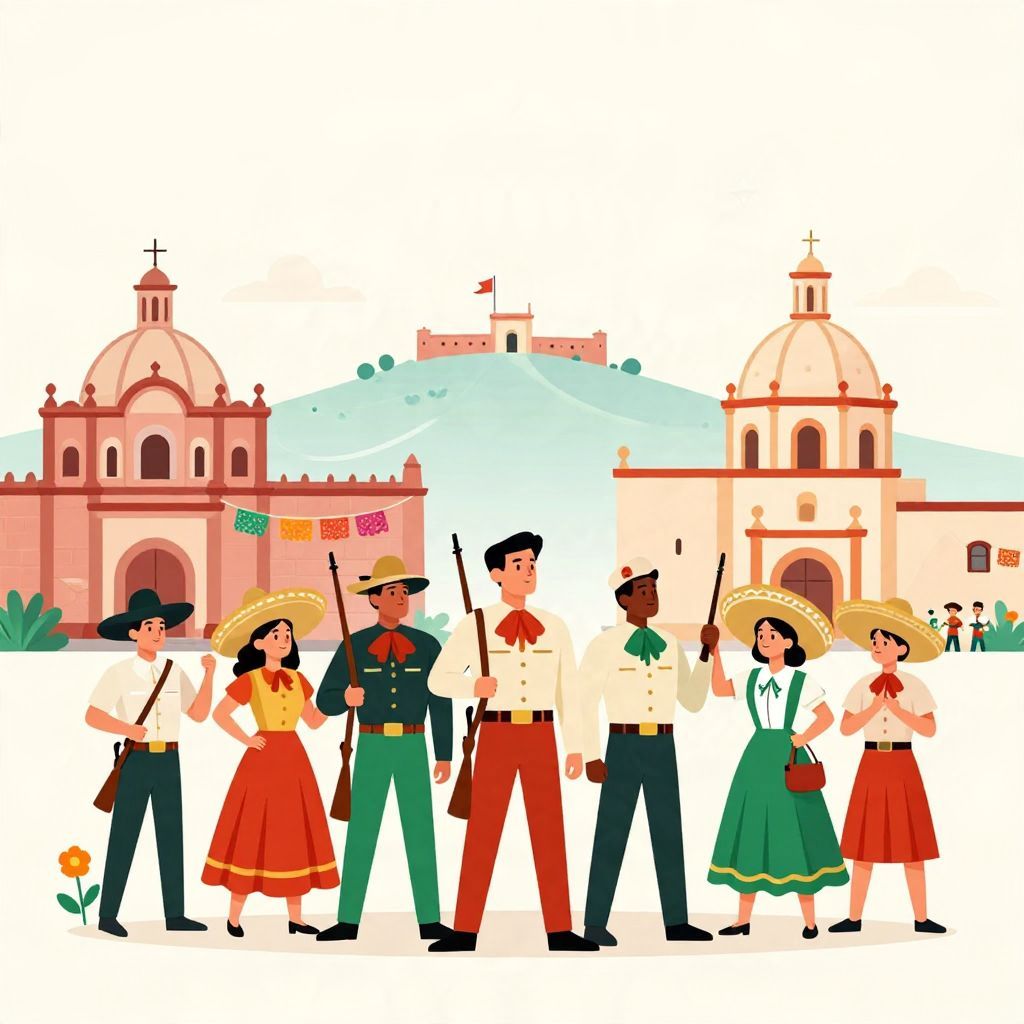
Cinco de Mayo is often mistaken for Mexico’s Independence Day, but it actually commemorates a specific military victory. The date marks the Mexican army’s defeat of French forces at the Battle of Puebla on May 5, 1862, a symbolic moment of resistance during a much larger war.
Today the holiday is celebrated in different ways in Mexico and the United States, and its meaning has changed over time. To understand what Cinco de Mayo is celebrating, it helps to look at the battle itself, the political crisis behind it, and how the date became a broader cultural observance.
What Is Cinco de Mayo Celebrating?
Cinco de Mayo celebrates Mexico’s victory over the French army at the Battle of Puebla on May 5, 1862. It is not Mexico’s independence day. The battle became a symbol of national resistance, especially because Mexican forces were outnumbered and poorly equipped, yet still repelled a better-armed foreign army.
The Historical Background: Why Was France Fighting in Mexico?
To understand Cinco de Mayo, you need the crisis that led to the battle. In the early 1860s, Mexico was politically unstable and financially weakened after years of internal conflict. President Benito Juárez suspended foreign debt payments, which angered European creditors. France, under Napoleon III, used the debt issue as part of a larger plan to expand influence in the Americas.
Britain and Spain initially joined France in pressuring Mexico, but both withdrew after negotiations. France stayed, and its intervention soon became a full military campaign. Napoleon III hoped to establish a French-backed empire in Mexico, which would strengthen French power and limit U.S. influence while the United States was distracted by its Civil War.
The road to Puebla
French forces advanced inland toward Mexico City. Puebla, a strategically important city southeast of the capital, became the site of the first major confrontation. Mexican troops were led by General Ignacio Zaragoza, who organized a defense with limited resources. The French army was considered one of the strongest in the world at the time, which made the outcome especially surprising.
The Battle of Puebla on May 5, 1862
The Battle of Puebla took place on May 5, 1862. Mexican troops defended fortifications near the city, including the forts of Loreto and Guadalupe. Despite being outnumbered, they held their position and forced the French to retreat. The victory did not end the French intervention, but it was a major morale boost for Mexico.
Why the battle mattered
The battle mattered less because it ended the war than because it proved Mexico could resist a powerful foreign army. It became a symbol of national pride, unity, and determination. Zaragoza’s victory also briefly slowed French momentum and gave Mexico time to organize further resistance.
It is important to be precise here: Cinco de Mayo did not mark the final defeat of France in Mexico. French forces returned, captured Mexico City in 1863, and helped install Maximilian of Habsburg as emperor. Mexico’s eventual recovery of sovereignty came later, after years of fighting and political struggle.
What Cinco de Mayo Is Not
One of the most common misunderstandings is that Cinco de Mayo is Mexico’s equivalent of the Fourth of July. It is not. Mexico’s main national independence holiday is September 16, which commemorates the start of the independence movement in 1810, not the Battle of Puebla.
Another misconception is that Cinco de Mayo is celebrated equally across all of Mexico. In reality, it is observed most visibly in the state of Puebla, where the battle occurred, and in some other parts of the country. It is far more prominent in the United States, where it developed a different cultural meaning.
How the Holiday Became More Popular in the United States
Cinco de Mayo gained wider visibility in the United States during the 20th century, especially among Mexican American communities. For many, it became a way to celebrate Mexican heritage, identity, and resilience. Over time, however, the holiday was also commercialized and turned into a broader, sometimes superficial, celebration of Mexican culture.
Cultural celebration versus historical memory
In the U.S., Cinco de Mayo often includes food, music, dancing, and public festivals. These celebrations can be meaningful expressions of cultural pride, but they sometimes blur the holiday’s historical origin. The result is a date that many people know as a festive occasion without understanding the battle or the French intervention behind it.
That shift is part of the holiday’s history. Public celebrations often evolve beyond their original political meaning, especially when they cross borders and enter popular culture. Cinco de Mayo is a good example of how a military victory can become both a historical commemoration and a cultural event.
Key Facts About Cinco de Mayo
- Date: May 5, 1862
- Event: Battle of Puebla
- Mexican commander: General Ignacio Zaragoza
- Opponent: French imperial forces
- What it celebrates: Mexico’s victory over France at Puebla
- What it is not: Mexico’s Independence Day
- Where it is most observed: Puebla in Mexico; widely in the United States as a cultural holiday
Why the Battle of Puebla Still Matters
Cinco de Mayo remains important because it represents more than a single battlefield success. It reflects Mexico’s struggle to defend its sovereignty during a period of foreign intervention and internal weakness. The victory at Puebla became a lasting symbol that a smaller, less equipped force could still resist imperial ambition.
The holiday also shows how history and memory can diverge. The battle itself was one event in a longer war, but its symbolic power grew over time. In Mexico, that symbolism is tied to national resistance. In the United States, it has also become a marker of Mexican American identity and public celebration.
Conclusion: The Real Meaning of Cinco de Mayo
Cinco de Mayo celebrates Mexico’s victory at the Battle of Puebla on May 5, 1862, not independence from Spain. Its historical importance lies in the defense of Mexican sovereignty against French intervention, and its modern meaning reflects both memory and cultural celebration. For more on related observances, see what May 5th means historically and this look at Mexican holiday traditions.