
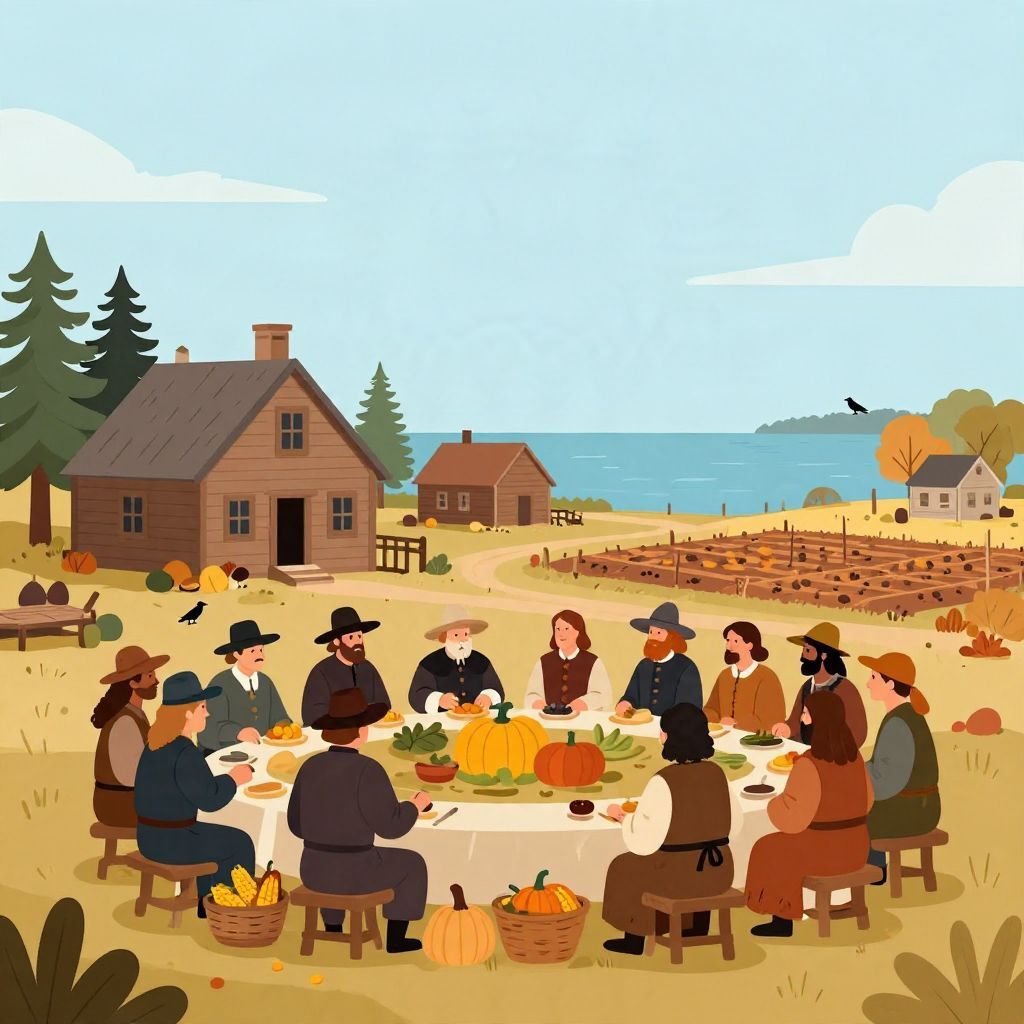
Thanksgiving is often associated with a single feast in early America, but its origins are more layered than the popular story suggests. The holiday developed from a mix of English religious customs, colonial harvest celebrations, and later national mythmaking in the United States.
If you are asking where Thanksgiving originated, the short answer is that its best-known American roots are in New England, especially the Plymouth Colony in present-day Massachusetts, but the holiday’s deeper background reaches back to European harvest festivals and days of thanksgiving in English Protestant tradition.
Where Did Thanksgiving Originate?
Thanksgiving originated in colonial New England, where English settlers held religious “days of thanksgiving” to mark survival, harvests, and other blessings. The most famous event linked to the holiday is the 1621 harvest feast at Plymouth in present-day Massachusetts, though that gathering was not the first thanksgiving and was not yet the modern holiday.
The Historical Background Before Plymouth
Long before the Pilgrims arrived in North America, Europeans had long celebrated harvests and held special religious observances of gratitude. In England, Protestant communities used “days of thanksgiving” to thank God for military victories, good weather, or relief from hardship. These were not annual feasts in the modern sense, but solemn religious occasions shaped by the Reformation.
English religious customs mattered
The settlers who became associated with Thanksgiving were English Separatists, often called Pilgrims, who had left England for religious reasons. They brought with them a tradition of setting aside days for prayer and thanksgiving. In that sense, Thanksgiving’s origins are not purely American; they are rooted in English religious culture and then reshaped by life in the colonies.
Harvest celebrations were common across cultures
It is also important to separate the holiday’s origin from the specific American story. Many societies have celebrated harvests. The New England version became distinctive because it blended harvest gratitude, survival in a harsh environment, and the later national desire to create a shared origin story.
The 1621 Plymouth Feast: The Best-Known Origin Story
The most famous event associated with Thanksgiving took place in 1621 at Plymouth Colony in present-day Massachusetts. After the first successful harvest, the colonists held a multi-day feast with the Wampanoag people. This gathering is often described as the “first Thanksgiving,” but historians usually treat that label cautiously because the participants did not call it that in the modern holiday sense.
What we know about the event
The 1621 feast was likely a harvest celebration rather than a formal religious thanksgiving service. It probably included food, recreation, and diplomacy. The Wampanoag leader Massasoit and his people played a major role in the colony’s survival, and the event reflected a temporary alliance between Native people and English settlers.
What the feast was not
It was not the origin of the modern national holiday in a direct line. It was one event among several early colonial thanksgivings. It also was not the familiar Thanksgiving dinner of later centuries. There is no evidence of pumpkin pie, mashed potatoes, or cranberry sauce in the form people imagine today.
Why Plymouth Became the Center of the Thanksgiving Story
Plymouth became central because later Americans wanted a founding story that connected gratitude, family, and national identity. In the 19th century, writers and reformers promoted the Plymouth feast as a symbolic beginning for Thanksgiving. Over time, that story became more famous than the broader history of colonial thanksgiving observances elsewhere in New England.
The holiday was shaped later, not fixed in 1621
For much of early American history, Thanksgiving was not a single nationwide holiday. Different colonies and states observed days of thanksgiving at different times for different reasons. The holiday only gradually became standardized. That means the “origin” of Thanksgiving depends on whether you mean the first feast, the first religious thanksgiving, or the creation of the modern holiday.
Other Early Thanksgivings in North America
It is a common misconception that Plymouth was the only early Thanksgiving. In fact, other European settlers in North America held thanksgiving observances before and after 1621. Spanish, French, and English colonists all had their own religious and seasonal ceremonies, making the holiday’s history broader than one New England event.
Examples of earlier or parallel observances
- Spanish explorers and settlers held religious services of thanksgiving in parts of North America in the 16th century.
- English colonists in Virginia also observed thanksgiving days, especially after surviving hardship or reaching a settlement milestone.
- New England colonies regularly proclaimed thanksgiving days for harvests, military events, or deliverance from danger.
Because of this, historians generally avoid calling Plymouth the single “first Thanksgiving” in an absolute sense. It is better understood as the most influential early Thanksgiving story in the United States.
How Thanksgiving Became a National Holiday
The modern American Thanksgiving holiday did not emerge immediately from the colonial period. It developed over time, especially in the 19th century, when writers, editors, and political leaders helped turn local thanksgiving observances into a national tradition. The holiday’s present form is the result of cultural selection as much as historical continuity.
Sarah Josepha Hale and the push for a national day
One of the most important figures in this process was Sarah Josepha Hale, a writer and editor who campaigned for a national Thanksgiving holiday in the mid-1800s. She believed a shared day of gratitude could promote unity. Her efforts helped persuade President Abraham Lincoln to proclaim a national Thanksgiving in 1863 during the Civil War.
Lincoln’s proclamation changed the holiday’s status
Lincoln’s decision did not create Thanksgiving from nothing, but it gave the holiday national recognition. The timing mattered: in the middle of a divided nation, a shared day of thanks offered a symbolic gesture of unity and reflection. After that, Thanksgiving became increasingly associated with the United States as a whole.
Where in the World Did the Tradition Come From?
To answer the question fully, Thanksgiving originated in more than one place. Its immediate American roots are in New England, especially Plymouth, but its deeper cultural ancestry lies in England and in older European harvest and religious traditions. The holiday is therefore both a colonial American creation and a continuation of older customs.
Three layers of origin
- Ancient and European harvest customs provided the broader seasonal idea of giving thanks after gathering food.
- English Protestant “days of thanksgiving” supplied the religious language and practice brought by settlers.
- Colonial New England, especially Plymouth, gave the holiday its most famous American narrative.
This layered origin explains why Thanksgiving is both historical and symbolic. It is not simply a reenactment of one meal. It is a holiday built from religious observance, colonial survival, and later national identity.
Myth, Memory, and the Native American Role
Any serious history of Thanksgiving must include Native peoples, especially the Wampanoag, whose role in the Plymouth story is essential. The feast is often told as a friendly meeting between equal partners, but the broader history of English colonization in New England involved displacement, disease, and conflict. The holiday’s origin story has often softened that reality.
Why this matters historically
The Wampanoag were not background figures in a settler tale; they were political actors responding to changing conditions in their region. Their alliance with Plymouth was shaped by diplomacy and survival. Later retellings of Thanksgiving often simplified or erased this context, which is why historians stress the difference between mythic memory and documented history.
So, Where Did Thanksgiving Originate?
Thanksgiving originated in colonial New England, especially in the cultural world of Plymouth Colony, but its roots stretch back to English religious thanksgiving traditions and older harvest customs. The holiday became American through centuries of change, and its modern form was shaped most decisively in the 19th century, not in 1621 alone.
In other words, Thanksgiving did not begin in one exact moment or one exact meal. It grew out of European tradition, colonial experience, and national storytelling. If you want to explore how American identity developed around holidays and public memory, you may also find more history articles on the site and this broader background on American imperialism useful for understanding how national narratives are formed.