
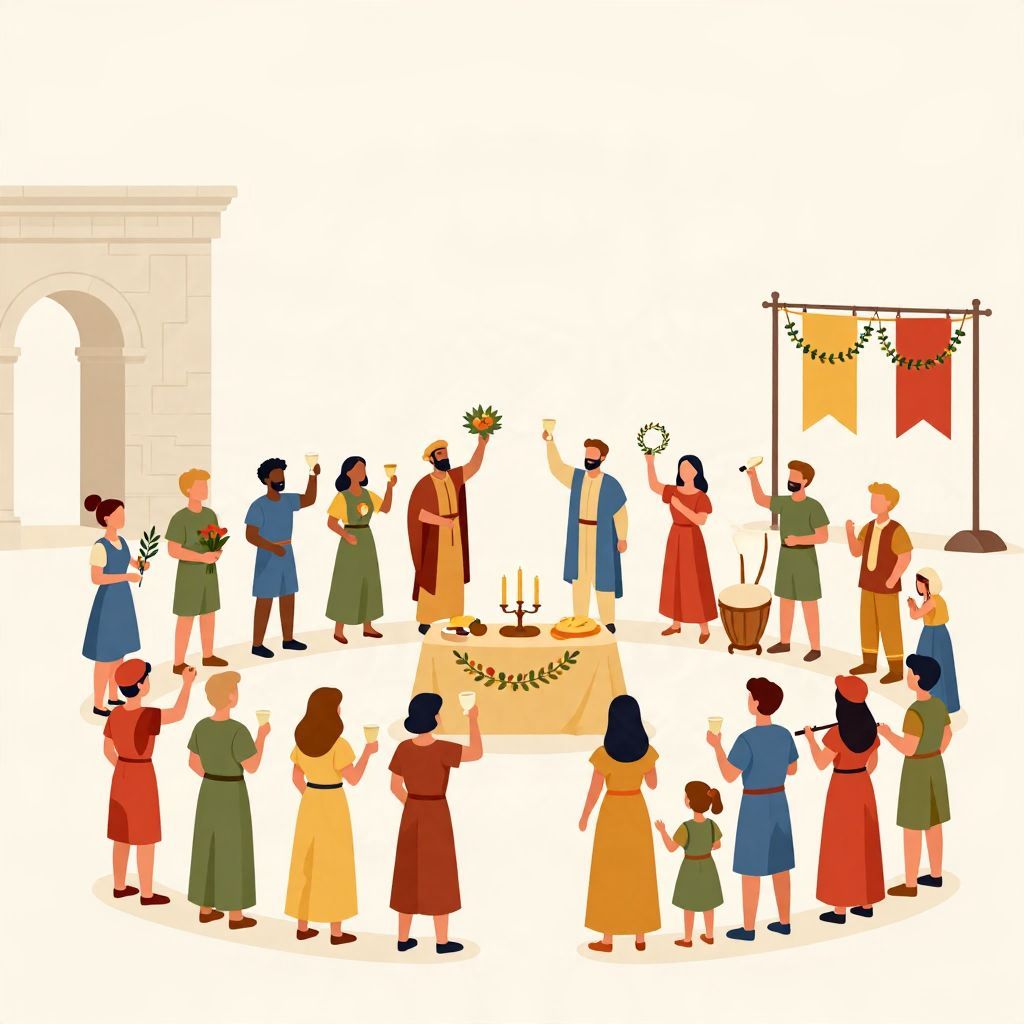
Why do we celebrate? Across history, people have marked special days to remember sacred events, honor rulers and ancestors, celebrate victories, and strengthen community identity. Celebrations are never just about fun; they reveal what a society values, fears, and remembers.
The reasons for celebration have changed over time, but the basic human impulse is ancient. From harvest festivals in early agrarian societies to modern national holidays, celebrations have helped people create shared meaning, mark the passage of time, and turn memory into ritual.
Why do we celebrate?
We celebrate to give meaning to time, memory, and community. Historically, celebrations have honored gods, commemorated political events, marked seasonal changes, and reinforced social bonds. They also helped societies teach values, preserve traditions, and express collective identity in ways that words alone could not.
The historical roots of celebration
Celebration is older than written history. Archaeologists and historians see evidence of ritual feasting, music, dance, and burial ceremonies in prehistoric societies, suggesting that people gathered for reasons beyond survival. These early events likely blended religion, memory, and social cohesion.
Ritual, religion, and the sacred calendar
In many ancient civilizations, celebration was tied to religion. Egyptians held festivals for gods such as Osiris and Amun. Mesopotamian societies used ritual calendars to renew kingship and honor divine powers. In ancient Greece, public festivals like the Panathenaia brought together worship, athletic contests, and civic pride. In Rome, holidays such as Saturnalia temporarily reversed normal social rules, showing how celebration could both reinforce and relax order.
These festivals were not merely entertainment. They expressed the belief that the world depended on divine favor, seasonal balance, and proper ritual action. By repeating ceremonies each year, communities connected the present to a sacred past.
Seasonal change and agricultural life
For farming societies, the calendar was shaped by planting, harvest, rain, and winter. Many celebrations grew out of these cycles. A successful harvest meant survival, so feasts were both gratitude and practical redistribution of food. In this sense, celebration was a response to uncertainty: people marked the moments when life seemed most vulnerable or most secure.
This agricultural foundation helps explain why so many celebrations cluster around solstices, equinoxes, and harvest seasons. Even when later religions or governments gave these days new meanings, older seasonal rhythms often remained beneath the surface.
How celebrations became historical memory
As societies became more complex, celebrations began to preserve collective memory. They commemorated victories, dynasties, revolutions, saints, and founding myths. In this way, a celebration became a form of public history, teaching people what their community wanted them to remember.
Commemoration and identity
States and empires used celebrations to legitimize power. A ruler’s accession, a military triumph, or an imperial anniversary could be turned into a public festival. These events reminded subjects who held authority and why. In medieval and early modern Europe, royal entries, coronations, and saint’s days all helped display political and religious order.
Modern national holidays developed from this older practice. Independence days, republic days, and memorial observances are not only dates on a calendar; they are narratives about origin, sacrifice, and belonging. They invite people to see themselves as part of a larger historical story.
Myth, legend, and historical fact
Not every celebrated origin story is historically secure. Some holidays rest on well-documented events, while others combine fact with legend. For example, many communities preserve stories about founders or miraculous interventions that may reflect later tradition more than precise historical evidence. Historians usually distinguish between the event itself and the meaning later generations attached to it.
This matters because celebrations often tell us as much about the time they were formalized as about the event they commemorate. A holiday may be ancient in origin, but its modern form can be surprisingly recent.
Why societies use celebration to build community
Celebration creates shared experience. When people gather for a feast, parade, religious rite, or memorial, they temporarily step outside ordinary life and participate in something collective. Historically, this has been one of the most powerful ways to build solidarity across class, age, and family lines.
Feasting, music, and public gathering
Feasts have long been central to celebration because sharing food signals trust and abundance. Music, dance, costumes, and public processions intensify the experience and make memory physical. These elements are common across cultures because they are easy to recognize, repeat, and pass on.
In many societies, public celebration also gave ordinary people a rare chance to be visible. Processions, markets, and festivals brought together elites and commoners in the same space, even if not on equal terms. That visibility helped make the social order feel real and shared.
Ritual repetition and social stability
Celebrations are repeated because repetition creates continuity. A yearly festival tells participants that they belong to a tradition larger than themselves. Even when political systems change, familiar rituals can remain, adapting to new beliefs while preserving older patterns of behavior.
This is one reason celebrations can survive conquest, migration, and reform. They are flexible. A religious feast may become a family holiday; a political commemoration may become a civic tradition; an ancient seasonal rite may survive as a cultural custom.
How celebrations changed in the modern world
Modern celebrations are shaped by nation-states, mass media, and global migration. Over time, many holidays moved from local or religious observance toward broader public recognition. Governments formalized some celebrations through public holidays, while communities carried others across borders and adapted them to new settings.
National holidays and modern politics
In the 18th and 19th centuries, revolutions and independence movements transformed celebration into a political tool. Public holidays were used to honor constitutions, revolutions, and national heroes. These events encouraged citizens to imagine themselves as members of a nation rather than subjects of a monarch or members of a local community alone.
At the same time, modern states often standardized calendars. Schools, workplaces, and official ceremonies gave holidays a uniform shape, making celebration part of civic life. This standardization did not erase older meanings, but it did make them more public and more regulated.
Migration and cultural continuity
Migration has also reshaped celebration. When people move, they often carry holidays with them. In new places, they may adjust foods, dates, language, and customs to fit local conditions while preserving the core meaning of the celebration. This is one reason many holidays today have regional variations.
Such changes are not signs of loss alone. They show how traditions survive by adapting. A celebration can remain recognizable even when its form changes from one country, city, or generation to another.
What celebrations reveal about history
Celebrations are valuable to historians because they reveal what people thought deserved remembrance. A society’s holidays can show its religious beliefs, political priorities, economic rhythms, and family structures. They also show how power works: who gets honored, who is excluded, and what version of the past is being promoted.
Celebration as a historical source
Historians study festivals, liturgies, calendars, parade records, songs, and civic ceremonies to understand how people lived. These sources can reveal public values more clearly than official laws alone. A holiday calendar may show which saints were important, which battles were commemorated, or which seasons shaped daily life.
Celebration can also expose tension. Some holidays were contested because different groups disagreed about their meaning. Reformers sometimes tried to suppress festivals they saw as wasteful, pagan, or politically dangerous. Others defended them as essential to identity and memory. That conflict itself is part of history.
Why some celebrations endure
Celebrations endure when they answer deep human needs: the need to remember, to belong, to mark time, and to hope. Even when the original reason fades, the ritual may remain because it still organizes community life. A holiday can outlast the empire, religion, or ruler that first shaped it.
That endurance is one of the most striking features of celebration in history. It is not simply a leftover from the past. It is a living practice that keeps being reinterpreted by each generation.
Conclusion: the deeper reason we celebrate
We celebrate because human beings use ritual to turn events into meaning. Historically, celebrations have honored the sacred, remembered the past, marked the seasons, and strengthened communities. Their forms change, but their purpose remains remarkably consistent: to help people understand who they are and where they belong.
If you want to see how this works in specific traditions, you can explore why Mexicans celebrate Christmas on the 24th or learn more about what May 5th represents.