
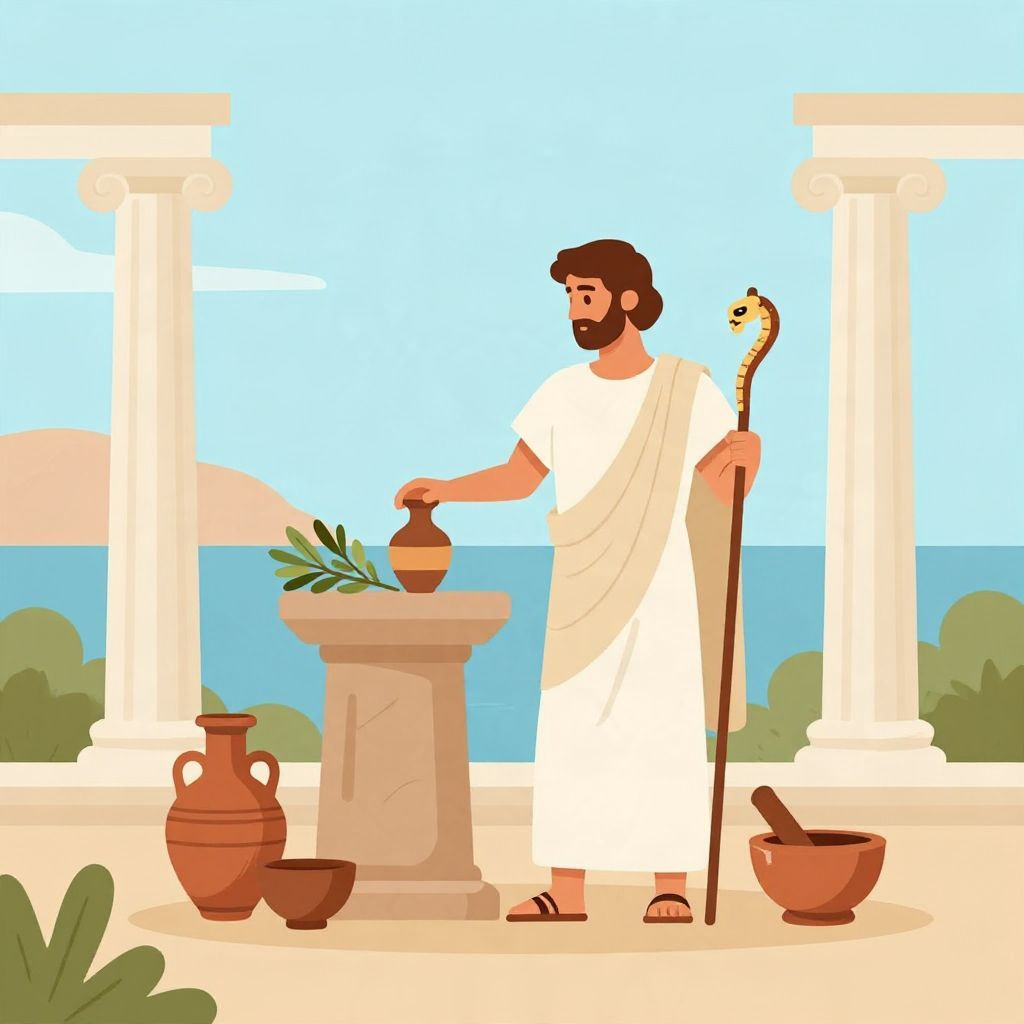
What is panacea? In history, the word has two important meanings: in Greek myth, Panacea was a goddess associated with healing, and in later English usage, “panacea” came to mean a cure-all or universal remedy. Both meanings matter because they show how an ancient religious idea became a lasting metaphor in medicine, politics, and everyday speech.
The word has survived for more than two millennia, but the belief behind it has changed. What began as a divine figure in the healing world of ancient Greece eventually became a symbol for the human hope that one solution might fix every problem.
What Is Panacea?
Panacea is originally the name of a Greek healing goddess, later used in English to mean a remedy that supposedly cures all diseases or solves all problems. In historical terms, it is best understood as both a mythological figure and a powerful metaphor for universal cure, especially in medicine and policy.
The Mythological Origins of Panacea
Panacea comes from ancient Greek religion and medicine. She was one of the daughters of Asclepius, the god of healing, and is usually identified alongside other healing figures such as Hygieia, Iaso, Aceso, and Aegle. These figures reflected the Greeks’ attempt to understand health as a divine and practical matter at once.
Meaning of the name
The name Panacea comes from Greek roots meaning roughly “all-healing” or “all-remedy.” That etymology is important: even in antiquity, the name suggested completeness, not merely treatment. Panacea represented the hope that healing could be total, restoring the body fully rather than easing one symptom at a time.
Panacea in Greek healing culture
In the ancient Greek world, healing was often connected to temples, ritual, and offerings. People visited sanctuaries of Asclepius seeking cures for illness, injury, and chronic pain. Panacea was part of this broader healing tradition. She was not the single most famous healing deity, but her name captured an ideal that many patients and worshippers desired: complete recovery.
How Did Panacea Become a Word for a Universal Cure?
Over time, “panacea” moved from myth into metaphor. Writers in Greek and later Latin used it to describe something that could heal everything, and English inherited that sense. By the early modern period, the word was commonly used for a supposed cure-all, especially in medical and philosophical writing.
From goddess to metaphor
This shift is a typical example of how ancient religious language survives after the original cult fades. The goddess Panacea was never simply a scientific concept, but her name was so closely tied to healing that it became useful as a general term. Once that happened, the word could be applied to any claimed universal solution, whether medicinal, social, or political.
Why the metaphor lasted
The idea of a panacea remains attractive because people often want simple answers to complex problems. In history, that desire appears again and again: a single herb, a miracle drug, a reform, a technology, or a policy is presented as the answer to everything. The word “panacea” has endured because it names both the hope and the warning embedded in that impulse.
Panacea in Ancient Medicine and Religion
Ancient healing did not separate medicine from religion in the modern way. Illness could be physical, spiritual, or both, and healing practices often included prayer, sacrifice, dream interpretation, diet, and practical treatment. Panacea belongs to this world of mixed explanations and remedies.
Healing at the sanctuaries of Asclepius
At Asclepian sanctuaries, worshippers sought cures through ritual incubation, in which they slept in sacred spaces hoping for healing dreams. Offerings and dedications recorded gratitude for recovery. Panacea’s association with healing fits this environment, where the boundary between divine intervention and medical care was fluid.
Relationship to other healing figures
Panacea was not isolated. Her family group around Asclepius expressed different aspects of health:
- Hygieia represented health and cleanliness.
- Panacea represented universal remedy or healing.
- Iaso was linked with recovery.
- Aceso was associated with the healing process.
- Aegle was sometimes connected with radiant health or beauty.
These figures show that the Greeks imagined healing as a process with several dimensions, not a single event.
What Panacea Does Not Mean
Because the word is often used loosely today, it is worth clarifying what it does not mean. A panacea is not simply any medicine, and it is not a proven cure. Historically and linguistically, it refers to an idealized universal remedy, often one that is claimed rather than demonstrated.
Not a scientific certainty
Modern medicine is built on evidence, testing, and the recognition that most diseases have different causes. That is very different from the older dream of a single cure for all ailments. When historians or writers use “panacea,” they usually mean a solution that is presented as too good to be true, or at least far broader than evidence supports.
Not limited to medicine
The word is also used outside healthcare. Political leaders, reformers, and commentators may describe a policy as a panacea when they believe it will solve poverty, crime, inequality, or conflict. In historical writing, this usage often carries a skeptical tone, because broad social problems rarely have one simple fix.
Panacea in Later History and Intellectual Life
As classical learning spread through the Roman world and later Europe, the name Panacea remained available to educated writers. Renaissance scholars, physicians, and poets revived many ancient terms, and panacea became a standard word in medical and literary language.
Early modern medicine and universal remedies
In the early modern period, medicine was full of claims about special substances that could cure many illnesses. Some were based on herbs, minerals, or alchemical theories; others were commercial products sold as wonder medicines. The word panacea fit this world well, because it captured the promise of total healing that many sellers wanted to advertise.
The rise of skepticism
As medical knowledge advanced, especially from the seventeenth century onward, educated observers became more cautious about universal claims. The history of the word “panacea” reflects this change. It survived not because people found a true cure-all, but because the term remained useful for criticizing exaggerated promises.
Why the Idea of Panacea Matters Historically
The history of panacea reveals something larger than a single myth. It shows how ancient religion, language, medicine, and human hope can overlap across centuries. A word that began in Greek myth became a lasting way to talk about ideal solutions and unrealistic expectations.
A window into ancient values
Panacea helps historians understand how the Greeks thought about health. They did not see healing as purely mechanical. Instead, they placed it within a sacred world where gods, ritual, and medicine all mattered. The goddess Panacea is evidence of that worldview.
A warning about easy answers
The modern meaning of panacea is equally revealing. It reminds us that societies often search for one answer to many problems. History repeatedly shows the danger of that habit. Whether in medicine, economics, or politics, claims of a universal cure deserve careful scrutiny.
Key Facts About Panacea
- Origin: Ancient Greek religion and mythology.
- Meaning of the name: “All-healing” or “universal remedy.”
- Family: Usually described as a daughter of Asclepius.
- Historical role: A healing goddess associated with recovery and cure.
- Modern meaning: A cure-all or supposed solution to all problems.
- Historical significance: The word shows how mythological language can survive as a metaphor in medicine and public debate.
Conclusion
So, what is panacea? Historically, it is both a Greek healing goddess and a word for a universal remedy. Its long life in language reflects a timeless human desire for complete healing and simple solutions. For more on how ideas and meanings travel through history, see what a cultural script is and what American imperialism is.