
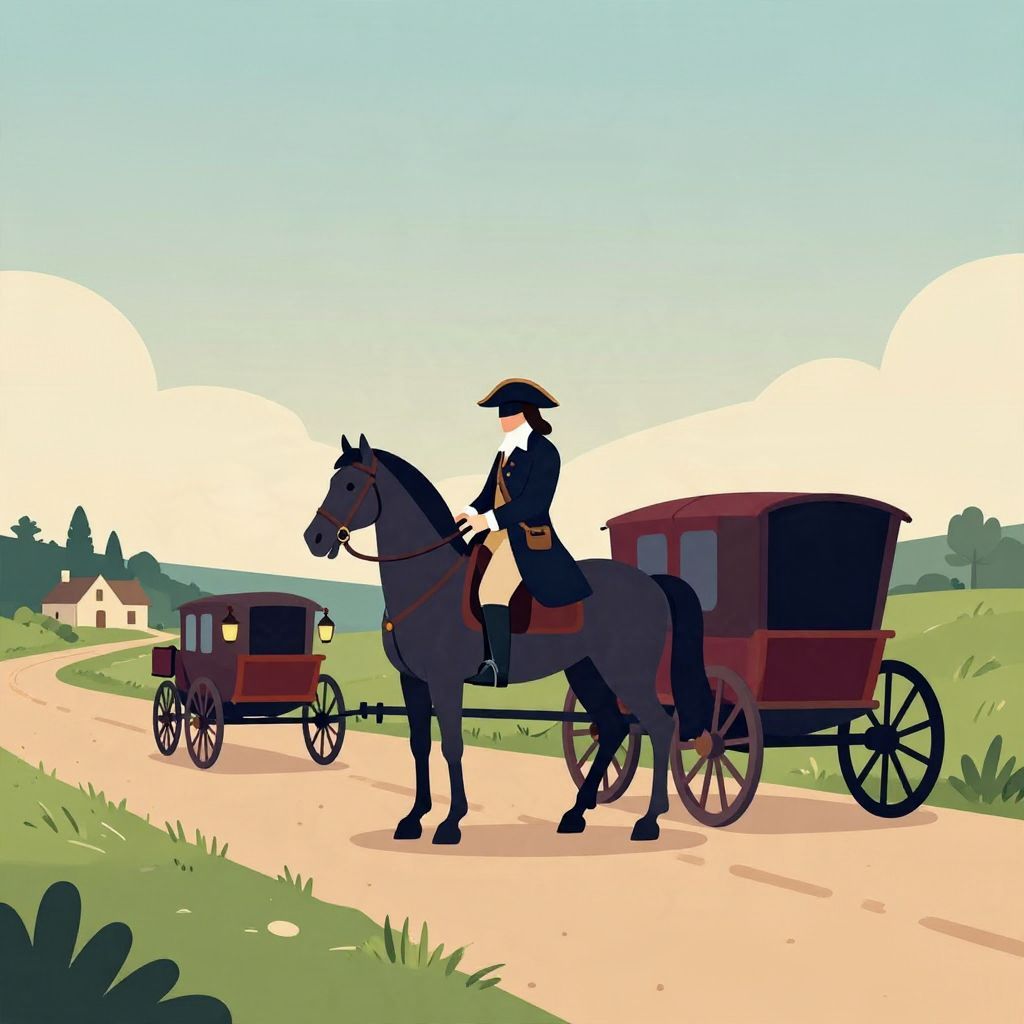
What is a highwayman? In history, the word usually refers to an armed robber who targeted travelers on public roads, especially in Britain and Ireland from the late 17th to early 19th centuries. Highwaymen became famous for stopping coaches, demanding money, and sometimes using the threat of violence rather than immediate force.
They are remembered both as criminals and as romantic figures in later folklore. The reality was harsher: highway robbery was dangerous, disruptive, and often punishable by death. Understanding highwaymen means looking at transport, law enforcement, social inequality, and the way legend turned crime into story.
What Is a Highwayman?
A highwayman was a mounted robber who preyed on people traveling by road, usually attacking coaches, horse riders, or isolated travelers. The classic highwayman is associated with the British “highway robbery” of the 1600s and 1700s, when roads were vulnerable and police forces were limited.
Where Did Highwaymen Come From?
The figure of the highwayman emerged from a world where travel was slow, roads were often poorly maintained, and state protection was limited. In England, the growth of road travel after the Tudor and Stuart periods created more opportunities for robbery. The term “highwayman” became common as public roads became central to commerce and communication.
Why roads were risky
Before modern policing, travelers could be isolated for long stretches. Wealthy passengers, merchants carrying cash, and mail coaches were attractive targets. A mounted robber could strike quickly and escape before local authorities arrived. This made roads, especially outside towns, ideal places for opportunistic crime.
Social and economic pressures
Highway robbery did not happen in a vacuum. Some highwaymen came from military backgrounds, including former soldiers left without steady work after wars. Others were driven by poverty, debt, or criminal networks. Still, it is important not to romanticize them: many highwaymen were violent offenders, and their victims ranged from ordinary traders to aristocrats.
The Golden Age of Highwaymen
The classic age of the highwayman is usually placed in the late 17th and 18th centuries, especially in England. This was the era that produced the most famous names and the strongest legends. It was also the period when stagecoaches, turnpike roads, and increased travel made robbery both more common and more visible.
Famous names in the tradition
Several historical figures became associated with highway robbery, though their reputations were shaped by later storytelling. Among the best known are Claude Duval, Dick Turpin, and James Hind. Their lives differed, and not every tale about them is reliable. In some cases, later ballads and novels exaggerated their charm, daring, or nobility.
- Claude Duval became famous for a stylish, supposedly courteous image.
- James Hind was linked to Royalist politics after the English Civil War.
- Dick Turpin is the most famous, but many stories about him are exaggerated or invented.
Reality versus legend
Popular culture often presents highwaymen as gallant rebels who robbed the rich and spared the poor. That image is only partly grounded in evidence. Some may have shown manners to victims, but robbery remained robbery. The “gentleman highwayman” is largely a literary and theatrical creation that grew stronger in the 18th and 19th centuries.
How Did Highwaymen Operate?
Highwaymen typically worked alone or in small groups. They used horses to move quickly and often chose places where travelers had little chance of escape. Their method relied on surprise, intimidation, and speed rather than prolonged fighting.
Typical tactics
- They watched roads or waited near known travel routes.
- They approached travelers on horseback, often with a pistol or sword.
- They ordered the victim to “stand and deliver,” a phrase now strongly linked to highway robbery in legend.
- They took money, watches, jewelry, or valuables, then fled.
Some highwaymen targeted coaches carrying mail or wealthy passengers. Others robbed solitary riders or small groups. Because roads were public and movement was frequent, a successful robber could vanish into the countryside before pursuit became effective.
Law, Punishment, and Policing
Highway robbery was treated as a serious felony in early modern Britain. The state increasingly tried to suppress it through harsher punishment, better road surveillance, and more organized law enforcement. Even so, enforcement remained uneven for much of the period.
Severe penalties
Convicted highwaymen could face execution, especially if they were found guilty of armed robbery. In England, many such crimes were capital offenses. Public executions were meant to deter others, but they also drew crowds and could turn criminals into grim celebrities.
Limits of early policing
Before modern police forces, local constables, parish officials, and private rewards were the main tools against highway robbery. The Bow Street Runners, formed in the mid-18th century in London, were an important step toward professional policing. Their work helped reduce some forms of organized road crime, though not immediately or completely.
Why Highwaymen Became Romantic Figures
Highwaymen gained a lasting place in literature, song, and popular memory because they fit a dramatic story: a lone rider, a moonlit road, a pistol, and a sudden confrontation. Later writers turned them into symbols of freedom, danger, and anti-authority rebellion.
Ballads, novels, and theater
Ballads and chapbooks helped spread colorful stories about famous robbers. In the 19th century, novels and stage plays often softened the brutality of highway robbery and emphasized style, wit, and daring. This created a powerful cultural image that still shapes how people imagine the highwayman today.
The appeal of the outlaw
The romantic highwayman appealed to audiences because he stood outside the law in a society marked by hierarchy and inequality. He could be imagined as a man who rejected authority, even when the historical record shows a more ordinary criminal reality. This tension between fact and legend is central to the highwayman’s reputation.
Highwaymen in Britain, Ireland, and Beyond
Although the highwayman is most closely associated with Britain, similar forms of road robbery existed elsewhere in Europe and in colonial settings. The exact name and cultural image varied, but the basic pattern was the same: armed robbery on roads where state power was thin and travel was vulnerable.
Britain and Ireland
In Britain and Ireland, road robbery became especially visible because of the importance of coach travel and the growth of printed news. Famous cases circulated quickly, and some robbers became national figures. In Ireland, road robbery also appeared in a broader context of political unrest, land conflict, and poverty.
Comparisons with other regions
Other countries had their own road bandits, brigands, and robbers, but the English-language “highwayman” image is distinctive because of its association with horses, pistols, and the stagecoach era. In that sense, the highwayman belongs to a wider European history of banditry, but with a specifically British cultural afterlife.
When Did Highwaymen Decline?
Highwaymen declined as transport, policing, and state power changed. Improved roads, more frequent patrols, and stronger law enforcement made armed robbery harder to carry out. The expansion of railways in the 19th century also reduced the centrality of the old highway network.
Changing travel and security
As roads became better organized and traffic increased, robbers had less chance to operate unnoticed. The rise of professional policing and more reliable criminal justice systems made capture more likely. By the mid-19th century, the classic highwayman had largely disappeared as a common figure.
From criminal type to historical memory
Even after highway robbery faded, the highwayman survived in stories, paintings, and songs. He became a symbol of a vanished road culture: isolated inns, coach travel, lantern light, and the danger of the open road. The historical figure was replaced by the cultural icon.
Key Facts About Highwaymen
- Definition: an armed robber who attacked travelers on public roads.
- Main period: especially common in Britain and Ireland from the late 17th to early 19th centuries.
- Usual method: mounted ambushes against coaches, riders, and isolated travelers.
- Social background: often linked to poverty, war, or criminal opportunity, though not always.
- Legal status: highway robbery was a serious felony and often a capital crime.
- Legacy: later literature and folklore turned some highwaymen into romantic outlaws.
Why the Highwayman Still Matters
The highwayman matters because he reveals how people traveled, feared crime, and imagined authority in the early modern world. He also shows how history and legend can diverge: the real highwayman was usually a dangerous robber, while the cultural highwayman became a stylish rebel of the road. To explore related historical systems of power and society, see what a feudal system was and what American imperialism was.