
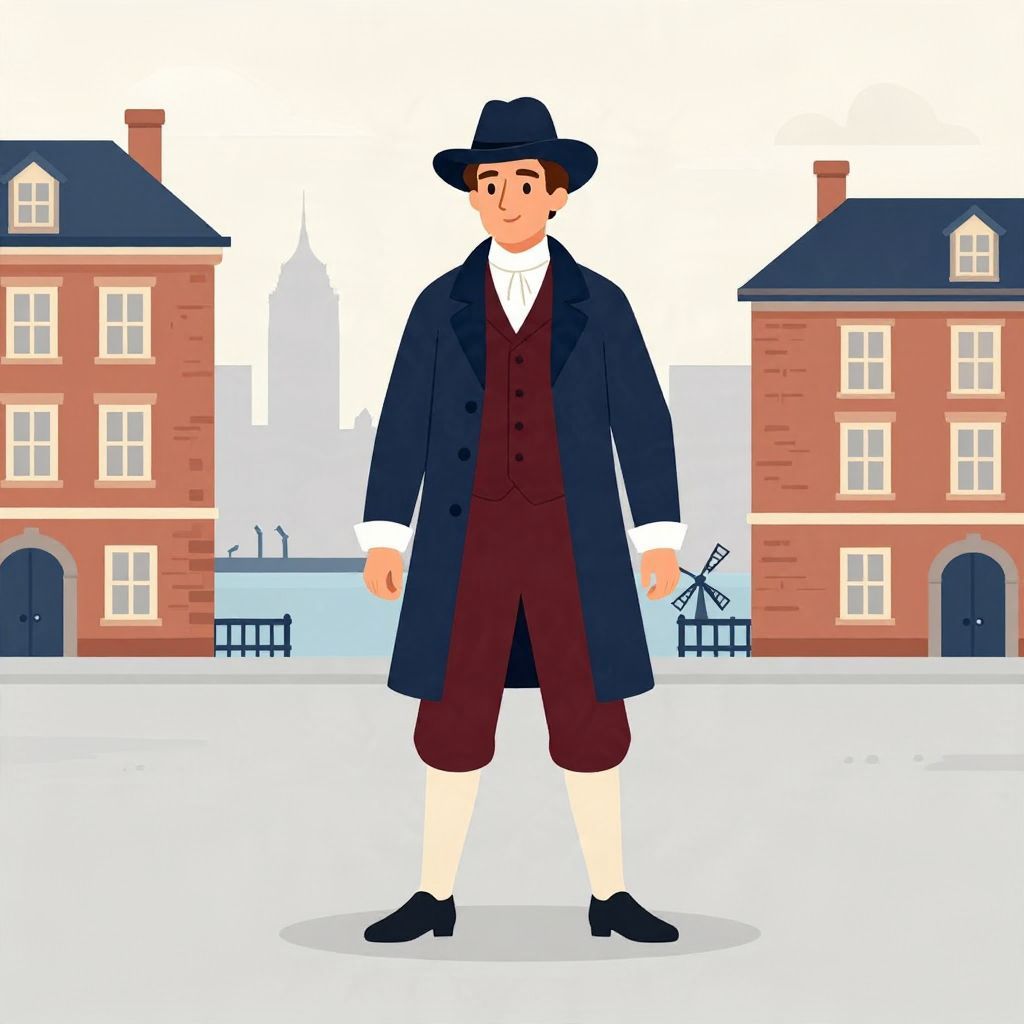
What are knickerbockers? The word can mean two related things: a style of loose-fitting trousers gathered below the knee, and, in some contexts, the people or culture associated with old New York. The clothing term is the one most readers mean today, especially when discussing 19th- and early 20th-century dress.
Knickerbockers were once common for boys, athletes, and outdoorsmen, and they became a recognizable part of Western fashion before gradually falling out of everyday use. Their history reflects changing ideas about practicality, class, childhood, sport, and modern style.
What are knickerbockers?
Knickerbockers are trousers that are full at the thigh and tightly gathered or fastened just below the knee. They were worn with long stockings or socks and were especially popular from the late 19th century into the early 20th century. The term can also refer to a traditional nickname for New Yorkers, but in clothing history it means knee-length breeches.
Where did knickerbockers come from?
The garment developed from earlier European breeches and riding clothes, which were designed for movement and for use on horseback. By the 18th and 19th centuries, knee-length trousers were common in parts of Europe and North America before long trousers became the standard for adult men. Knickerbockers emerged as a practical variation suited to active wear.
From breeches to modern trousers
Before long pants became dominant, men’s lower garments often ended at or just below the knee. This was true in aristocratic dress, military uniforms, and work clothing. As long trousers spread in the early 19th century, knee-breeches became less formal and more specialized. Knickerbockers inherited that older shape but were adapted for everyday use, especially for boys and sportsmen.
The name “Knickerbocker”
The word is often traced to Washington Irving’s satirical History of New York (1809), published under the pseudonym “Diedrich Knickerbocker.” Irving used the name to evoke old Dutch New York, and it later became attached to New Yorkers in general, especially those from established families. The clothing term likely drew on this cultural association, though the exact path from nickname to garment name is not perfectly documented.
How were knickerbockers worn?
Knickerbockers were typically worn with stockings, socks, or gaiters that covered the lower leg. They were often made of wool, tweed, cotton, or other sturdy fabrics. Because they ended below the knee, they allowed freedom of movement while still looking neat and tailored. That made them useful for school, outdoor activity, and certain kinds of work or travel.
Typical features
- Loose through the hip and thigh
- Gathered, buttoned, or buckled below the knee
- Usually paired with long socks or stockings
- Made from durable fabrics for active use
- Common for boys and men in informal settings
Not the same as shorts
Knickerbockers are not simply shorts. They extend to the knee or just below it and create a distinct silhouette. In some regions, especially in later American usage, the term could be applied loosely to various knee-length trousers, but historically the gathered lower leg is the key feature.
Why did knickerbockers become popular?
Knickerbockers became popular because they fit a changing world. Industrialization, growing interest in outdoor recreation, and new ideas about childhood all encouraged more practical clothing. They were easier to move in than stiff formal garments, and they suited activities such as cycling, hiking, golf, and school play.
Children’s clothing and changing ideas of age
In the 19th century, boys’ clothing increasingly reflected the idea that children should dress differently from adults. Knickerbockers became a common stage in boys’ dress before long trousers were adopted. This helped mark a transition from childhood to adulthood, and it gave parents a practical compromise between formality and freedom of movement.
Sport and leisure
Knickerbockers were especially associated with sports. Golfers, cyclists, baseball players, and hikers wore them because they were less restrictive than long trousers. In early baseball, for example, the uniform often included knee-length trousers, long socks, and caps. The style fit the broader late 19th-century rise of organized sport and outdoor leisure.
Knickerbockers in American culture
In the United States, knickerbockers became strongly associated with middle-class respectability, boyhood, and athletic life. They were common in school clothing and sports uniforms, and they appeared in photographs, advertisements, and illustrations from the late 1800s and early 1900s. Their popularity was never universal, but they were familiar enough to become a visual shorthand for an era.
The New York connection
The word “Knickerbocker” also became a cultural label for New York City and its older Dutch heritage. This is why the NBA team the New York Knicks use a shortened form of the name. But the clothing and the city nickname are not identical in origin, even though they overlap in American memory. The shared word helped give the garment a distinctly urban, East Coast flavor.
Baseball and the “knicker” look
Baseball uniforms helped keep the style visible well into the 20th century. Players wore trousers that ended below the knee, usually with high socks. This look became part of the sport’s identity and influenced how people imagined athletic dress more broadly. Even after everyday fashion changed, the baseball uniform preserved the knickerbocker silhouette.
When did knickerbockers fall out of fashion?
Knickerbockers gradually declined in everyday wear during the early to mid-20th century. Long trousers became more standard for boys and men, while shorts gained ground for children and sports. By the 1920s and 1930s, knickerbockers were less common in ordinary dress, though they remained visible in golf, scouting, and some school settings.
Why the change happened
Several trends pushed them out of fashion:
- Long trousers became more widely accepted for boys and younger men
- Shorts emerged as a simpler alternative for children and athletics
- Mass fashion moved toward cleaner, straighter silhouettes
- Urban life and changing social norms reduced the need for old-style practical dress
Fashion also changed because clothing increasingly signaled modernity. As suits became slimmer and more streamlined, the gathered knee of knickerbockers looked old-fashioned. What had once seemed practical began to seem dated.
Are knickerbockers still worn today?
Yes, but rarely in everyday fashion. Knickerbockers survive in specialized or nostalgic settings, especially in golf, historical reenactment, some traditional school uniforms, and costume wear. They may also appear in fashion history discussions or in style revivals that borrow from vintage sportswear.
Modern echoes
Some modern garments resemble knickerbockers without using the name. Cropped trousers, breeches, culottes, and certain athletic pants all share part of the same design logic: freedom of movement with a controlled silhouette. Still, true knickerbockers remain a historically specific style tied to the late Victorian and Edwardian eras.
Key facts about knickerbockers
- Definition: Knee-length trousers gathered below the knee
- Peak popularity: Late 19th century to early 20th century
- Common wearers: Boys, athletes, golfers, cyclists, outdoorsmen
- Typical pairing: Long stockings or socks
- Historical roots: Earlier European breeches and practical riding wear
- Cultural link: Associated with old New York through the “Knickerbocker” name
Why knickerbockers matter in history
Knickerbockers are more than a forgotten style of trousers. They show how clothing changes with technology, sport, childhood, and social values. Their rise and decline reflect a broader shift from formal, layered dress toward modern, streamlined clothing. They also remind us that fashion can carry cultural meaning, linking everyday wear to identity, class, and place.
In short, knickerbockers were practical knee-length trousers that became a familiar part of 19th- and early 20th-century dress, especially for boys and athletes. They are a small but revealing part of fashion history, and their story connects neatly with broader changes in modern life, including the rise of mass sport and changing urban culture. For related context, you may also enjoy what happened in 1924 and how American football got its name.