
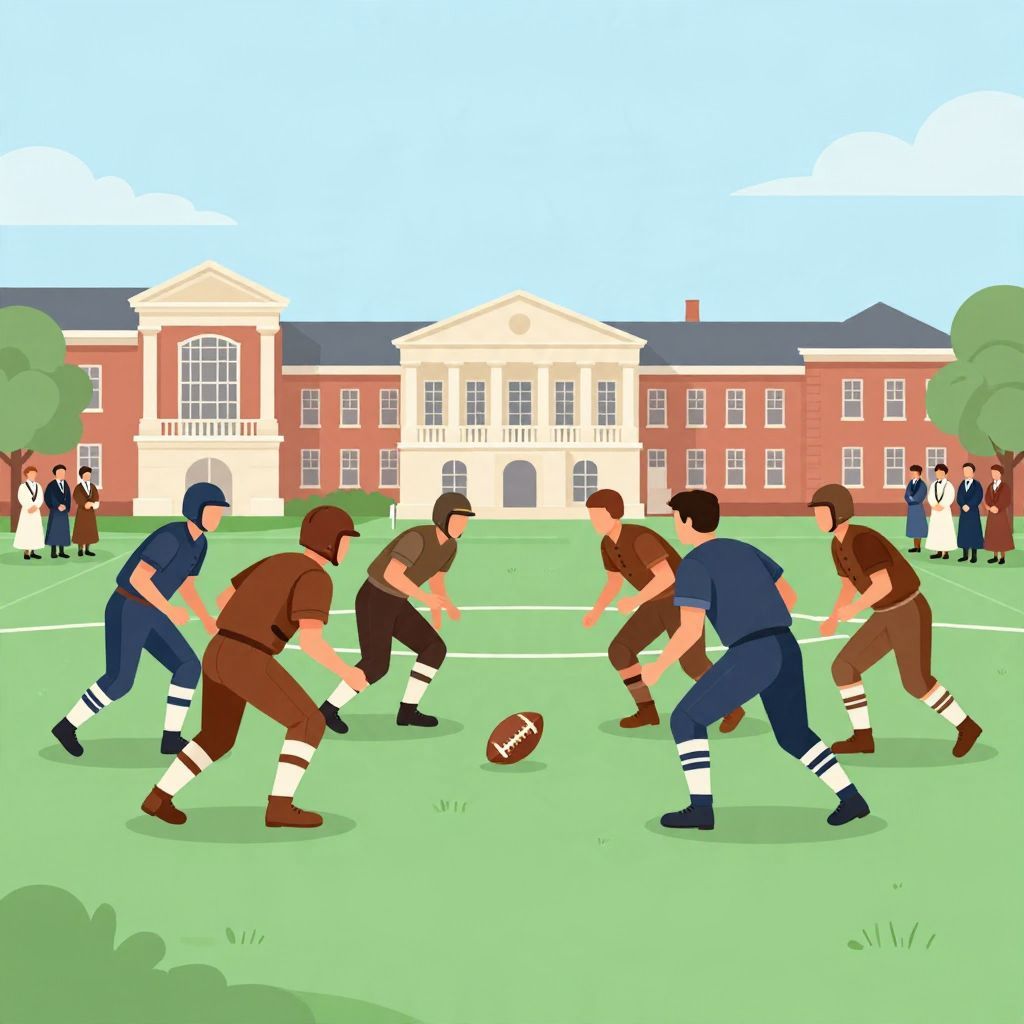
How did American football get its name? The short answer is that the sport inherited the word football from older English games in which a ball was played on foot rather than on horseback. In the United States, the name stuck even as the game evolved into a distinct sport with carrying, tackling, and an oval ball. The “American” part was added to distinguish it from association football, or soccer.
The story is less about a single naming moment than about a long process of borrowing, adapting, and renaming a game that changed dramatically in the late 19th century.
How did American football get its name?
American football got its name from older “football” games played on foot, not because the modern sport originally looked like soccer. In the United States, college versions of rugby and football gradually merged into a new game during the 1870s and 1880s. By the early 20th century, “American football” became the common way to distinguish it from other football codes.
Where the word “football” came from
The name “football” long predates the modern American sport. In medieval and early modern England, “football” referred broadly to games played on foot, often in contrast to mounted sports such as horseback riding. The term did not always mean the same set of rules we use today. It described a family of rough, local ball games that varied from place to place.
Why the name was not originally about kicking
One common misconception is that “football” must mean a game centered on kicking a ball. Historically, that is only partly true. In many early football games, players could kick, carry, or push the ball, depending on local custom. The important idea was that ordinary people played it on foot in open spaces, usually with few standardized rules.
How the game in America changed before it got its modern name
In the United States, football developed from college athletics in the mid-19th century. Early campus games were often chaotic and local, with rules borrowed from different traditions. Two major influences were association football and rugby football, both imported from Britain. American colleges experimented with both styles before settling into a hybrid that became distinctively American.
The key turning point: the 1870s
A major milestone came in 1874, when Harvard played McGill University in a series of games that helped introduce rugby-style play to American students. Over the next few years, colleges increasingly adopted rugby-like rules, especially the idea of advancing the ball by carrying it. This shift moved the American game away from soccer and toward what would become football in the United States.
Walter Camp and the modern shape of the game
Walter Camp, often called the “father of American football,” helped codify the sport in the 1880s. He was not the sole inventor, but he was influential in shaping rules such as the line of scrimmage, the system of downs, and reduced team size. These changes made the game more strategic and more unlike rugby or association football.
As the rules changed, the name did not change immediately. People still called it “football” because it had emerged from football traditions, even though it was becoming something new.
Why it became “American” football
The word American was added to distinguish the sport from other football codes, especially association football, which became known in many countries as “football” and in the United States as “soccer.” By the late 19th and early 20th centuries, several forms of football existed side by side: rugby football, association football, and the American version.
The need to separate similar sports
As international sports culture expanded, the label “football” alone became ambiguous. In Britain, “football” usually meant association football, while rugby had its own separate identity. In the United States, however, the gridiron game had become the dominant football code. Calling it “American football” clarified which sport was meant, especially in global contexts.
When the term became common
The phrase “American football” appears increasingly in the late 19th and early 20th centuries, but it did not replace “football” in everyday U.S. speech. Americans continued to say simply “football,” while “American football” became more useful in print, international discussion, and comparison with other codes. In other words, the full name was descriptive, not a formal renaming event.
What happened to the other footballs?
The history of the name makes more sense when seen alongside the history of the other codes. Association football developed its own standardized rules in England in the 19th century and spread worldwide. Rugby football also split into different forms, including rugby union and rugby league. The American game was one branch of a larger football family, not a sport that appeared in isolation.
Three major football codes
- Association football: the global game commonly called soccer in the United States.
- Rugby football: a carrying-and-contact game that influenced American football.
- American football: the U.S. version with downs, a line of scrimmage, and specialized positions.
Because these sports shared ancestry, the word “football” remained attached to all of them in different places. The American version kept the old family name even as it developed a very different identity.
Why the name matters historically
The name “American football” matters because it captures the sport’s layered history. It shows how games evolve through borrowing rather than clean invention. The sport is “American” not because it has no foreign roots, but because it was transformed in the United States into a distinct national game.
A name that reflects adaptation
The history of the name also reveals how sports become cultural symbols. By the early 20th century, American football was tied to U.S. colleges, then professional leagues, and eventually to national identity. Its name preserved older European language while marking a new American development.
Why people still just say “football” in the U.S.
In everyday American usage, “football” usually means American football because it is the most popular football code in the country. That local convention can make the name seem simple, but historically it is the result of competition among different sports and different naming traditions.
Common myths about the name
Several popular explanations oversimplify the story. One myth says the game was named football because early players mostly kicked the ball. That is too narrow. Another says the sport was deliberately renamed “American football” from the start. That is also inaccurate. The name emerged gradually as the game evolved and as the need to distinguish it from other footballs grew.
What historians generally agree on
Most historians of sport agree on three broad points: the word “football” is older than the modern American game; the U.S. version developed out of college football and rugby influences in the 19th century; and “American football” became a useful distinguishing label once multiple football codes existed internationally.
The bottom line
American football got its name from the older tradition of football games played on foot, then kept that name as the sport changed into a distinct American code. The “American” label was added later to separate it from other footballs, especially association football. The result is a name that preserves the sport’s European origins while marking its uniquely U.S. evolution. For more on the broader sporting context, you may also enjoy reading about the history of soccer and the origins of rugby.