
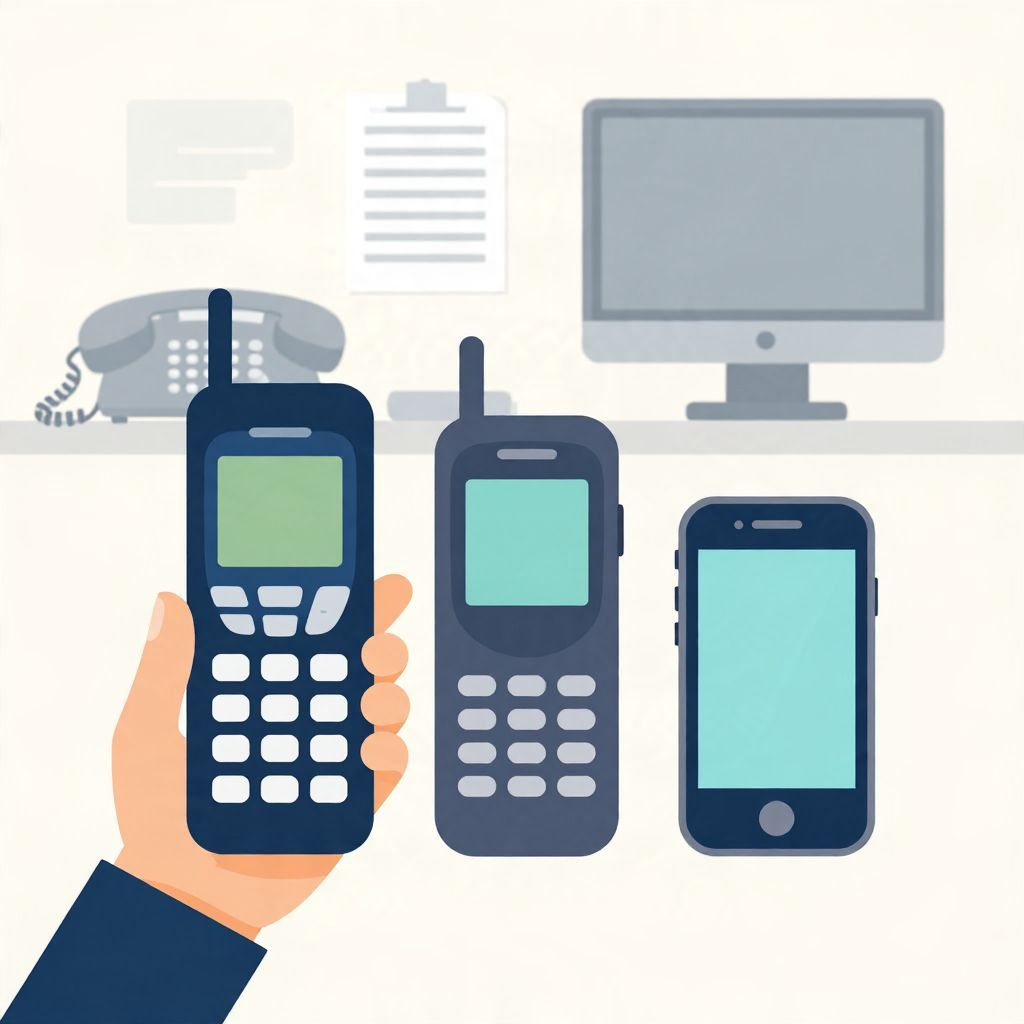
When was the smartphone invented? The short answer is that the smartphone emerged in the early 1990s, and the first widely recognized smartphone was the IBM Simon, unveiled in 1992 and sold in 1994. It was not the sleek touchscreen device people picture today, but it combined calling, faxing, email, and apps in one handheld machine.
The smartphone was not invented all at once by a single person. It developed from earlier mobile phones, personal digital assistants, and computer networking, then evolved rapidly as screens, batteries, and wireless internet improved.
When Was The Smartphone Invented?
The smartphone is generally traced to 1992, when IBM introduced the Simon Personal Communicator. It reached the market in 1994 and is widely regarded as the first true smartphone because it combined a mobile phone with computing features such as email, calendar tools, a touchscreen, and software applications.
Why 1992 is the key date
Before Simon, mobile phones could make calls, and handheld organizers could store contacts or notes, but they did not meaningfully combine communication and computing in one device. Simon did. That is why historians of technology usually treat its 1992 debut as the invention point, even though the modern smartphone experience took much longer to mature.
The Story Behind the First Smartphone
The smartphone grew out of several older technologies. By the late 20th century, engineers were trying to shrink computers, connect devices wirelessly, and make portable electronics more useful for everyday work. The result was a new kind of machine that sat between a telephone and a pocket computer.
From mobile phones to pocket computers
In the 1980s and early 1990s, mobile phones were still bulky and expensive. At the same time, companies such as Psion, Apple, and Hewlett-Packard were developing personal digital assistants and handheld computers. These devices could store contacts, notes, and schedules, but they were usually separate from the telephone network. The smartphone idea was to merge those functions.
IBM Simon and its features
IBM Simon was developed with BellSouth and demonstrated in 1992. It included a touchscreen, stylus input, address book, calendar, calculator, email, pager functions, and the ability to send and receive faxes. Users could also install applications. In modern terms, it was limited and slow, but in historical terms it was a breakthrough: a portable, networked computing device that also made phone calls.
What Made Simon a Smartphone?
Most historians and technology writers define a smartphone as a handheld device that combines phone functions with computing features and network connectivity. By that definition, Simon qualifies because it was more than a phone and more than an organizer. It was an early attempt to unify communication, information management, and software in one device.
Not every early device fits the definition equally well
There is some debate over origin stories because the word smartphone became common later than the devices themselves. Some earlier products had partial smartphone traits, but they lacked one or more core elements. A device may have been portable and digital, yet if it could not truly integrate telephony with computing, many historians would not call it a smartphone.
The role of the term “smartphone”
The label itself became widely used in the late 1990s and early 2000s, as companies began marketing more advanced mobile devices. This means the invention date and the naming date are not the same thing. The technology existed before the term became popular.
Important Milestones in Smartphone History
The smartphone’s history is best understood as a timeline of innovations rather than a single invention moment. Each step made the next one possible, from early handheld computing to modern app-based phones.
- 1992 — IBM unveils Simon, the first widely recognized smartphone prototype.
- 1994 — Simon is sold commercially in limited numbers.
- Late 1990s — Devices from Nokia, Ericsson, and others begin combining phone features with email and basic internet access.
- 2002 — BlackBerry popularizes mobile email for business users.
- 2007 — Apple introduces the iPhone, transforming the smartphone into a mass consumer product.
- 2008 — The App Store and Android ecosystem help establish the modern smartphone era.
Why the iPhone Is Often Confused with the Invention of the Smartphone
Many people assume the smartphone was invented in 2007 because the iPhone changed public expectations so dramatically. That is understandable, but historically it is not the same as invention. The iPhone did not create the smartphone from nothing; it refined the concept and made it practical, attractive, and mainstream for millions of users.
What the iPhone changed
The iPhone popularized a large multitouch screen, simplified software navigation, and a strong web-browsing experience. It also helped shift the market away from physical keyboards and styluses toward touch-based interfaces. In that sense, it did not invent the smartphone, but it did redefine what one should feel like.
Why market success matters
Some inventions become historically important only after they are widely adopted. Simon was the first major step, but the iPhone and later Android devices turned the smartphone into a global everyday tool. So if the question is about the first smartphone, the answer is Simon; if it is about the smartphone as we know it, the answer moves closer to 2007 and after.
How the Smartphone Evolved After the First Version
The early smartphone was limited by battery life, processing power, screen quality, and slow wireless networks. As those constraints eased, smartphones became smaller, faster, and far more useful. This evolution changed not only consumer habits but also business, politics, journalism, and social life.
Networks and connectivity
Early smartphones were constrained by the speed and reliability of mobile networks. As 2G, 3G, 4G, and later 5G networks developed, smartphones became capable of web browsing, streaming, video calls, navigation, and real-time messaging. Better connectivity was as important as better hardware.
Software and apps
The app ecosystem transformed the smartphone from a communications device into a general-purpose platform. Banking, maps, games, photography, and social media all became portable. This software expansion is one reason the smartphone became such a dominant technology in daily life.
Touchscreens and design
Touchscreen technology existed before the modern smartphone boom, but it became central once devices could respond quickly and accurately to finger input. The move away from physical buttons helped smartphones become simpler to use and easier to design around large displays.
Who Invented the Smartphone?
There is no single inventor of the smartphone in the way there is for some isolated devices. The smartphone was the product of many engineers, designers, and companies working over years. IBM’s Simon team is central to the story, but the device depended on earlier work in mobile telephony, portable computing, user interfaces, and wireless communication.
A collective invention
Technological history often works this way. One company may build the first recognizable version, but the idea grows from a broader ecosystem of research and competition. That is especially true for the smartphone, which required advances in semiconductors, batteries, operating systems, and telecommunication standards.
Why the Smartphone Matters Historically
The smartphone is one of the most influential inventions of the late 20th and early 21st centuries because it changed how people communicate, work, travel, and record their lives. It compressed many tools into one object: phone, camera, map, notebook, music player, and internet terminal.
Its broader impact
Smartphones reshaped industries from photography to publishing. They also changed social behavior by making constant connectivity normal. At the same time, historians note that this transformation brought trade-offs, including privacy concerns, attention fragmentation, and dependence on digital platforms.
So, When Was The Smartphone Invented?
If you want the most historically defensible answer, the smartphone was invented in 1992, when IBM introduced the Simon Personal Communicator. If you mean the version of the smartphone that became familiar to most people today, the decisive turning point came in 2007 with the iPhone and the app-driven smartphone era that followed.
In other words, the smartphone has two important dates: the date of invention and the date of mass transformation. The first belongs to IBM Simon; the second belongs to the modern mobile revolution. For related reading, you may also enjoy when the iPad was invented and when earbuds were invented.