
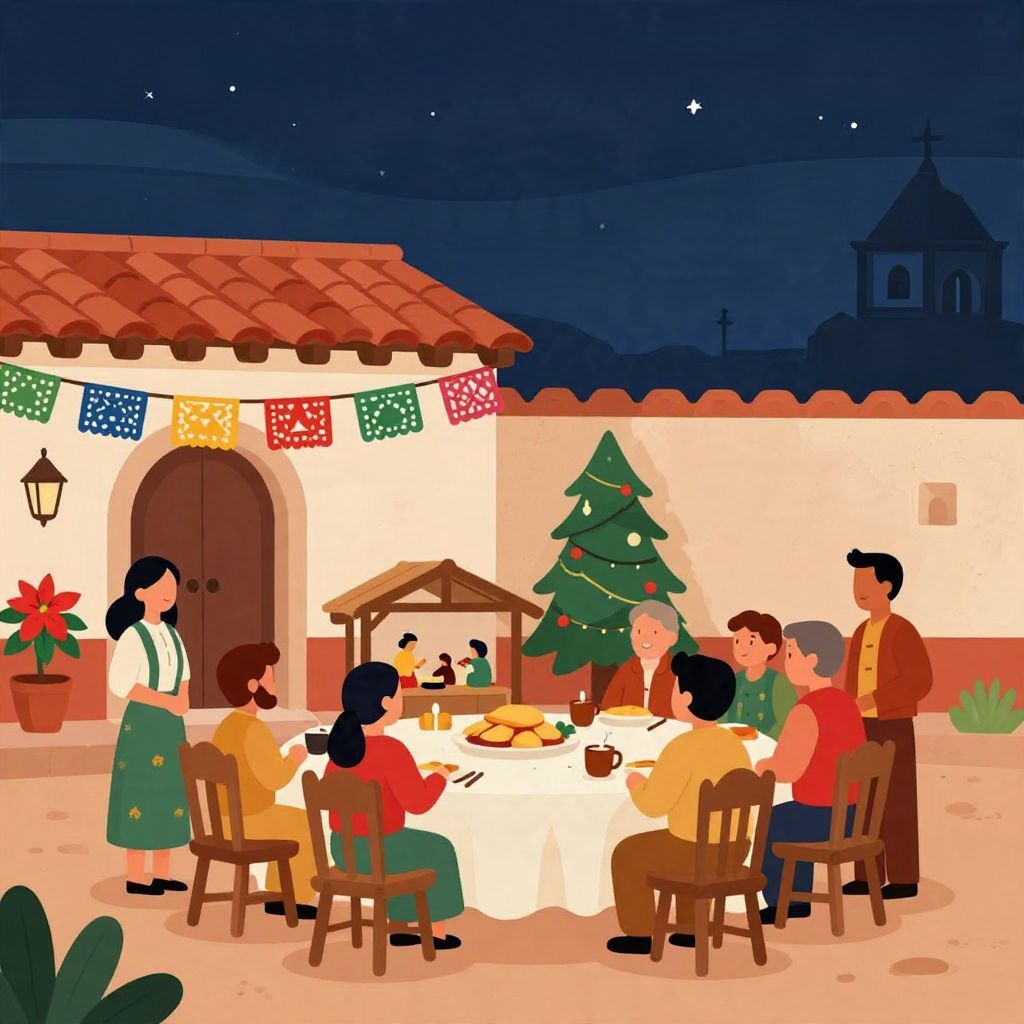
Why do Mexicans celebrate Christmas on the 24th? The short answer is that in Mexico, the main Christmas gathering traditionally happens on Nochebuena, Christmas Eve, rather than on Christmas Day itself. This custom grew from centuries of Catholic practice, Spanish colonial influence, and local family traditions that made the evening of December 24 the central moment of celebration.
That does not mean December 25 is ignored. Rather, the most important meal, gift exchange, and church observances often take place the night before, with Christmas Day reserved for rest, family visits, and continued celebration.
Why do Mexicans celebrate Christmas on the 24th?
Mexicans celebrate Christmas on December 24 because Nochebuena became the traditional peak of the holiday in a deeply Catholic culture shaped by Spain. In Catholic tradition, a liturgical day begins at sunset, so the vigil before Christmas Day has long been meaningful. In Mexico, that religious rhythm blended with family-centered customs, making the evening of the 24th the heart of Christmas.
The religious roots of Nochebuena
To understand the Mexican Christmas calendar, it helps to start with Catholic practice. In much of the Christian world, major feast days were historically preceded by a vigil, a night of prayer and preparation. Christmas Eve therefore carried special importance as the threshold to the Nativity feast. The Spanish word Nochebuena literally means “good night,” but it refers specifically to Christmas Eve.
Why the evening mattered more than the morning
In older Christian custom, the day did not always begin at midnight. Liturgical observance often treated evening as the beginning of the feast. That is one reason many Spanish-speaking countries, including Mexico, developed strong Christmas Eve traditions. The celebration begins when the family gathers, prays, eats, and marks the arrival of Christmas at midnight.
Mass and midnight celebration
A central part of the tradition is the Misa de Gallo, or Midnight Mass. In many communities, attending church late on December 24 was a way to welcome Christmas properly. After Mass, families returned home for food, music, conversation, and sometimes fireworks or neighborhood festivities. This sequence helped make December 24 the emotional and social center of the holiday.
How Spanish colonial rule shaped Christmas in Mexico
Mexico’s Christmas customs were not formed in isolation. After the Spanish conquest in the 16th century, Catholic missionaries and colonial authorities introduced European religious festivals, including Christmas, into New Spain. Over time, these practices mixed with local customs and became part of everyday life in colonial society.
The role of the Spanish empire
Spanish colonization brought the Catholic calendar to Indigenous communities across central and southern Mexico. Missionaries used feast days, processions, and public rituals to teach Christian doctrine. Christmas became one of the most important annual observances, and its Eve took on special significance because it was tied to worship, family gathering, and communal identity.
Blending with local traditions
Colonial Mexico was not simply a copy of Spain. Indigenous communities adapted Christian rituals in their own ways, and over centuries a distinct Mexican holiday culture emerged. Elements such as music, food, candles, and neighborhood gatherings gave Christmas Eve a local character. The result was a celebration that was Catholic in structure but Mexican in expression.
The historical development of Mexican Christmas customs
Mexican Christmas traditions developed gradually rather than appearing all at once. Some of the most recognizable customs today are tied to the colonial period, while others became widespread later. Together, they explain why the 24th became the central date.
Posadas and the days before Christmas
One of the best-known Mexican traditions is the posadas, held from December 16 to 24. These processions reenact Mary and Joseph seeking shelter before the birth of Jesus. The tradition grew in colonial Mexico and became especially important in religious and community life. Because the posadas end on Christmas Eve, the 24th naturally became the climax of the season.
Family-centered celebration
Mexican Christmas has long emphasized the household. Instead of focusing primarily on a morning exchange of gifts, families often gather late on the 24th for dinner, prayer, and celebration. Children may receive presents at midnight or early on the 25th, but the main family event is usually the evening meal on Christmas Eve. This pattern reflects both religious timing and the value placed on shared family time.
Food, music, and neighborhood life
Traditional dishes vary by region, but the Christmas Eve table often includes tamales, bacalao, turkey, mole, ponche, and other festive foods. After dinner, families may open gifts, sing, or enjoy fireworks and music. In many places, the holiday spills into the street and the neighborhood, reinforcing the idea that the 24th is the real social celebration.
Why Christmas Day is often less central than Christmas Eve
In Mexico, December 25 is still Christmas Day, but it tends to be quieter. Historically, this made sense because the major religious observance had already taken place the night before. After the late-night gathering and Mass, Christmas Day often became a time for rest, visiting relatives, or continuing the holiday with a smaller meal.
A practical reason: the midnight schedule
Because many families stay up late on the 24th, the 25th is often a recovery day. This practical reality reinforces the older religious pattern. The main feast, prayers, and gift exchange have already happened, so Christmas Day itself is less intense.
Not a rejection of December 25
It is important not to misunderstand the custom. Mexicans do not celebrate “instead of” Christmas Day; they celebrate the birth of Christ in a way that begins on the evening of the 24th. The 25th remains part of the holiday, but the emotional center of gravity lies with Nochebuena.
Regional and family differences across Mexico
Mexico is large and culturally diverse, so Christmas customs vary by region, class, and family tradition. In some places, the 24th is overwhelmingly dominant. In others, especially where local customs or church schedules differ, the 25th may still have a stronger role. Urban families, rural communities, and Indigenous communities may each celebrate in different ways.
Some communities extend the season
The Christmas season in Mexico does not end on December 25. In many places it continues through Three Kings’ Day on January 6, when children may receive more gifts and families share rosca de reyes. This longer holiday season shows that Mexican Christmas is part of a broader festive cycle, not a single date.
Local traditions matter
In some communities, processions, nativity scenes, regional foods, or local saint festivals shape the holiday more than national customs do. Still, the 24th remains important because it is the night when family, faith, and celebration come together most fully.
Common myths and misunderstandings
People sometimes assume that Mexicans celebrate on the 24th because they “do Christmas wrong” or because the country is simply different from the United States. That is too simplistic. The custom has deep historical roots in Catholic liturgy and Spanish colonial culture. It is not an accident or a modern trend.
It is not only about gift-giving
Another misunderstanding is that the date is chosen only for convenience, so children can open presents earlier. While gift-giving is part of the holiday, the deeper reason is religious and historical. The 24th became central because Christmas Eve was the traditional moment of vigil, worship, and family gathering.
It is also not unique to Mexico
Mexico is one of several countries where Christmas Eve is more important than Christmas Day. Similar traditions exist in parts of Latin America, Europe, and other Catholic communities. Mexico’s version, however, is especially rich because of the combination of posadas, Midnight Mass, and strong family-centered customs.
The lasting significance of celebrating on the 24th
The Mexican Christmas Eve tradition reveals how history shapes everyday life. What seems like a simple date choice is actually the product of centuries of religious practice, colonial exchange, and cultural adaptation. The 24th became the key celebration because it fit Catholic worship patterns and because Mexican families made it the emotional center of the holiday.
Today, celebrating on Nochebuena remains one of the clearest examples of how a European religious tradition was transformed in the Americas. If you want to explore more cultural history, you may also enjoy broader history and culture articles and an explanation of cultural divergence. The main takeaway is simple: Mexicans celebrate Christmas on the 24th because history, religion, and family life made Christmas Eve the true heart of the holiday.