
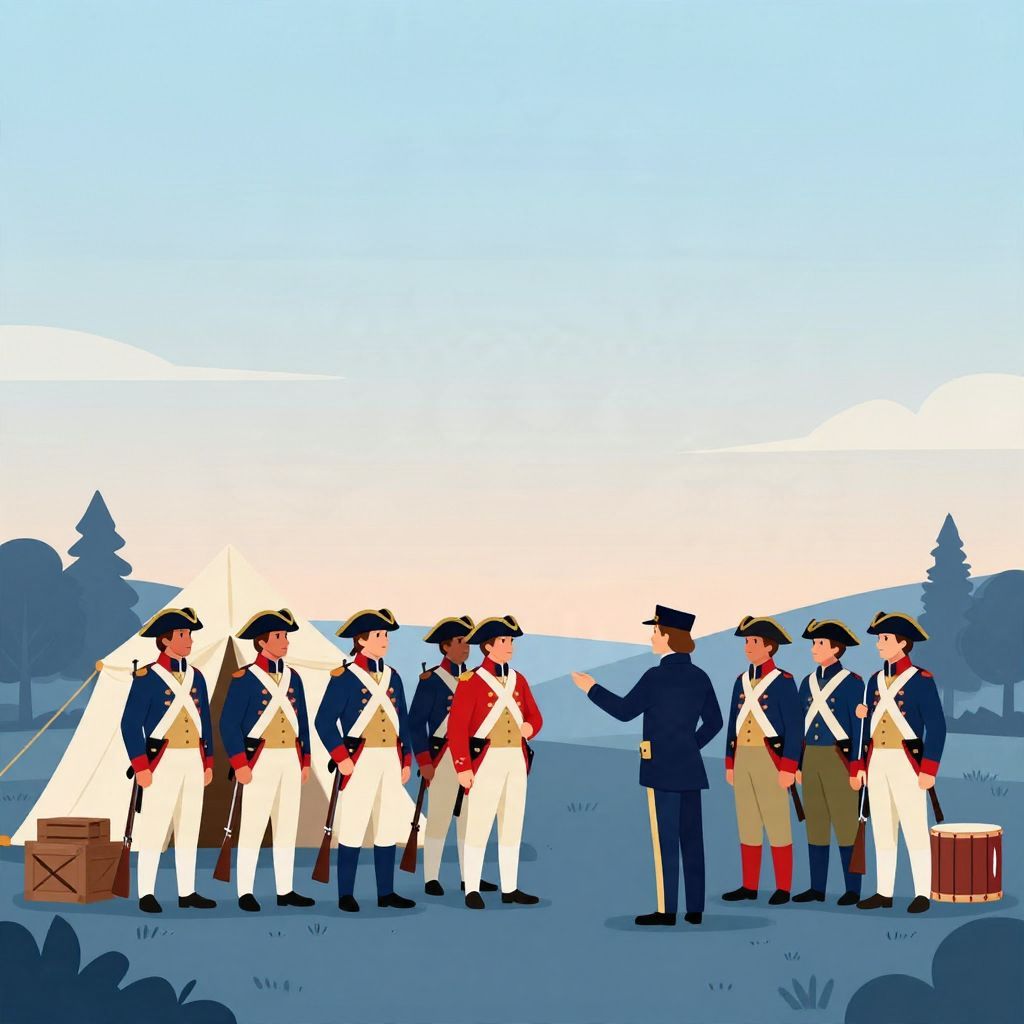
When is the Army’s birthday? In the United States, the Army’s official birthday is June 14, 1775. That date marks the creation of the Continental Army by the Second Continental Congress, making it the institutional beginning of the U.S. Army as a national military force.
The answer is simple, but the history behind it is more interesting. The Army’s birthday is tied to the American Revolution, the move from colonial militias to a unified army, and the long process of turning a revolutionary force into a permanent national institution.
When Is the Army’s Birthday?
The U.S. Army’s birthday is June 14, commemorating June 14, 1775, when the Second Continental Congress authorized the formation of the Continental Army. This is the date officially recognized by the Army today, even though the modern U.S. Army evolved through later reorganizations after independence.
Why June 14, 1775 Matters
June 14, 1775 is important because it was the moment the colonies moved beyond local militias and created a continental military force under central authority. The Congress took this step during the opening phase of the Revolutionary War, after fighting had already begun at Lexington and Concord in April 1775.
The Continental Army was not born all at once
Before June 1775, the colonies relied on militias: part-time soldiers raised by individual colonies, towns, or local leaders. These forces could defend their communities, but they were not designed for a long war against Britain. The new Continental Army was meant to coordinate resistance across all thirteen colonies.
George Washington’s appointment followed soon after
On June 15, 1775, Congress appointed George Washington commander in chief of the Continental Army. This gave the fledgling army a single leader and helped transform a collection of colonial troops into a more unified fighting force.
How the Army’s Birthday Became an Official Tradition
The Army did not always celebrate its birthday in a standardized way. The tradition developed later as the service looked for a clear founding date that connected the modern Army to its Revolutionary origins. June 14 became the natural choice because it was the date Congress formally authorized the army that preceded the modern institution.
A date tied to identity and continuity
Military organizations often use founding dates to build institutional identity. For the U.S. Army, June 14 links present-day soldiers to the Revolutionary generation and emphasizes continuity from the Continental Army to the modern regular army. It is both a historical marker and a symbol of service.
Why not July 4?
Some people assume the Army’s birthday should be July 4, 1776, because that is Independence Day. But July 4 marks the adoption of the Declaration of Independence, not the creation of the Army. The Army existed more than a year earlier, when the colonies were still formally under British rule.
The Historical Context of 1775
The Army’s birthday belongs to the early Revolutionary War period, when conflict between Britain and the colonies had escalated from political protest to armed resistance. The fighting at Lexington and Concord in April 1775 showed that local resistance alone would not be enough. A larger, coordinated force was needed.
From militia to continental force
Colonial militias were deeply rooted in local society and had long been part of life in British North America. But a militia system was not the same as a standing army. The Continental Army was created to serve a broader strategic purpose: to unify the colonies’ military effort and confront British regulars in a sustained war.
Congress faced a practical problem
The Second Continental Congress had to solve urgent military and political problems at once. It needed to organize troops, appoint officers, supply weapons and food, and establish command authority. The creation of the Continental Army was therefore not just symbolic; it was a practical response to war.
What the Continental Army Actually Was
The Continental Army was the military force established by the Continental Congress to fight Britain during the American Revolution. It was made up of soldiers from different colonies, and its size, organization, and effectiveness changed over time as the war progressed.
Early challenges
The army faced major difficulties from the start:
- short enlistments that caused constant turnover
- limited supplies and poor logistics
- competition between state interests and central authority
- training problems and uneven discipline
- financial instability and weak procurement systems
The role of Washington and reform
George Washington’s leadership gave the army continuity, but he could not solve every problem alone. Over time, training, discipline, and supply improved, especially with the help of experienced officers and foreign allies. The Army’s early history is therefore a story of adaptation as much as battlefield success.
How the Modern U.S. Army Connects to 1775
The modern U.S. Army traces its lineage to the Continental Army, but it is not unchanged since 1775. After independence, the United States reduced and reorganized its military several times. Still, the Army sees June 14, 1775 as its founding moment because it represents the first national army under American authority.
Revolutionary origins, national institution
The Continental Army was the first step in a longer evolution. The United States later created the Regular Army, adjusted its size in peacetime, and expanded it dramatically during major wars. Despite these changes, the Army’s institutional memory continues to emphasize its Revolutionary War beginning.
Why institutional memory matters
Founding dates help military services tell their own history. For the Army, June 14 is not only a date on the calendar; it is a reminder that the service emerged from the struggle for independence and from the effort to create a nation capable of defending itself.
How the Army Birthday Is Celebrated
The Army’s birthday is often observed with ceremonies, educational programs, and public recognition of soldiers and veterans. These celebrations vary by year and location, but they usually highlight the Army’s history, traditions, and service to the nation.
Common observances
- formal birthday ceremonies at Army installations
- cake-cutting traditions honoring the Army’s history
- historical presentations and museum exhibits
- messages from Army leaders and public commemorations
The meaning of the cake-cutting tradition
One well-known Army birthday custom is the ceremonial cake cutting, often involving the oldest and youngest soldiers present. This symbolizes the transfer of tradition across generations and connects present-day service members to the Army’s long history.
Common Questions About the Army’s Birthday
Is the Army’s birthday the same as the U.S. Army’s founding date?
Yes. In official U.S. Army tradition, the birthday and founding date are both June 14, 1775. That is the date Congress authorized the Continental Army.
Does every country’s army have a birthday?
Not necessarily. Some armies commemorate a founding date, while others celebrate service anniversaries, battle honors, or national military holidays. The U.S. Army’s birthday is distinctive because it is tied to a specific Revolutionary War decision by Congress.
Is the Army older than the United States itself?
Yes. The Army’s official birthday predates the Declaration of Independence by more than a year. That is one reason June 14 is historically significant: it shows that the armed struggle for independence began before the nation formally declared itself independent.
Why the Army’s Birthday Still Matters Today
The Army’s birthday is more than a ceremonial date. It reflects the origins of American national defense, the challenges of building a unified force from colonial militias, and the enduring importance of military institutions in U.S. history. June 14, 1775 remains the clearest answer to the question of when the Army began.
For readers interested in broader military and national history, the Army’s founding sits alongside the larger story of the American Revolution and the creation of the United States. You can also explore related historical context at My Life Is History.