
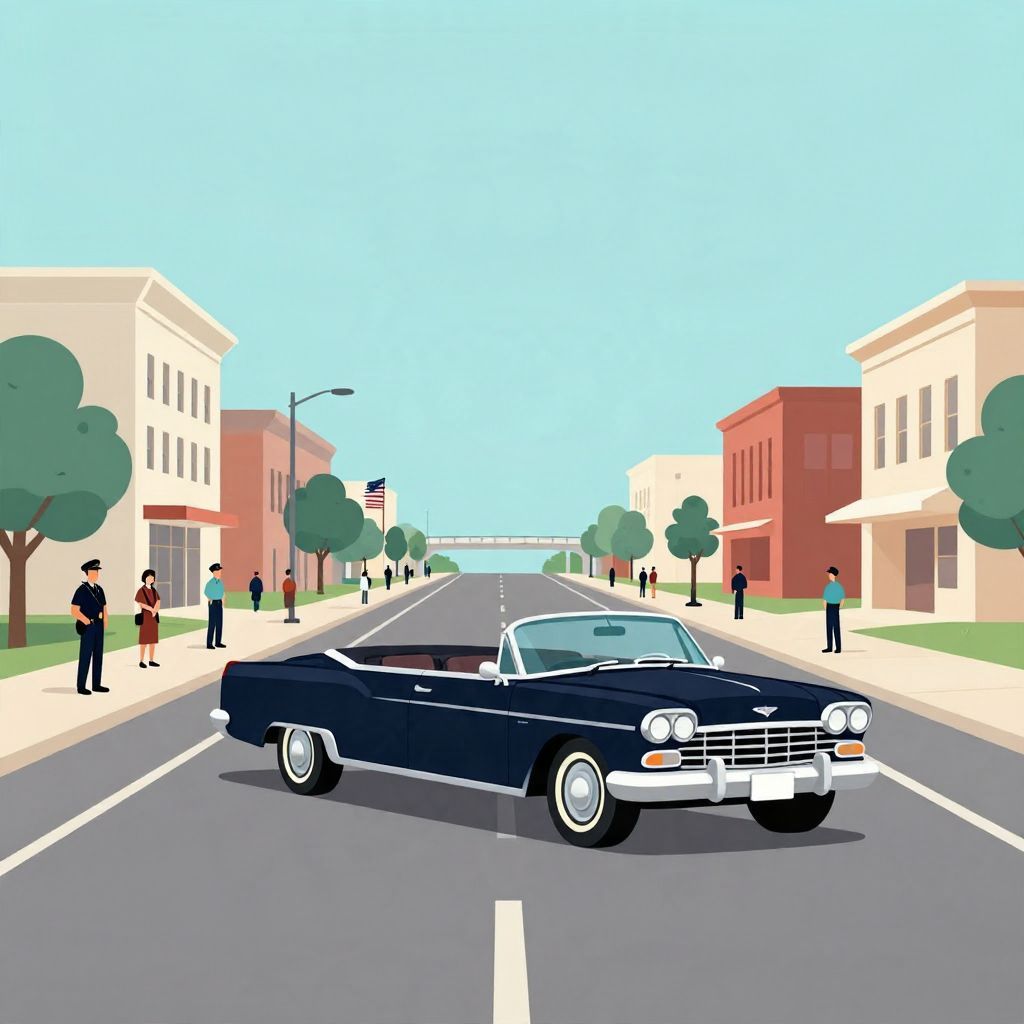
When people ask, “What car was JFK shot in?” they are usually asking about the vehicle in which President John F. Kennedy was riding during the assassination in Dallas on November 22, 1963. The answer is precise: he was shot while riding in a 1961 Lincoln Continental convertible, a specially modified presidential limousine known as the Secret Service’s X-100.
That car has become one of the most famous vehicles in American history because it was the setting for a national tragedy. Understanding what it was, how it was used, and why it looked the way it did helps explain both the event itself and the security practices of the era.
What car was JFK shot in?
John F. Kennedy was shot in a 1961 Lincoln Continental convertible, a custom-built presidential limousine designated X-100. It was a black, open-top car used by the Secret Service for official motorcades. On November 22, 1963, Kennedy rode in it through Dealey Plaza in Dallas when the assassination occurred.
The car itself: a presidential limousine built for visibility
The vehicle was not an ordinary consumer car. It was a specially modified Lincoln Continental created for presidential use, with a long wheelbase, a rear passenger compartment, and equipment designed for ceremonial motorcades. The open-top design made the president highly visible to crowds, which was considered important for public appearances at the time.
Why was it a convertible?
In the early 1960s, presidents often traveled in open cars during parades and public events so that crowds could see them clearly. The idea was to balance security with accessibility. In hindsight, that choice appears dangerous, but at the time the threat environment and protective philosophy were different from later decades.
What was the X-100?
The Secret Service used the code designation X-100 for Kennedy’s limousine. It was built and modified for presidential transport, with features such as radio equipment, jump seats, and accommodations for Secret Service agents. Over time, the car was altered several times as security needs changed, but it remained the same core vehicle during Kennedy’s presidency.
How the assassination unfolded in the car
On November 22, 1963, Kennedy was riding in the limousine in a motorcade through Dallas alongside First Lady Jacqueline Kennedy, Texas Governor John Connally, and Connally’s wife, Nellie. As the car passed through Dealey Plaza, shots were fired. Kennedy was struck while seated in the rear portion of the vehicle, and the assassination became one of the most scrutinized moments in modern U.S. history.
The seating arrangement mattered
The exact arrangement in the car is important because it shaped how the shots affected the occupants. Kennedy sat in the rear right seat. Governor Connally sat in front of him on a jump seat. The open design and the car’s slow pace in the motorcade made the occupants visible, while also leaving them exposed.
Why the car’s design became so controversial
After the assassination, the limousine’s open configuration drew intense criticism. Many observers asked why the president was not in a fully enclosed vehicle. The answer lies partly in the standards of the time: open motorcades were common, and the car had been used in that way for public appearances before Dallas. The tragedy helped transform presidential security policy in the years that followed.
Was it really the same car throughout Kennedy’s presidency?
Yes, but with important modifications. The Lincoln Continental was delivered in 1961 and then altered repeatedly for presidential use. These changes included security and communications upgrades, and the car was adapted to meet ceremonial and practical needs. It was still fundamentally the same limousine when Kennedy used it in Dallas in 1963.
Why the car was chosen
The Secret Service and White House staff wanted a car that was large, prestigious, and suitable for a president. Lincoln was an established luxury brand, and the Continental offered the size and style needed for official use. The vehicle projected modernity and status, which mattered in Cold War-era presidential image-making.
The aftermath: what happened to the limousine after Dallas?
After the assassination, the limousine did not simply remain in service unchanged. It became a powerful historical artifact. The car was later redesigned and repurposed, and its association with Kennedy made it one of the most recognizable objects connected to the event. Today, it is preserved as an important piece of presidential and national history.
Why the car is historically significant
The limousine is significant not just because Kennedy was shot in it, but because it symbolizes a turning point in American political culture. The assassination changed how presidents were protected, how public appearances were managed, and how Americans understood vulnerability at the highest level of government.
Common misconceptions about the car JFK was shot in
Because the assassination has been discussed for decades, several myths and misunderstandings have circulated. Some are harmless, while others distort the historical record. The basic facts, however, are well established: Kennedy was shot in a 1961 Lincoln Continental convertible during the Dallas motorcade.
Misconception 1: It was a regular car
It was not a standard production vehicle. It was a customized presidential limousine with special equipment and a high-profile ceremonial role. Its design reflected both luxury and the security assumptions of the early 1960s.
Misconception 2: The car was armored like modern presidential vehicles
It was not armored in the way later presidential limousines would be. Modern presidential cars are heavily protected and designed for far greater ballistic resistance. Kennedy’s car, by contrast, was open and far less secure.
Misconception 3: The car alone caused the tragedy
The limousine’s design mattered, but it was only one part of a larger historical event involving route planning, security procedures, crowd control, and the broader political climate. The assassination cannot be reduced to the car itself.
Why the question still matters
People continue to ask what car JFK was shot in because the vehicle has become a shorthand for the assassination itself. The limousine is more than a machine; it is a historical object tied to a moment that reshaped the United States. Knowing the exact car helps ground the story in evidence rather than legend.
Lessons from the event
The assassination led to major changes in presidential security. Motorcade procedures became stricter, protective details expanded, and open-top public travel became much less common. In that sense, the car’s history is tied to a broader shift in how democratic leaders are protected in public life.
Key facts at a glance
- Car: 1961 Lincoln Continental convertible
- Secret Service designation: X-100
- Date of assassination: November 22, 1963
- Location: Dallas, Texas, in Dealey Plaza
- Occupants: John F. Kennedy, Jacqueline Kennedy, Governor John Connally, and Nellie Connally
The answer to “What car was JFK shot in?” is the 1961 Lincoln Continental convertible, the presidential limousine known as X-100. Its role in the assassination made it one of the most famous cars in history, and its story remains central to understanding both the event in Dallas and the changes that followed in presidential security.