
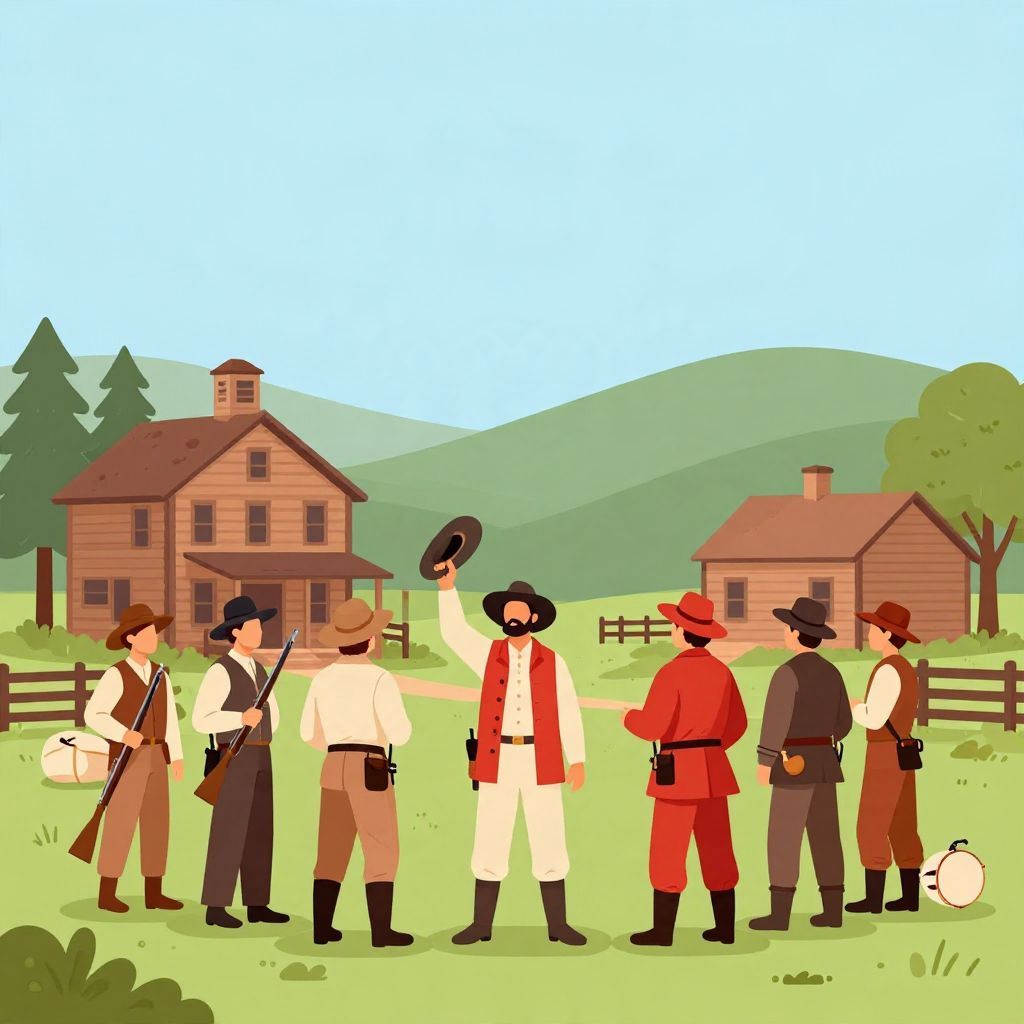
Why is Tennessee called the Volunteer State? The short answer is that the nickname grew out of the state’s reputation for supplying large numbers of volunteer soldiers, especially during the War of 1812 and later conflicts. Over time, the label became a point of pride, tied to Tennessee’s military participation and self-image.
The story is partly historical fact and partly popular memory. The nickname did not appear from a single official act; it developed through wartime service, political culture, and later celebration of Tennessee’s role in American military history.
Why Is Tennessee the Volunteer State?
Tennessee is called the Volunteer State because Tennesseans repeatedly answered military calls for service in unusually large numbers, most famously in the War of 1812. The nickname reflects a long tradition of volunteer military participation, not a formal state designation. It became especially associated with Andrew Jackson’s Tennessee troops and later wartime enlistments.
The War of 1812 and the Origin of the Nickname
The strongest historical basis for the nickname comes from the War of 1812. When the United States needed troops, Tennessee supplied far more volunteers than expected. Their service in the campaign against the Creek Nation and in the defense of the Gulf South helped create the image of Tennessee as a state ready to fight without being drafted.
Andrew Jackson and Tennessee Volunteers
One of the most important figures in this story was Andrew Jackson, a Tennessee militia leader who later became president. Jackson commanded volunteer forces from Tennessee in the Creek War, especially after the devastating Battle of Horseshoe Bend in 1814. His troops were widely known as volunteers, and their prominence helped link the state with military service in the public mind.
Jackson’s success mattered because it gave the term “volunteer” a visible and heroic meaning. Tennessee men were not simply recruits; they were citizens who came forward on their own initiative, at least as the story was later told. That image fit the young state’s frontier culture and its desire for political respect in the early republic.
How the nickname spread
The phrase “Volunteer State” did not become instantly fixed in one year. It emerged gradually in newspapers, political speeches, and popular usage during the early 19th century. By the time of the Mexican-American War in the 1840s, Tennessee’s reputation for volunteer soldiers was already well established and reinforced by another large wartime enlistment.
What “Volunteer” Meant in Early American History
In the early United States, “volunteer” had a specific military meaning. It referred to men who offered service without being formally conscripted into the regular army. State militias often filled this role. In frontier states like Tennessee, where military organization was closely tied to local communities, volunteering could become a matter of honor, duty, and political identity.
Militia culture on the frontier
Tennessee’s early history helps explain why the nickname took root. The region was still developing in the late 18th and early 19th centuries, and many settlers had recent experience with frontier conflict, Native American resistance, and border insecurity. In that environment, armed service was common and socially respected. Military participation was part of civic life, not a distant professional career.
This does not mean every volunteer acted from pure patriotism. Some men enlisted for pay, land, adventure, or local loyalty. Still, the broader culture encouraged the idea that Tennesseans were unusually willing to serve when called.
Why the War of 1812 Mattered So Much
The War of 1812 gave Tennessee a chance to stand out nationally. The state’s volunteers were especially visible in the southern theater of the war, where Jackson led campaigns against the Creek Confederacy and later against British forces at New Orleans. Tennessee troops were part of the larger American war effort, but their numbers and visibility made a lasting impression.
The Creek War and Horseshoe Bend
In 1813 and 1814, Tennessee volunteers joined Jackson’s forces in the Creek War, a conflict rooted in the broader pressures of American expansion, Native resistance, and wartime alliances. The Battle of Horseshoe Bend in March 1814 was a decisive victory for Jackson and his allied forces. Tennessee volunteers were central to that campaign, and their role helped elevate the state’s military reputation.
New Orleans and national recognition
Jackson’s victory at the Battle of New Orleans in January 1815 further enhanced the fame of Tennessee soldiers. Although the battle took place after the Treaty of Ghent had been signed, news traveled slowly, and the victory was celebrated as a major American triumph. Tennessee volunteers were part of the force that helped secure Jackson’s legend and, by extension, the state’s nickname.
Was Tennessee the Only State with Volunteers?
No. Other states also furnished volunteer troops in American wars. What made Tennessee distinctive was the scale and consistency of its volunteer participation, along with the political fame of its soldiers and leaders. The nickname became a shorthand for a pattern, not a literal claim that no one else volunteered.
In other words, the phrase is comparative and symbolic. Tennessee was not the only state with patriotic citizens, but it became one of the most strongly associated with volunteer military service in the national imagination.
The Mexican-American War Reinforced the Nickname
The nickname gained further strength during the Mexican-American War of 1846–1848. Tennessee again answered the federal call with a large number of volunteers. This was politically important because it showed that the state’s military reputation was not limited to the age of Andrew Jackson. The pattern continued into the mid-19th century.
During this era, volunteer regiments were a major part of American warfare. States competed in prestige as well as manpower, and Tennessee’s willingness to provide troops fit the image already attached to it. The nickname became more durable because it was repeatedly confirmed by events.
How the Nickname Became Part of Tennessee Identity
By the later 19th century, “Volunteer State” had become more than a wartime description. It was a civic identity. Tennesseans embraced the nickname in speeches, commemorations, and public memory. Like many state nicknames, it condensed a complicated history into a simple and flattering phrase.
Pride, memory, and selective history
State nicknames often simplify the past. Tennessee’s nickname emphasizes military service, but it leaves out many other parts of the state’s history, including slavery, Native displacement, internal divisions, and Civil War conflict. The label is historically grounded, yet it reflects a selective memory that highlights bravery and willingness to serve.
That does not make it false. It means the nickname is best understood as a cultural symbol shaped by memory as much as by events. Historical truth and public identity do not always line up perfectly, and the Volunteer State is a good example of that tension.
Did Tennessee Officially Become the Volunteer State?
There was no single moment when Tennessee was formally “named” the Volunteer State by law. The nickname emerged informally and gradually. Over time, it became so widely used that it functioned like an official title, but its origins are rooted in popular usage rather than a formal declaration.
That distinction matters. Many famous nicknames begin in newspapers, speeches, or local pride before becoming standard. Tennessee’s nickname followed that path. It was earned in war, repeated in memory, and eventually accepted as part of the state’s identity.
What the Nickname Says About Tennessee’s Early History
The Volunteer State nickname reveals several important features of Tennessee’s early history. It shows the state’s frontier military culture, its attachment to militia service, and its rising importance in national politics through figures like Andrew Jackson. It also reflects how Americans in the 19th century valued voluntary military service as a sign of republican virtue.
At the same time, the nickname tells only one part of the story. Tennessee’s past includes conflict, migration, expansion, and deep social divisions. The Volunteer State label survived because it offered a proud and memorable way to summarize one of the state’s most visible historical contributions.
Conclusion
Tennessee is called the Volunteer State because its citizens repeatedly volunteered for military service in large numbers, especially in the War of 1812 and later conflicts. The nickname grew from real wartime participation, but it was also shaped by memory, pride, and the fame of Andrew Jackson. For more on the broader historical world that shaped early America, you might also explore the history of America’s oldest city or read about related historical terminology and identity.