
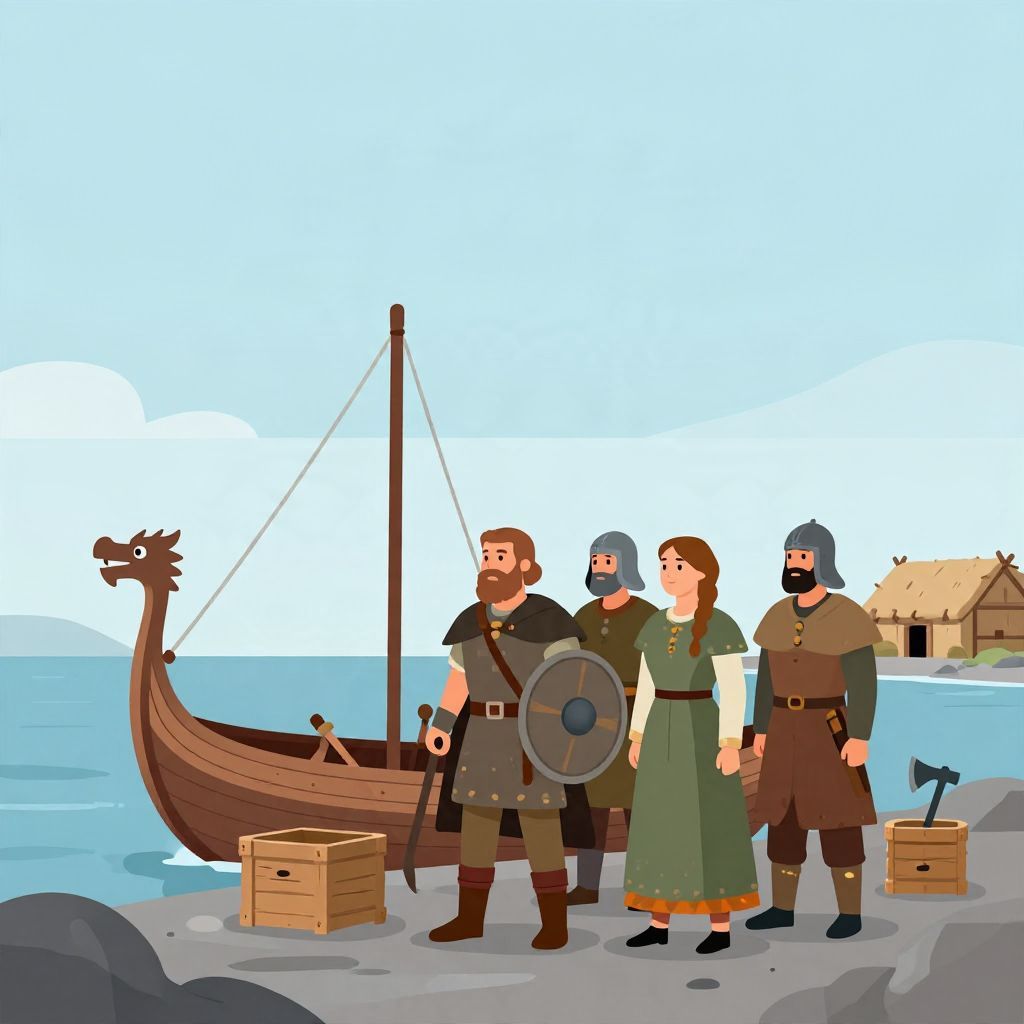
When people ask what Vikings looked like, they are usually imagining the raiders of the late eighth to eleventh centuries from Scandinavia. The real answer is less dramatic than popular images suggest: Vikings were not a single “type,” but men and women from Norway, Denmark, and Sweden whose appearance varied by region, diet, age, and status.
What we know comes from archaeology, burial finds, art, written accounts, and scientific study of remains. Those sources show that Vikings were often practical, well-groomed, and culturally distinctive, but they were not all blond giants in horned helmets.
What Did Vikings Look Like?
Vikings were generally North Germanic people from Scandinavia, so they likely had the physical range common in northern Europe: fair, dark blond, red, and brown hair; light and darker eyes; and heights typical for the early medieval period. Clothing, grooming, and social status shaped their appearance more than any single “Viking look.”
The Viking Appearance Myth: Horned Helmets and Uniform Blond Hair
The most famous Viking image is mostly a modern invention. Horned helmets belong to much older ceremonial objects and later costume design, not to everyday Viking warfare. Likewise, the idea that all Vikings were blond is false; surviving evidence points to a mixed population with varied hair colors and styles.
Why the horned-helmet image is wrong
No archaeological evidence shows Viking warriors routinely wearing horned helmets in battle. Horns would have been impractical in combat. The image became popular in the 19th century through art, opera, and romantic nationalism, which reshaped Vikings into theatrical symbols of northern strength.
Hair color was more varied than the stereotype
Some people in Scandinavia were fair-haired, but others had brown or red hair. Written descriptions by outsiders sometimes emphasized light hair because it stood out to southern observers. That does not mean all Scandinavians looked the same. Viking-age communities were diverse, and appearance changed with age, ancestry, and local mixing.
How Tall Were Vikings?
Vikings were probably not exceptionally tall by modern standards, but many were sturdy and well-built. Skeletal evidence suggests average male height in the Viking Age was around 5 feet 7 inches to 5 feet 8 inches, with women generally shorter. Nutrition, childhood health, and social conditions affected height just as they do today.
What skeletons tell historians
Burials and skeletal remains show that many Vikings had physically demanding lives. Some bones bear signs of heavy labor, healed injuries, and wear from repeated activity. Farmers, traders, sailors, and warriors all used their bodies intensively. That does not mean every Viking was muscular in the modern sense, but many were likely lean and strong.
What Did Vikings Wear?
Viking clothing was practical, layered, and suited to a cold climate. Men and women wore wool and linen, often in tunics, trousers, dresses, aprons, cloaks, and belts. Wealthier people could display status through dyed fabrics, brooches, trim, and imported materials, while poorer people wore plainer garments.
Men’s clothing
- Tunics worn over trousers
- Wool cloaks fastened with brooches or pins
- Belt knives and practical accessories
- Boots or shoes made from leather
Women’s clothing
- Underdresses made of linen or wool
- Apron dresses or overdresses
- Oval brooches used to fasten straps
- Head coverings in some contexts, especially for married women
Color mattered. Natural dyes could produce reds, yellows, blues, and greens, though bright colors were more expensive. Clothing was often repaired and reused, so a Viking’s outfit could show thrift, skill, and status all at once.
Hair, Beards, and Grooming
Vikings likely cared a great deal about personal grooming. Combs, tweezers, razors, ear picks, and other toiletry items are common finds in Viking-age graves and settlements. These objects suggest that neat hair and clean appearance were valued, especially among adults who wanted to present themselves well in public.
What hairstyles may have looked like
There was no single Viking hairstyle. Men may have worn hair long, tied back, or cut in practical styles. Beards were common, though not universal. Some written sources from outside Scandinavia describe Vikings as well-kept or strikingly groomed, while others reflect the biases of enemies and travelers. The evidence supports variety, not a uniform style.
Women’s hair and ornaments
Women likely wore their hair long or braided, sometimes covered depending on age, status, or custom. Jewelry was important: brooches, beads, rings, and pendants helped communicate identity and wealth. These items were not just decoration; they were part of how people presented themselves in a society where status was visible.
What Did Vikings Look Like in Battle?
In war, Vikings would have looked less like fantasy barbarians and more like practical early medieval fighters. They wore helmets only when available, and most warriors probably did not have full armor. A fighting man’s appearance depended on wealth, equipment, and role, from raider to retainer to chieftain’s follower.
Helmets and weapons
Only a small number of helmets survive, and they suggest simple protective designs rather than ornate fantasy gear. Chain mail was expensive and likely limited to wealthier warriors. Shields, spears, axes, and swords were more common markers of combat than elaborate armor. Many raiders would have been armed efficiently rather than heavily protected.
How outsiders may have perceived them
Medieval observers often described Vikings as intimidating because they were foreign, mobile, and violent in raids. That does not mean they looked monstrous. Their impact came from tactics, ships, and surprise as much as from appearance. A disciplined raiding party in practical clothing could still seem terrifying to a coastal community.
How Regional Differences Shaped Viking Looks
“Viking” was not an ethnic label for one homogeneous people. It described a way of life and activity—raiding, trading, exploring, and settling—mainly among Scandinavian societies. Norwegians, Danes, and Swedes came from different regions and had different local traditions, so appearance could vary across the Viking world.
Norway, Denmark, and Sweden
People in coastal Norway, Denmark, and Sweden shared language and culture, but local environments shaped diet, trade, and material culture. A Danish coastal warrior, a Swedish trader, and a Norwegian settler in Iceland might all have been called Vikings in broad historical terms, yet each could look somewhat different in dress and equipment.
Vikings abroad
As Vikings traveled, they mixed with local populations in places such as the British Isles, Ireland, Normandy, and parts of Eastern Europe. Over time, descendants of Scandinavian settlers often blended into local societies. That means “what Vikings looked like” changed across generations and regions, especially in settlement areas.
What Archaeology and Science Reveal
Modern science has refined the picture of Viking appearance. Burial analysis, isotope studies, and genetic research help historians understand diet, movement, and ancestry. These tools do not produce a single portrait, but they confirm that the Viking world was more diverse and interconnected than older stereotypes suggested.
Burials and grave goods
Archaeological finds show that some people were buried with clothing fasteners, weapons, tools, and personal items that reveal how they lived and presented themselves. Grave goods can suggest gendered roles, rank, and occupation, though they must be interpreted carefully. A wealthy burial does not describe all Vikings, only a particular individual or status group.
Genetics and ancestry
Genetic studies indicate that Viking-age populations were not isolated. Scandinavia had long-standing connections with neighboring regions through trade, migration, and intermarriage. This does not mean every Viking had the same ancestry or appearance. It does mean the Viking world was more connected and varied than a simple “northern warrior race” idea implies.
How the Viking Look Became a Modern Symbol
Today’s image of the Viking owes much to later centuries. Artists, nationalists, novelists, and filmmakers turned Vikings into symbols of rugged masculinity, freedom, and northern identity. That image is powerful, but it often simplifies a complex historical reality into a single costume and body type.
From history to legend
Medieval Scandinavians became legendary over time through sagas, later retellings, and modern popular culture. The result is an icon that blends fact and fantasy. Real Vikings were farmers, sailors, craftsmen, traders, and sometimes raiders. Their appearance reflected everyday life, not the dramatic visual shorthand of modern entertainment.
So, What Did Vikings Really Look Like?
Vikings likely looked like ordinary early medieval Scandinavians: varied in hair color, eye color, height, and build; dressed in wool and linen; equipped with practical clothing and grooming tools; and marked by the needs of travel, labor, and warfare. The true Viking look was diverse, functional, and shaped by status and region.
In other words, Vikings were not a single visual stereotype but a historical people whose appearance was as mixed and changing as their world. If you want to explore how appearance and identity are shaped by history, you may also enjoy reading about what Spaniards look like and even the surprisingly different ways historians reconstruct the lives of ancient animals such as woolly mammoths.