
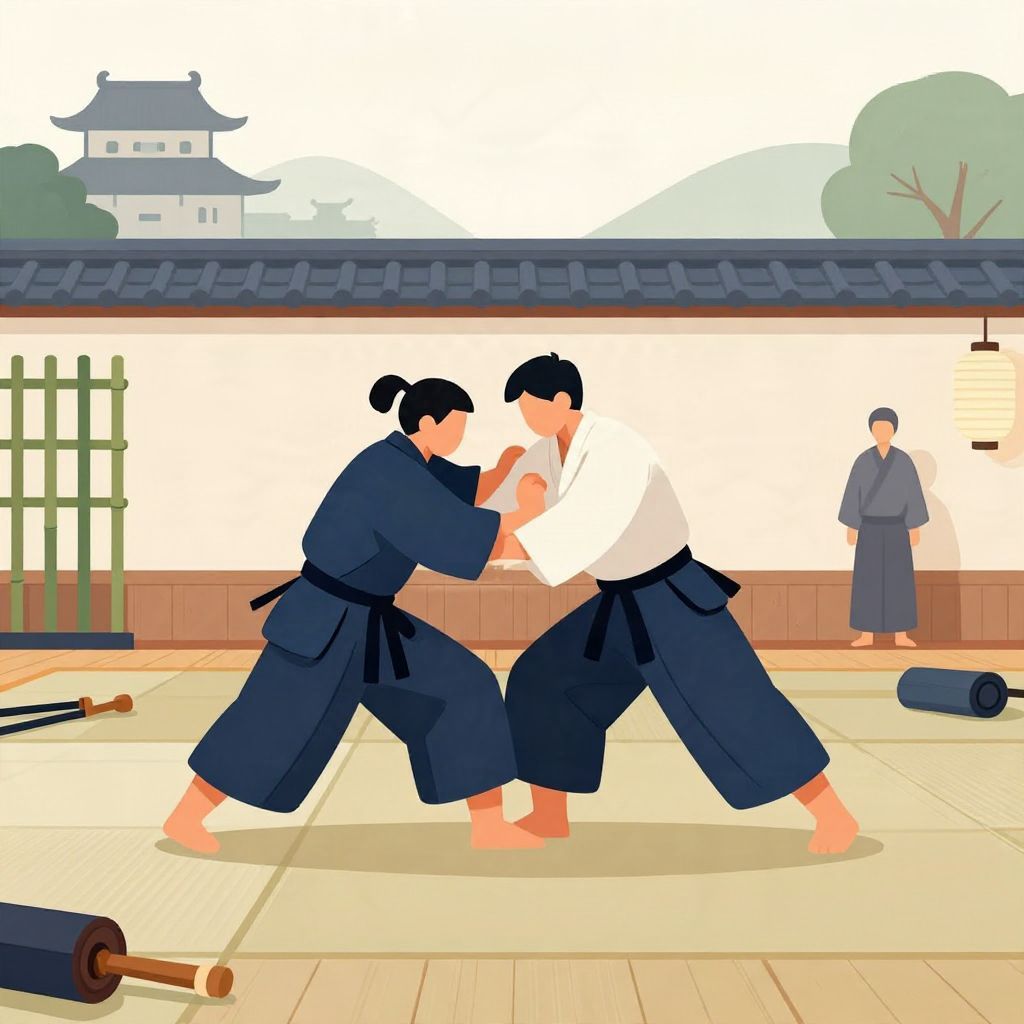
Jiu jitsu is most commonly traced to Japan, where it developed as a battlefield and self-defense tradition among samurai. But the story is more layered than a single birthplace: the term, techniques, and later styles evolved over centuries, and modern forms spread far beyond Japan.
If you are asking “where is jiu jitsu from,” the short answer is that its historical roots are Japanese, especially in the feudal era. From there, jiu jitsu changed through regional schools, then later branched into modern Japanese jujutsu, Brazilian jiu-jitsu, and other related systems.
Where Is Jiu Jitsu From?
Jiu jitsu comes from Japan. Its older forms, usually called jujutsu or jūjutsu, emerged among samurai in medieval and early modern Japan as methods for grappling, throws, joint locks, pins, chokes, and weapon disarms. The modern global name “jiu jitsu” is a romanized spelling of that Japanese tradition.
The Japanese Origins of Jiu Jitsu
Feudal Japan and the needs of samurai
Jiu jitsu took shape in a society where armed warriors needed ways to fight when swords, spears, or armor made striking less effective. In feudal Japan, especially from the late medieval period onward, martial schools developed practical techniques for close combat. These methods were not one single invention but a family of systems designed for real battlefield and personal defense situations.
The word itself is usually translated as “gentle art” or “yielding art,” though that can be misleading if taken too literally. The “gentle” idea refers to using leverage, timing, and redirection rather than brute force. That principle became central to many schools and later influenced judo and Brazilian jiu-jitsu.
Not one founder, but many schools
There is no single founder of jiu jitsu. Instead, it grew through many ryū, or martial lineages, each with its own curriculum and philosophy. Some schools emphasized grappling against armored opponents; others focused more on self-defense, restraint, or battlefield survival. Because these schools were transmitted by teachers and students over generations, the art developed unevenly across Japan.
By the Edo period, beginning in the early 1600s, Japan experienced relative peace under the Tokugawa shogunate. That changed the role of martial arts. Techniques that had once been battlefield necessities increasingly became systems for training, discipline, and personal protection. This period helped preserve and refine jujutsu schools, even as the social conditions that produced them were changing.
How Jiu Jitsu Developed Over Time
From battlefield technique to organized tradition
Early jujutsu was practical and adaptable. It included throws, joint manipulation, grappling on the ground, and methods for controlling an armed opponent. Some schools also taught striking, weapon use, and escape techniques. The art was never purely about one kind of movement; it was a flexible response to the realities of combat.
As Japanese society changed, so did the art. During long periods of peace, jujutsu became more formalized and instructional. Teachers codified techniques into systems, and students learned not only how to fight but also how to move, balance, and react under pressure. In this way, jiu jitsu became both a martial practice and a cultural tradition.
The Meiji era and modernization
In the late 19th century, Japan modernized rapidly after the Meiji Restoration of 1868. Traditional martial arts faced new pressures as the country adopted modern military and educational systems. Some older schools declined, but others adapted. This era was crucial for the transformation of jujutsu into modern martial arts, especially through the work of innovators who reinterpreted older techniques for new purposes.
The most important figure in this transition was Jigoro Kano, who created judo in the 1880s by drawing on jujutsu traditions and emphasizing safety, pedagogy, and sport. Judo did not replace jujutsu entirely, but it helped reshape how the world understood Japanese grappling arts. Later, Brazilian jiu-jitsu would emerge from this same stream of development.
Jiu Jitsu, Jujutsu, and Judo: What Is the Difference?
Why the names vary
People often use “jiu jitsu” as a broad term, but historically the Japanese word is more accurately rendered as jujutsu or jūjutsu. The spelling “jiu jitsu” became common in English-language usage, especially through early international exposure. Different spellings can refer to the same historical roots, though modern schools may emphasize different methods and goals.
Jujutsu is the older umbrella term for Japanese grappling and self-defense systems. Judo is a later modern martial art and sport derived from jujutsu principles. Brazilian jiu-jitsu is a 20th-century development that grew from Japanese judo and jujutsu influences after those arts traveled abroad. So while they are related, they are not identical.
Shared principles, different emphases
- Jujutsu: traditional Japanese self-defense and combat systems.
- Judo: a modern Japanese martial art emphasizing throws, pins, and sportive practice.
- Brazilian jiu-jitsu: a grappling-focused art developed in Brazil from Japanese sources.
All three share an emphasis on leverage, timing, balance, and control. But their historical settings and training methods differ, which is why the question “where is jiu jitsu from” needs a careful answer rather than a simple one-word label.
How Jiu Jitsu Left Japan
International travel and cultural exchange
Jiu jitsu spread outside Japan in the late 19th and early 20th centuries, when Japanese teachers, students, and travelers introduced martial arts abroad. Demonstrations in Europe, the Americas, and elsewhere sparked interest in Japanese physical culture. At the same time, foreign observers sometimes misunderstood jiu jitsu, treating it as a mysterious or exotic fighting method rather than a long-developed tradition.
This international exposure mattered because it changed the art’s future. Once jujutsu entered global circulation, it began to be adapted to new audiences, rules, and training environments. That process eventually produced distinct offshoots, especially in the Americas.
The rise of Brazilian jiu-jitsu
One of the most famous descendants of Japanese jiu jitsu is Brazilian jiu-jitsu. In the early 20th century, Japanese martial artist Mitsuyo Maeda helped spread judo and related grappling methods in Brazil. Members of the Gracie family and others adapted these teachings, placing greater emphasis on ground fighting, positional control, and live sparring.
Brazilian jiu-jitsu is therefore not the original source of jiu jitsu, but a later branch of the Japanese tradition. It became globally influential in its own right, especially through mixed martial arts and submission grappling. Still, its historical roots remain tied to Japan.
Was Jiu Jitsu Invented in One Place?
Why origin stories can be oversimplified
It is tempting to ask for a single birthplace, but martial arts rarely emerge from one exact moment or inventor. Jiu jitsu developed gradually across different Japanese regions, schools, and historical periods. Its techniques likely drew on earlier forms of combat, including wrestling, battlefield grappling, and methods for dealing with armored opponents.
That means the best historical answer is not “invented in one village on one date,” but “formed in Japan over time.” This is true of many traditional arts. They are built by generations of practitioners who refine, preserve, and adapt what they inherit.
Popular myths and what historians can say
Some modern stories try to give jiu jitsu a dramatic single origin, but those claims are usually more legend than evidence. Historians can say with confidence that the art’s documented development is Japanese and that its later global forms came from that foundation. They cannot honestly point to one universally accepted founder or one exact founding year for all jiu jitsu.
That uncertainty is not a weakness in the history; it is part of how living traditions work. Jiu jitsu is best understood as a lineage of practice rather than a single invention.
Why Japan Was the Right Place for Jiu Jitsu to Grow
Warrior culture and practical combat needs
Japan’s long history of warrior rule created the conditions for grappling arts to develop. Samurai warfare required versatile methods for close combat, especially when weapons were lost, broken, or impractical at short range. Jujutsu answered those needs by teaching control, balance breaking, and efficient restraint.
Later, Japan’s structured martial schools helped preserve and transmit these techniques. The country’s strong tradition of lineages, disciplined instruction, and formalized schools gave jiu jitsu a durable cultural home.
Peace, adaptation, and survival
Ironically, long peace helped jiu jitsu survive. When large-scale warfare declined in the Edo period, martial arts did not disappear; they changed purpose. They became systems for training body and mind, for self-defense, and eventually for modern sport and exercise. That adaptability is one reason jiu jitsu endured while many purely battlefield methods faded.
What Jiu Jitsu Means Today
A Japanese art with global branches
Today, “jiu jitsu” can mean different things depending on context. Some people use it to refer to traditional Japanese jujutsu. Others mean Brazilian jiu-jitsu, which is now one of the most widely practiced grappling arts in the world. In both cases, the deeper historical origin points back to Japan.
This global spread is part of jiu jitsu’s history, not a departure from it. The art’s journey from Japanese samurai schools to international gyms shows how traditions can travel, change, and remain recognizable across centuries.
Conclusion: The Historical Answer
So, where is jiu jitsu from? Historically, it is from Japan, where jujutsu developed as a martial tradition shaped by samurai warfare, school lineages, and later modernization. Its modern forms spread worldwide, especially through judo and Brazilian jiu-jitsu, but the original roots are unmistakably Japanese. For related martial and cultural history, you may also enjoy what capoeira is and where gin is from.