
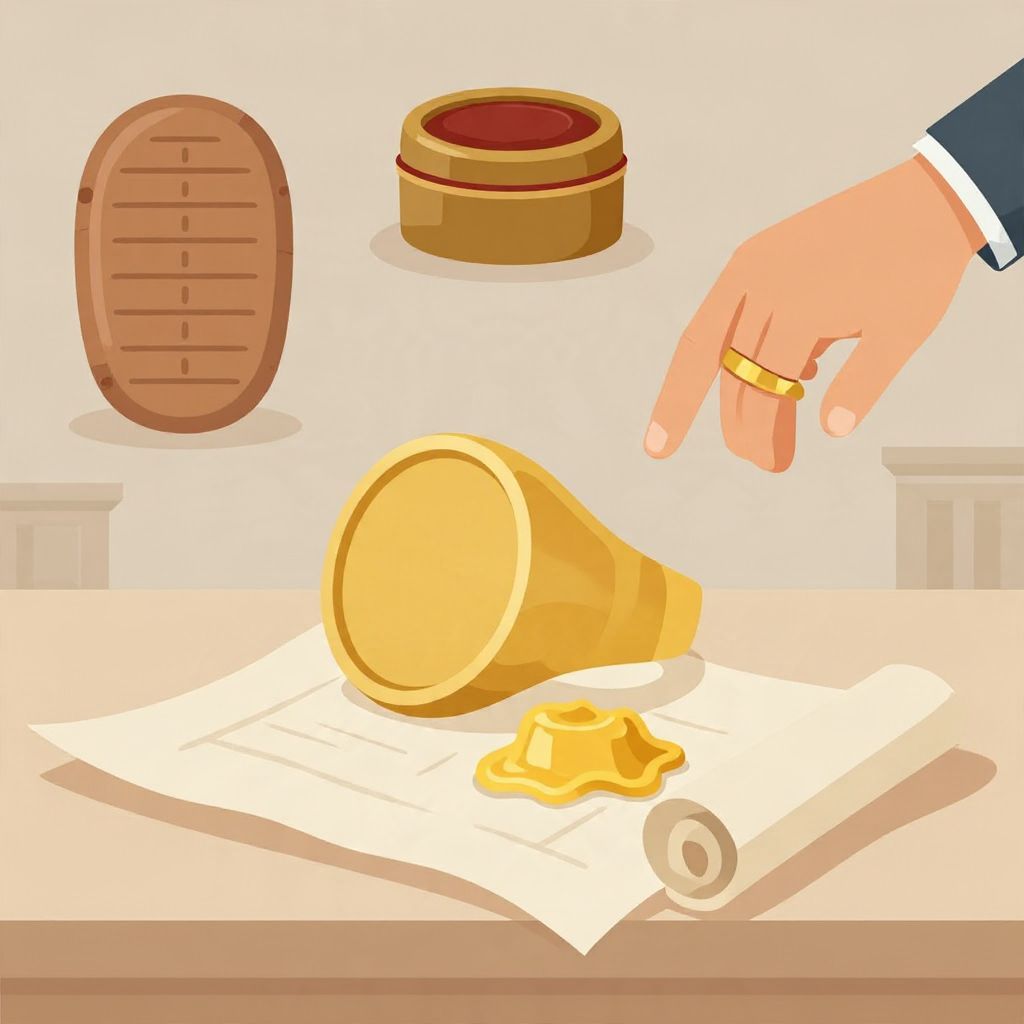
What is a signet ring? For most of history, it was more than jewelry: it was a personal seal, a mark of identity, and sometimes a symbol of authority. Worn on the hand and pressed into wax, clay, or another soft material, a signet ring could authenticate a letter, legal document, or shipment.
Its history stretches from the ancient Near East to the courts, churches, and households of Europe and beyond. Over time, the signet ring shifted from a practical tool of administration to a status object, yet it kept its old association with power, trust, and personal identity.
What is a signet ring?
A signet ring is a ring engraved with a unique design—often a family crest, monogram, symbol, or seal—that can be pressed into wax or clay to leave an identifying impression. Historically, it served as a personal signature, especially before widespread literacy and standardized handwriting.
How signet rings worked in history
The basic idea was simple. A signet ring bore a raised or engraved image on its face, usually cut in reverse so that the impression would read correctly when stamped. The wearer pressed it into softened wax on a letter or document, creating a seal that showed who sent it and whether the message had been opened.
Seal, not just decoration
Unlike ordinary rings, signet rings were functional objects. Their main purpose was authentication. In societies where many people could not read, and where official signatures were not yet universal, a seal could stand in for a written name. It also made forgery harder, since the design was supposed to be personal and difficult to copy.
Materials and design
Signet rings have been made from gold, silver, bronze, iron, and later other metals. The face might carry initials, heraldic arms, religious symbols, a portrait, or a simple geometric device. In some periods, the ring was set with carved gemstones such as intaglios, where the design was cut into the stone rather than raised from it.
Where did signet rings come from?
The use of personal seals is ancient, and signet rings developed from that broader sealing culture. Archaeological evidence shows seal use in the ancient Near East and Egypt thousands of years ago, long before the classic European signet ring became familiar. The ring form became especially practical because it kept the seal close at hand and hard to misplace.
Ancient Near Eastern and Egyptian roots
Seals were used in Mesopotamia and Egypt to mark ownership, secure containers, and validate authority. Early seals were often cylinder seals or stamp seals rather than rings. Over time, ring seals became more common in some regions, especially among elites and officials who needed a portable, personal mark.
Classical Greece and Rome
By the classical period, signet rings were well established in the Mediterranean world. Greek and Roman elites used them both for practical sealing and as markers of rank. In Rome, the ring could signify citizenship, office, or family identity. The famous Roman anulus signatorius was the sealing ring associated with formal use, especially among the upper classes and officials.
Why signet rings mattered in the ancient and medieval world
Signet rings mattered because they connected identity with authority. A seal could confirm a command, a contract, a will, or a private letter. In political systems where trust depended on personal reputation and visible rank, the ring became a compact symbol of legitimacy.
Authority and administration
Rulers, nobles, bishops, merchants, and administrators used seals to manage property and correspondence. A sealed document signaled that its contents were approved by the person whose mark it bore. In practice, this helped governments and households function across distance, since a seal could travel where the owner did not.
Privacy and security
Signet rings also protected privacy. A sealed letter could reveal whether it had been opened. A broken seal suggested tampering. This was especially important in diplomacy, business, and elite family correspondence, where secrecy and authenticity were closely linked.
Signet rings in the Middle Ages
During the Middle Ages, signet rings remained important across Europe and the Islamic world, though their exact use varied by region and social class. They were part of a much larger seal culture that included wax seals, seal matrices, and stamped emblems on documents, containers, and goods.
Heraldry and family identity
In medieval Europe, many signet rings displayed heraldic devices. These were not random ornaments; they identified a lineage, office, or household. As heraldry became more formalized, seals and rings helped express noble identity and inheritance. A ring could therefore function as both a legal instrument and a statement of status.
Church and state
Clerics and rulers often used seals on rings or separate seal matrices. Bishops, abbots, and kings relied on sealing practices to issue orders and authenticate correspondence. The association between a ring and office was strong enough that some high-ranking churchmen and rulers were known by their seal rings as much as by their written names.
Were signet rings only for kings and nobles?
No. Although signet rings are often associated with royalty and aristocracy, they were used by many different people. Merchants, lawyers, clergy, and urban professionals also used seals, especially as trade and legal paperwork expanded. The privilege of wearing a signet ring was widespread in some societies, even if the style and prestige differed by rank.
Merchants and urban elites
As commerce grew in medieval and early modern towns, merchants needed reliable ways to validate contracts, shipments, and correspondence. A merchant’s seal ring could identify a business house as effectively as a noble’s seal identified a lineage. In this sense, signet rings were tools of trust in both political and commercial life.
Women and signet rings
Women also used seals, especially widows, heiresses, noblewomen, and women managing property or correspondence. The surviving evidence is uneven, partly because many documents were created and preserved in male-dominated institutions. Still, historical records show that seal use was not exclusively male, even if the symbolism often leaned toward male authority in elite societies.
How signet rings changed over time
The importance of signet rings declined gradually as handwriting, notarization, bureaucracy, and mass literacy expanded. By the modern era, signatures and official stamps became the main tools of authentication. Yet signet rings did not disappear; they became more symbolic, often serving as heirlooms, status markers, or ceremonial objects.
From practical seal to family heirloom
In later centuries, many families kept signet rings as inherited objects. Even when they were no longer used daily for sealing documents, they preserved family memory and continuity. A ring passed from one generation to another could carry a crest, initials, or a design tied to ancestry and identity.
Modern ceremonial use
Today, signet rings are often worn for tradition, fashion, or family heritage rather than administrative necessity. Some people still use them to seal wax, especially in formal correspondence or ceremonial settings. In this modern context, the ring’s meaning is often historical and personal rather than legal.
What makes a signet ring different from other rings?
The key difference is purpose. A decorative ring is worn mainly for appearance, while a signet ring is designed to identify its owner through an engraved seal. The face is usually flat or slightly domed, large enough to carry a clear design, and intended to leave an impression rather than simply catch the eye.
Common features
- A seal design cut into stone or metal
- An image or monogram made to appear correctly in reverse when stamped
- A broad face suitable for pressing into wax
- A connection to identity, office, or family lineage
Related objects
Signet rings are closely related to seal matrices, signets, and stamp seals. The difference is partly practical and partly historical. A seal matrix is the tool used to make an impression, while a signet ring is a wearable seal. In many periods, the ring was simply the most convenient form of the seal.
Popular myths and historical realities
Signet rings have attracted stories of secret societies, hidden powers, and royal intrigue. While some rings did play roles in diplomacy, inheritance, and political control, the historical reality is less mysterious and more administrative. Their main importance lay in routine acts of authentication, not magic or conspiracy.
The legend of the “power ring”
Popular culture sometimes treats signet rings as if they conferred authority by themselves. In fact, the power came from social recognition. A seal worked because other people accepted it as valid. Without that trust, even the most impressive ring was just a piece of jewelry.
Why signet rings still matter historically
Signet rings offer a useful window into how premodern societies managed identity, trust, and power. They show that history was not only shaped by battles and kings, but also by practical tools that made administration possible. A small ring could help move orders, property, and authority across long distances.
In short, a signet ring was historically a wearable seal: a personal, functional object used to authenticate documents and express identity. Its long history—from ancient seals to medieval heraldry and modern heirlooms—shows how everyday objects can carry deep political and cultural meaning. For related reading, you may also be interested in the history of heraldry and medieval daily life.