
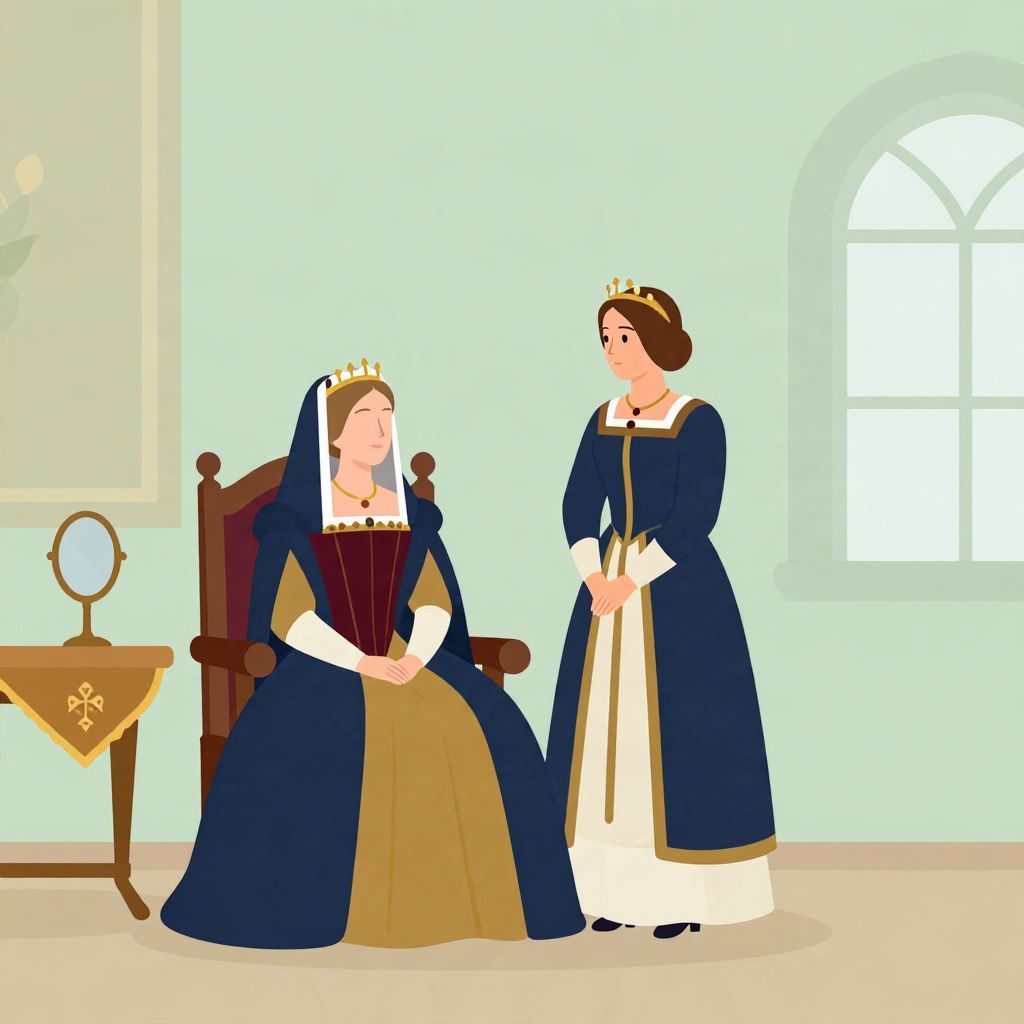
What does lady in waiting mean? The phrase refers to a woman who attended a queen, princess, or other noblewoman in a royal or aristocratic household. In practice, the role combined companionship, ceremonial presence, and personal service, though the exact duties varied by country and period.
The title sounds simple, but its history is tied to court life, rank, gender, and political power. A lady in waiting was not a servant in the modern sense, nor merely a friend; she occupied a position within a hierarchy that could bring influence, status, and access to the center of government.
What Does Lady In Waiting Mean?
A lady in waiting was a woman appointed to assist and accompany a queen or high-ranking noblewoman. She might help with dressing, travel, correspondence, ceremonies, and daily companionship. In many courts, the role was held by women of noble birth, which distinguished them from ordinary household servants.
The Historical Meaning of a Lady in Waiting
The phrase “lady in waiting” is most closely associated with European royal courts from the medieval period through the early modern era. Although the wording is English, similar positions existed in many monarchies long before the term became standard. The “waiting” part refers to attendance on a superior, not passive waiting around.
Not a servant, but not an equal either
Historically, a lady in waiting occupied an in-between social position. She served the queen or princess, yet she often came from a noble family and was expected to behave with the manners of her rank. This made the role both practical and prestigious. It could also be a stepping-stone to court influence, marriage prospects, or political patronage.
Different courts used different titles
Across Europe, courts used a variety of titles for women in royal attendance. English courts used terms such as lady of the bedchamber, maid of honour, and gentlewoman, depending on rank and era. In other monarchies, equivalent roles existed under different names. The duties were often similar even when the titles were not.
Where Did the Role Come From?
The roots of the lady-in-waiting tradition lie in medieval and early modern court culture, when royal households were large, hierarchical, and highly ceremonial. Monarchs and their families lived surrounded by attendants who managed daily life, displayed status, and reinforced the dignity of the crown. Women of rank were included in this system to attend royal women.
Medieval courts and household service
In medieval Europe, aristocratic households were organized around service and loyalty. Noblewomen did not live privately in the way many modern people imagine. They were surrounded by attendants who helped with clothing, grooming, travel, entertainment, and religious observance. Over time, some of these attendants became formal court officers.
By the early modern period, the role became more formal
From roughly the 15th to the 18th centuries, royal households became increasingly structured. Court offices were carefully ranked, and ladies in waiting became part of a visible system of ceremony. Their presence signaled the status of the queen and the grandeur of the monarchy. In some courts, appointments were influenced by politics as much as by personal trust.
What Did Ladies in Waiting Actually Do?
The duties of a lady in waiting depended on the court, the rank of the woman she served, and the period in question. Her work could be intimate and practical, ceremonial and social, or politically significant. The role often blended personal attendance with the performance of royal dignity.
Common duties in royal households
- Accompanying the queen or princess in public and private
- Assisting with dressing, bathing, and personal grooming in earlier periods
- Carrying messages, letters, or small items
- Helping manage social visits and court etiquette
- Attending ceremonies, religious services, and formal meals
- Providing conversation and companionship
Why companionship mattered
Royal women, especially queens, often lived under close scrutiny and with limited privacy. A lady in waiting could be a trusted companion during long days of ceremony and travel. In some cases, she was also a confidante, helping the queen navigate court politics, family tensions, and the pressures of public life.
Who Became a Lady in Waiting?
In many monarchies, ladies in waiting were drawn from noble or gentry families. Their social rank mattered because they represented the dignity of the royal household. A woman’s family connections could also make her appointment useful to the crown, since court service often rewarded loyalty and bound important families to the monarch.
Social status and family connections
Appointments were rarely random. A lady in waiting might be the daughter, sister, or wife of a nobleman whose support the queen or king wanted to secure. Court service could strengthen a family’s standing, and in return the family might gain access, favor, or influence. This was especially true in monarchies where patronage shaped politics.
Education and courtly skills
A lady in waiting was expected to know court etiquette, speak and behave gracefully, and often read and write well. In some courts, she might also be expected to sing, dance, sew, or participate in refined conversation. The ideal court lady was both socially polished and discreet.
How the Role Changed Over Time
The meaning of lady in waiting changed as monarchies changed. In the Middle Ages and early modern era, court life was highly personal and ceremonial. By the 19th and 20th centuries, many royal households had become smaller and more public-facing, and the role became more formal, less intimate, and sometimes more symbolic.
From daily service to ceremonial attendance
Earlier ladies in waiting might spend much of the day physically near the queen, helping with private routines. Later, especially in constitutional monarchies, the role often focused more on public appearances, official events, and companionship than on hands-on personal service. The queen’s household became less like a domestic household and more like a ceremonial institution.
Modern royal households
In some modern monarchies, the term still survives, though the job may be less demanding than in the past. Today, a lady in waiting may help with engagements, accompany a royal woman, or assist with correspondence and public duties. In some countries, the title has been replaced or updated to reflect modern expectations and professional staff structures.
Was a Lady in Waiting Powerful?
Sometimes, yes. Although the role was not officially political, proximity to a queen or princess could create real influence. A trusted lady in waiting might hear private conversations, shape access to the royal woman, or help manage who got time and attention at court. That made the position potentially important in dynastic politics.
Influence through access
Courts were spaces where access mattered. People sought audiences, favors, offices, and recommendations. A lady in waiting could act as a gatekeeper or intermediary, especially if she had the confidence of the royal woman she served. However, influence varied widely and depended on personality, trust, and the political environment.
Risks of court service
Close access to power could also be dangerous. Court factions, jealousy, and gossip were common. A lady in waiting might gain favor one year and lose it the next. Because she stood near the center of court life, she could become involved in scandal, rivalry, or political suspicion even if she held no formal office of state.
Famous Historical Examples
Many women who served as ladies in waiting are remembered because they later became politically significant, wrote memoirs, or were associated with major events. Their stories show how the role could intersect with history in unexpected ways.
Women at the Tudor and Stuart courts
At the English Tudor and Stuart courts, ladies in waiting were part of the daily life of queens such as Catherine of Aragon, Anne Boleyn, Mary I, Elizabeth I, and later queens consort. Some became important figures in their own right, while others are known because they witnessed dramatic moments of dynastic change, religious conflict, or succession disputes.
Later European courts
In later centuries, royal households across Europe continued to employ women in similar roles. Their titles and duties varied, but the basic idea remained the same: a woman of rank attending a royal woman in a mixture of service, ceremony, and companionship. In some cases, these women became well known through portraits, diaries, or court records.
Common Misunderstandings About the Term
The phrase “lady in waiting” is often misunderstood today because modern English makes it sound like a passive or subordinate position. Historically, however, it was a recognized court office with social meaning. It was not simply about standing nearby; it was about belonging to a structured world of rank and service.
It was not the same as being a maid
One common mistake is to assume a lady in waiting was just a household maid. In fact, many were noblewomen or women of gentle birth. They might perform some practical tasks, especially in earlier periods, but their status was usually much higher than that of ordinary domestic servants.
It was not always a single fixed job
The term covers several related roles, and the exact meaning changed over time. A lady in waiting could be a close personal attendant, a ceremonial companion, or a senior household officer. Because of this, historians usually interpret the term in context rather than giving one rigid definition for every century and court.
Why the Term Still Matters
Understanding what lady in waiting means opens a window into how royal households worked and how women participated in power structures that were often informal but influential. The role reveals that court life depended not only on kings and queens, but also on the women who supported, observed, and sometimes shaped their world.
A window into gender and power
The office shows how elite women could exercise influence within a system that formally limited their authority. A lady in waiting might not rule, but she could help maintain the social and political machinery of monarchy. Her position reflects the importance of access, trust, and ceremony in premodern politics.
In short, a lady in waiting was a woman who attended a queen or noblewoman in a royal household, combining service, companionship, and ceremonial duty. The role changed across centuries, but it remained an important part of court life. If you want to explore the topic further, see what a lady in waiting was to the queen and a broader explanation of the title.