
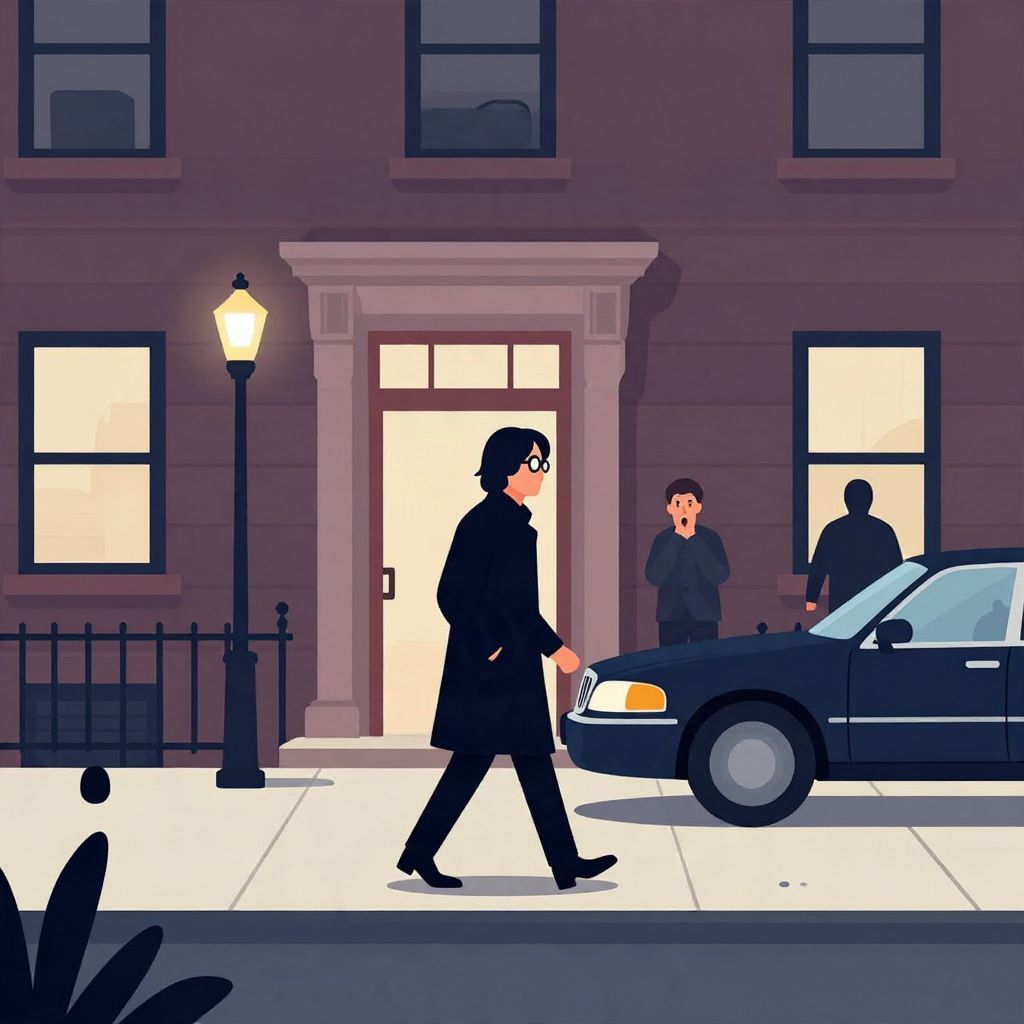
John Lennon was shot on December 8, 1980, outside the Dakota apartment building in New York City. He died later that night at Roosevelt Hospital. The killing shocked the music world and quickly became one of the most widely reported celebrity murders of the 20th century.
The event ended the life of a former Beatle whose influence on popular music, youth culture, and antiwar activism had already made him a global figure. To understand what happened that night, it helps to look at the date, the setting, the shooter, and the aftermath.
When Was John Lennon Shot?
John Lennon was shot on the evening of December 8, 1980, in New York City. He was struck by gunfire outside his home at the Dakota, near Central Park West, and was pronounced dead later that night after emergency treatment at Roosevelt Hospital. The shooting took place around 10:50 p.m., though the exact minute is usually given as approximate in historical accounts.
What Happened on December 8, 1980?
That night, Lennon and his wife, Yoko Ono, were returning to the Dakota after a recording session. As they arrived, a man later identified as Mark David Chapman approached and fired multiple shots at Lennon. Lennon was hit several times and collapsed inside the building entrance area. Police and emergency responders rushed him to the hospital, but the wounds were fatal.
The setting: the Dakota and New York City
The Dakota was more than a famous address; it was Lennon’s home and a place where he had tried to live a quieter family life after years of intense fame. New York in 1980 was a city of stark contrasts, and the Dakota’s entrance on a busy street made the attack both public and immediate. The shooting occurred in front of witnesses, which is one reason the event became so seared into public memory.
Who shot John Lennon?
John Lennon was shot by Mark David Chapman, a 25-year-old man from Hawaii. Chapman had traveled to New York and waited near the Dakota. He later pleaded guilty to second-degree murder and received a prison sentence of 20 years to life. Historians and biographers generally treat Chapman’s act as a deliberate assassination of a public figure, though not in the political sense of a state-directed killing.
Why Did the Shooting Happen?
The motive was not a political conspiracy or a broader historical plot. Chapman’s actions were rooted in a mix of obsession, mental instability, and a fixation on fame and identity. He had become preoccupied with Lennon as a symbol of celebrity success and personal contradiction. In historical terms, the killing is often discussed as an example of the dangerous intersection between celebrity culture and disturbed individual violence.
Was there a warning sign?
In hindsight, some details look ominous, but historians are careful not to turn hindsight into certainty. Chapman had a history of emotional instability and had made troubling choices before the attack. Still, the shooting was not the result of a publicly known, organized threat that could have been easily predicted from the outside. That uncertainty is part of why the event remains so unsettling.
John Lennon’s Final Hours
After being shot, Lennon was transported by police to Roosevelt Hospital, where medical staff attempted to save him. He was pronounced dead later that night, on December 8, 1980. Because of the severity of the wounds, there was little chance of survival. The speed with which the death was confirmed gave the event an immediate and devastating impact around the world.
How the news spread
The announcement of Lennon’s death moved rapidly through news outlets and radio broadcasts. Fans gathered outside the Dakota and at public spaces in New York and elsewhere to mourn. For many people, the news felt unbelievable: a musician who had helped define the 1960s and 1970s was suddenly gone. The shock was intensified because Lennon had remained visible in public life shortly before his death, including his recent return to recording.
Why John Lennon’s Death Mattered Historically
Lennon’s shooting mattered not only because he was famous, but because he had become a cultural symbol. As a Beatle, solo artist, and public commentator, he represented postwar youth culture, artistic experimentation, and the political turbulence of the late 20th century. His death marked the end of an era for millions who had grown up with the Beatles’ music and the broader cultural changes they helped shape.
The Beatles and cultural memory
The Beatles were already part of modern history by 1980, but Lennon’s death deepened their place in public memory. The loss prompted renewed attention to the band’s legacy, Lennon’s solo work, and the social meaning of celebrity. In the years that followed, the shooting became one of the defining tragic moments in rock history, often recalled alongside other major cultural losses of the era.
Impact on music and public life
After Lennon’s death, many artists and fans reflected on the vulnerability of public figures and the costs of fame. The event also contributed to broader conversations about gun violence, mental health, and security for celebrities. While those debates have evolved over time, the shooting remains a reference point in discussions about the risks faced by prominent individuals in public spaces.
Timeline of the Key Events
For readers who want the sequence at a glance, the main events unfolded as follows:
- December 8, 1980, evening: John Lennon and Yoko Ono return to the Dakota in New York City.
- About 10:50 p.m.: Mark David Chapman shoots Lennon outside the building.
- Shortly after: Lennon is rushed by police to Roosevelt Hospital.
- Later that night: Lennon is pronounced dead.
- Afterward: Chapman is arrested, prosecuted, and later convicted.
How Historians and the Public Remember the Shooting
Historically, the shooting is remembered as both a personal tragedy and a public event. It is personal because it ended one man’s life and devastated his family and friends. It is public because Lennon was not only a musician but a widely recognized figure whose words and songs had entered global culture. The combination made the killing unusually resonant.
Memory, myth, and fact
Over time, celebrity deaths often attract rumors, simplified stories, and exaggerated claims. In Lennon’s case, the core facts are clear: he was shot on December 8, 1980, in New York, and died that night. The more complicated questions concern motive, mental state, and the meaning people attach to the event. Those matters invite interpretation, but the basic chronology does not.
What Happened Afterward?
In the years after the shooting, Lennon’s music and public image continued to grow in significance. Memorials, tributes, and anniversary reflections kept his memory alive. The Dakota remained closely associated with the tragedy, and the date itself became a solemn marker for fans around the world. For many, December 8 is not just a date in music history but a cultural moment of loss.
In short: John Lennon was shot on December 8, 1980, outside the Dakota in New York City, and died later that night. The event ended the life of one of the most influential musicians of the 20th century and left a lasting mark on music history, celebrity culture, and public memory. For more on the era that shaped Lennon’s world, you may also enjoy reading about the Beatles and New York City history.