
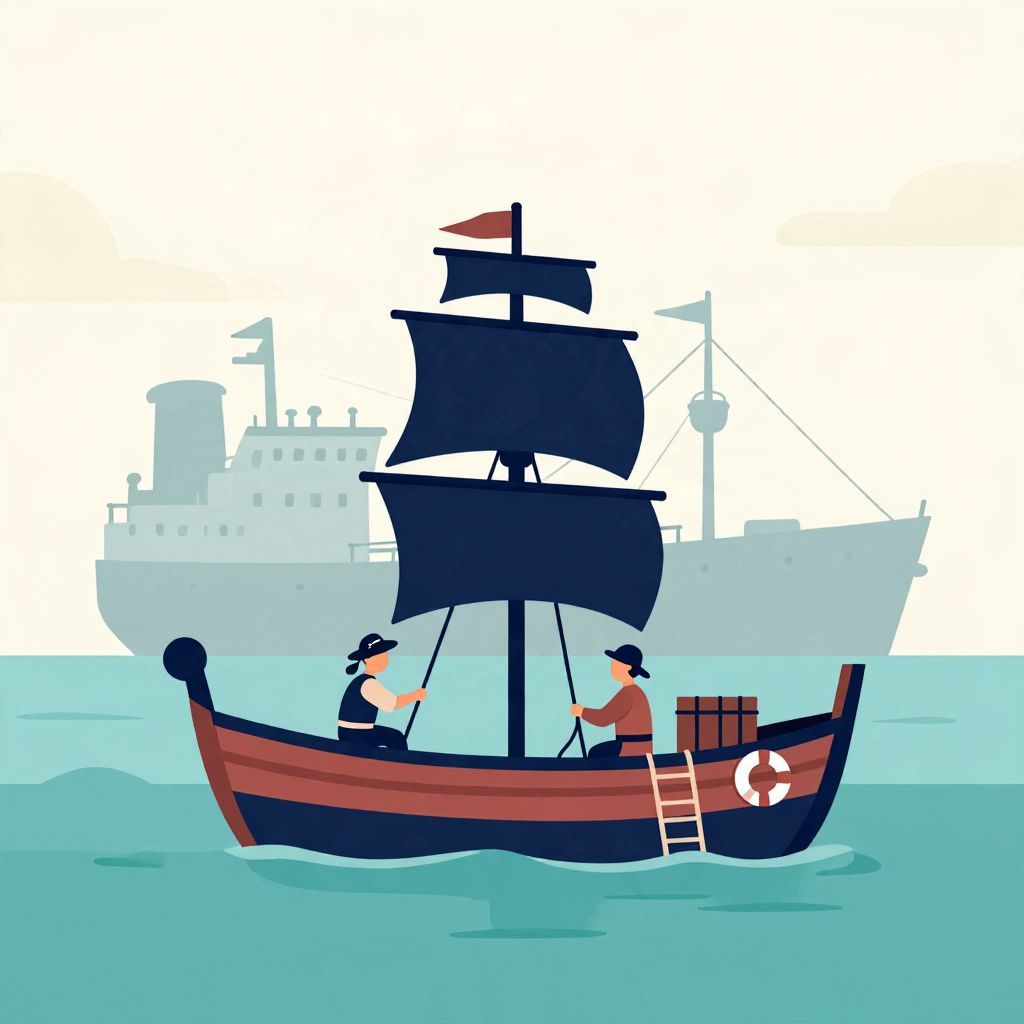
Do pirates still exist? Yes—but not in the romantic, swashbuckling sense of the movies. Modern piracy is real, and it still threatens shipping in some parts of the world, especially where law enforcement is weak and valuable cargo passes through busy sea lanes.
The word “pirate” now covers a range of crimes at sea, from armed robbery against ships to hijackings for ransom. The history of piracy is long, but its modern form is shaped by global trade, naval patrols, and the uneven reach of states.
Do pirates still exist?
Yes. Pirates still exist today, but they are modern criminals rather than the treasure-hunting figures of popular legend. Contemporary piracy usually involves attacking boats or commercial ships to steal cargo, fuel, cash, or to take crews hostage for ransom. It is most common in regions where maritime security is limited.
What modern piracy looks like
Modern piracy is usually practical, not theatrical. Instead of swords and flags, pirates use speedboats, automatic weapons, boarding hooks, and communications equipment. Their targets are often merchant vessels, fishing boats, tugboats, and tankers. In many cases, the goal is not to seize the ship permanently but to steal what can be sold quickly or to demand payment for the crew’s release.
Common forms of piracy today
- Armed robbery at sea: stealing valuables, cargo, or personal items from a ship.
- Hijacking for ransom: taking control of a vessel and holding crew or ship until payment is made.
- Fuel theft and cargo theft: siphoning fuel or unloading goods for resale.
- Kidnapping from coastal waters: especially in regions with weak policing and high-value shipping routes.
Because the modern maritime economy is so large, even a small number of attacks can have serious consequences. Shipping companies may reroute vessels, raise insurance costs, and spend more on security. In that sense, piracy remains a live historical problem, not just a subject from the age of sail.
Where piracy still happens
Piracy is not evenly spread across the world. It tends to appear where trade routes are busy, coastal states are fragile, and armed groups can operate with relative impunity. The exact pattern changes over time as navies, coast guards, and international patrols respond.
Regions associated with modern piracy
- The Horn of Africa and the western Indian Ocean: especially prominent in the late 2000s and early 2010s, when Somali piracy drew global attention.
- The Gulf of Guinea: known for kidnappings, armed attacks, and oil-related theft.
- Parts of Southeast Asia: including waters near the Strait of Malacca and surrounding archipelagos, where some attacks are opportunistic and others are organized.
- Other coastal zones: piracy can flare in smaller pockets wherever governance breaks down and maritime traffic is vulnerable.
Somalia became the best-known modern piracy hotspot because state collapse on land made the sea easier to exploit. Pirates there could launch attacks from remote coasts and sometimes hold ships far offshore. International naval patrols and onboard security later reduced the scale of those attacks, showing how piracy often rises and falls with political conditions.
How modern piracy differs from the “Golden Age”
The classic image of pirates comes mostly from the late 17th and early 18th centuries, often called the “Golden Age of Piracy.” That era produced famous names such as Blackbeard and “Calico Jack,” and it shaped the popular pirate myth. But modern piracy is very different in motive, organization, and setting.
Then and now
- Purpose: early modern pirates often sought plunder from imperial trade routes; modern pirates usually want fast money, ransom, or stolen cargo.
- Technology: wooden sailing ships have been replaced by motorboats, satellite phones, and automatic weapons.
- Response: today’s pirates face coast guards, naval task forces, surveillance systems, and international maritime law.
- Public image: the old pirate became a romantic outlaw in literature and film, while modern pirates are usually discussed as organized criminals or armed militants.
Historically, piracy has always been tied to commerce. The more valuable the shipping lanes, the more tempting they become. In the age of empire, pirates preyed on merchant vessels carrying sugar, silver, spices, textiles, and enslaved people. Today, the cargo may be oil, manufactured goods, or food supplies, but the basic logic is similar: piracy follows profit.
What counts as piracy under international law?
One reason the answer to “Do pirates still exist?” can seem confusing is that the legal definition is narrower than the popular one. Under international law, piracy generally refers to illegal acts of violence or detention committed for private ends on the high seas, outside a state’s territorial waters. Attacks closer to shore may be classified differently, often as armed robbery at sea.
Why the legal distinction matters
This distinction affects who can arrest suspects, which courts can try them, and how international forces respond. A ship attacked in international waters may trigger one set of rules; a ship attacked in a harbor or near shore may fall under the jurisdiction of the coastal state. In practice, the line can be messy, especially where territorial control is weak or disputed.
That is why reports about piracy sometimes use the word broadly, even when lawyers and maritime agencies use more precise language. The public may hear “piracy,” while officials may describe the same event as armed robbery, kidnapping, or maritime crime.
Why piracy has not disappeared
Piracy survives because the conditions that support it still exist in some places. Sea lanes are vast, patrol coverage is uneven, and shipping remains essential to the global economy. When poverty, conflict, corruption, or weak coastal governance combine with easy targets, piracy can flourish.
Key historical causes
- Weak states: pirates exploit areas where governments cannot consistently police the coast.
- Economic desperation: some recruits are drawn by unemployment, local hardship, or the lure of quick profit.
- Strategic geography: narrow straits and heavily traveled routes offer many targets.
- Conflict and instability: war or civil disorder can create openings for armed groups at sea.
Historically, piracy has often been a symptom of larger disorder rather than an isolated crime. In earlier centuries, imperial rivalries, war, and privateering blurred the line between state violence and piracy. In the modern era, the same pattern can reappear when governments lose control of coastal regions or when criminal networks adapt to weak enforcement.
Are there still “pirate ships”?
There are still vessels used for piracy, but they do not resemble the legendary pirate ship with black sails and a skull-and-crossbones flag. Modern pirate boats are usually fast, low-profile craft meant to approach a target quickly. Some groups use larger mother ships to extend their range, especially in open waters.
The famous black flag is mostly a historical symbol. In the early 18th century, pirates used distinctive flags to intimidate victims and signal that resistance might be costly. Today, the image survives in culture, sports, and branding, but it is not a reliable marker of real piracy. A modern pirate is more likely to hide than to advertise.
How governments and navies respond
International responses have reduced piracy in some regions, though not eliminated it. Naval patrols, convoy systems, armed guards on ships, better route planning, and cooperation among states have all made attacks more difficult. In some areas, prosecutions and local policing have also helped.
Typical anti-piracy measures
- Armed security teams on commercial vessels
- International naval patrols and surveillance
- Hardening ships with barriers, alarms, and evasive tactics
- Cooperation between shipping companies and maritime agencies
- Regional efforts to strengthen coast guards and legal systems
These measures show an important historical point: piracy is not inevitable. It grows where opportunity outpaces enforcement, and it declines when states, shipping networks, and international partners close those gaps. But because the world’s oceans are so large, the problem can never be fully erased.
What people usually get wrong about pirates
Popular culture has made pirates seem either glamorous or cartoonish. Real piracy is neither. It is violent, risky, and often tied to organized crime. Most modern pirates are not independent adventurers; they are part of networks that plan attacks, move stolen goods, or negotiate ransoms.
Another misconception is that piracy belongs only to the past. In fact, the historical record shows repeated waves of piracy across centuries, from the Mediterranean and the Caribbean to the Indian Ocean and Southeast Asia. The form changes, but the underlying conditions can recur whenever maritime commerce and weak security meet.
So, do pirates still exist?
Yes, pirates still exist, but they are best understood as modern maritime criminals rather than the romantic figures of folklore. Their attacks are shaped by today’s shipping routes, politics, and technology, yet they belong to a very old history of violence at sea. The basic answer is simple: piracy never vanished; it adapted.
If you want to explore the symbols and social world behind pirate history, you may also like reading about what the black flag means and the older tradition of the highwayman, another outlaw figure shaped by fear, legend, and law.