
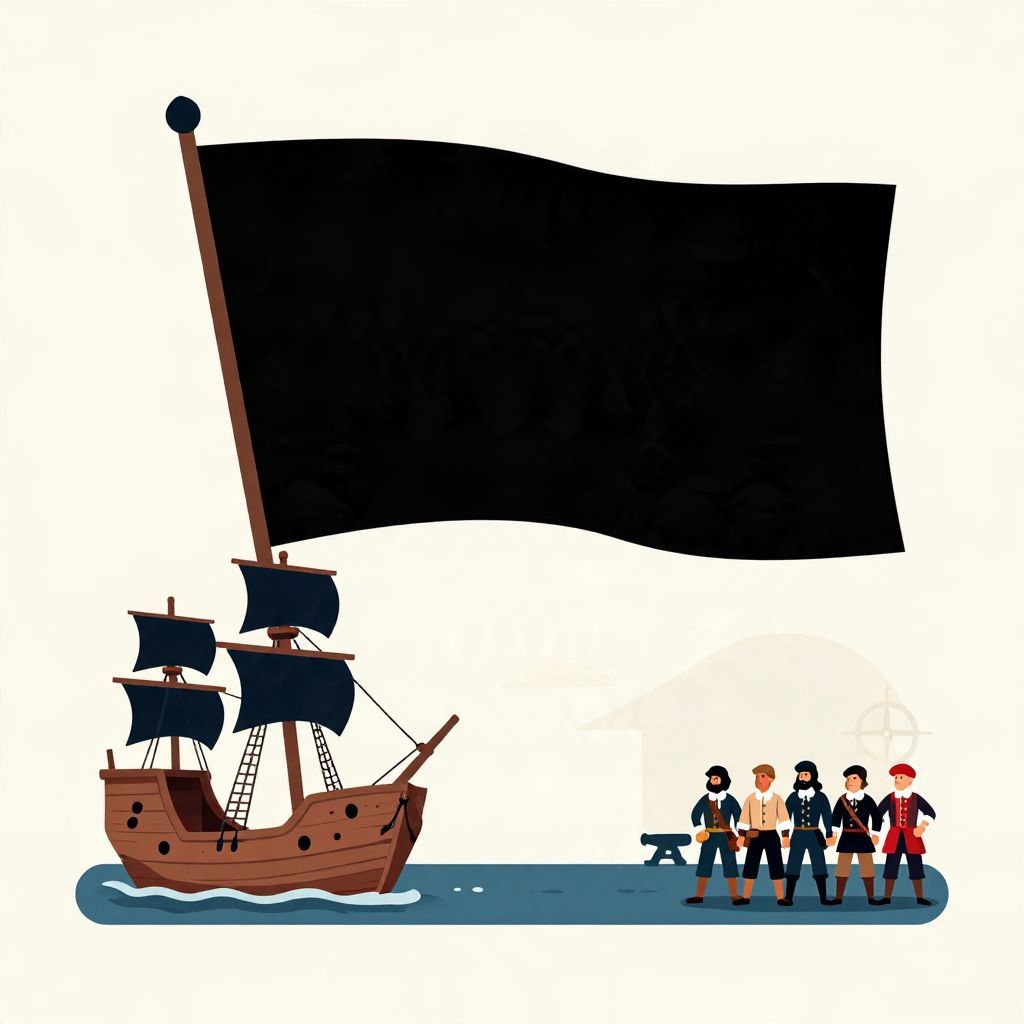
What does a black flag mean? The answer depends on time, place, and context. Across history, a black flag has signaled death, mourning, rebellion, piracy, military defiance, or political protest. In some settings it has also been used for fashion, symbolism, or simple visual contrast.
Because flags are powerful public symbols, the meaning of a black flag has changed over centuries. Its history is less about one fixed definition than about how different communities used the color black to communicate danger, resistance, grief, or authority.
What Does a Black Flag Mean?
A black flag most commonly means mourning, danger, rebellion, or refusal to surrender. Historically, it has been used by pirates, insurgents, anarchists, and some military groups. In modern life, the meaning depends on the setting: it may signal protest, a warning, or a political statement rather than a single universal message.
The Historical Roots of the Black Flag
Black has long carried strong symbolic weight in many cultures. In European traditions, it was associated with death, grief, and solemnity. That made it a natural choice for banners used in war, punishment, or mourning. Over time, the black flag became linked not just with sorrow, but with defiance and the rejection of established authority.
Black as a Symbol in Earlier History
Long before modern nation-states, armies and rulers used colored banners to identify groups on the battlefield. Black was visually striking and emotionally charged. In some cases, it suggested no quarter, meaning no mercy would be given. In others, it was used to mark a community in mourning after a tragedy or the death of a leader.
Because medieval and early modern sources do not always preserve exact flag meanings consistently, historians are careful not to treat every black banner as having the same message. The symbol often changed depending on who carried it and why.
Black Flags and Piracy
One of the most famous historical meanings of a black flag comes from piracy in the early 18th century. Pirates in the Atlantic and Caribbean used black flags to intimidate targets and suggest the threat of violence. The best-known version was the Jolly Roger, often decorated with skulls, bones, or other fearsome images.
Why Pirates Used Black Flags
The black flag was effective because it created fear before a fight even began. A ship that saw a pirate flag might surrender rather than risk battle. Pirates were not a single organized navy, so their flags varied widely. The Jolly Roger was never one standard design; it was a family of symbols used by different crews.
Popular culture has made the pirate black flag seem universal, but historically that is too simple. Some pirates used red flags instead, which could imply bloodshed and no mercy. Others flew plain black cloth. The important point is that the flag was meant to communicate threat and psychological pressure.
Black Flags in Rebellion and War
In political and military history, black flags have often represented revolt against an established power. Revolutionary groups, insurgents, and anti-government movements sometimes chose black to show that they rejected existing rule or were prepared for total struggle. The meaning was not always the same, but the color often implied seriousness and uncompromising intent.
Anarchism and the Black Flag
In the 19th century, the black flag became strongly associated with anarchism. Anarchists used black to symbolize the absence of a state and to express opposition to political authority. Unlike national flags, which represent sovereignty and unity, the black flag in anarchist tradition suggested refusal, protest, and radical change.
This association became especially visible in European labor and revolutionary movements. The black flag was not merely decorative; it was a political statement. It signaled that the group carrying it did not accept the legitimacy of the existing order.
Black Flags in Islamic and Revolutionary History
Black banners also appear in Islamic history, where they have had varied meanings across different periods. One of the most famous examples is the use of black banners by the Abbasids during their rise to power in the 8th century. In that context, black became a dynastic and political symbol, not simply a sign of mourning.
Later movements in the Middle East and beyond also adopted black flags for religious or revolutionary reasons. However, the meaning is not uniform across all such uses. Some groups chose black to evoke historical memory, while others used it to project militancy or resistance. It is important to avoid assuming that every black flag in Islamic history means the same thing.
What a Black Flag Means in Modern Contexts
Today, a black flag can still mean different things depending on where it appears. It may mark protest, signal danger, or express identity. In some sports or motorsport settings, a black flag has a very specific technical meaning, such as disqualification or a requirement to leave the track. In other cases, it is used in memorials or demonstrations.
Common Modern Meanings
- Mourning or remembrance — used to honor the dead or mark a tragedy.
- Rebellion or protest — especially in political movements or demonstrations.
- Danger or warning — in some practical or ceremonial contexts.
- Piracy or outlaw symbolism — often in historical reenactment or popular culture.
- Technical penalty — in motorsport, where a black flag can mean a driver must report to officials.
Because the symbol is so flexible, the context matters more than the color alone. A black flag at a memorial has a very different meaning from a black flag at a protest or on a racing circuit.
How the Meaning of a Black Flag Changed Over Time
The black flag’s history shows how symbols evolve. In older societies, it was often tied to death, punishment, or military threat. During the age of piracy, it became a tool of intimidation. In the modern era, it gained political meanings linked to anarchism, rebellion, and resistance. Each use built on the emotional force of the color black.
From Mourning to Defiance
One reason the black flag endured is that black itself carries a strong visual message. It can suggest emptiness, finality, seriousness, or refusal. That made it useful for mourning, but also for groups that wanted to reject compromise. The same color could therefore express grief and resistance at the same time.
This dual meaning helps explain why black flags appear in so many different historical settings. They are not tied to one culture, one religion, or one political movement. Instead, they became a flexible symbol that communities adapted to their own needs.
Black Flag vs. Other Flag Colors
To understand what a black flag means, it helps to compare it with other common flag colors. Red often suggests blood, revolution, or urgency. White can symbolize peace, surrender, or purity. Black stands apart because it frequently combines the meanings of mourning, danger, and refusal in a single image.
That is why black flags often appear in moments of conflict or transition. They are used when people want to communicate something severe, final, or uncompromising. In historical terms, the black flag is less about celebration than about warning, loss, or resistance.
Popular Myths About the Black Flag
Modern media has created a few misunderstandings about black flags. The most common is the idea that any black flag automatically means piracy. Another is that black always means the same thing in every culture. Both ideas oversimplify a symbol with a long and varied history.
What Historians Caution Against
Historians usually avoid treating symbols as fixed across all eras. A black flag flown by a pirate in the Caribbean, an anarchist in Europe, or a mourning group at a funeral does not carry identical meaning. The symbol only becomes clear when placed in its historical setting.
That is why careful interpretation matters. A black flag is not a single code word but a historically adaptable sign. Its meaning comes from the people using it, the moment in which it appears, and the audience meant to understand it.
The Lasting Significance of the Black Flag
The black flag remains powerful because it communicates strong emotion with very little visual complexity. It can represent grief, danger, resistance, or defiance in a way that is instantly recognizable. That flexibility has helped it survive from medieval warfare to modern protest culture.
In historical terms, the black flag is a reminder that symbols do not stay still. They move through time, gathering new meanings while keeping traces of older ones. That is why the question “What does a black flag mean?” has no single answer, only a history of changing uses and interpretations.
For readers interested in related symbolism, see also what a black flag means in general historical and cultural contexts and what a black American flag means. The clearest takeaway is that a black flag usually signals mourning, rebellion, danger, or protest—but the exact meaning always depends on the historical moment and the people who raised it.