
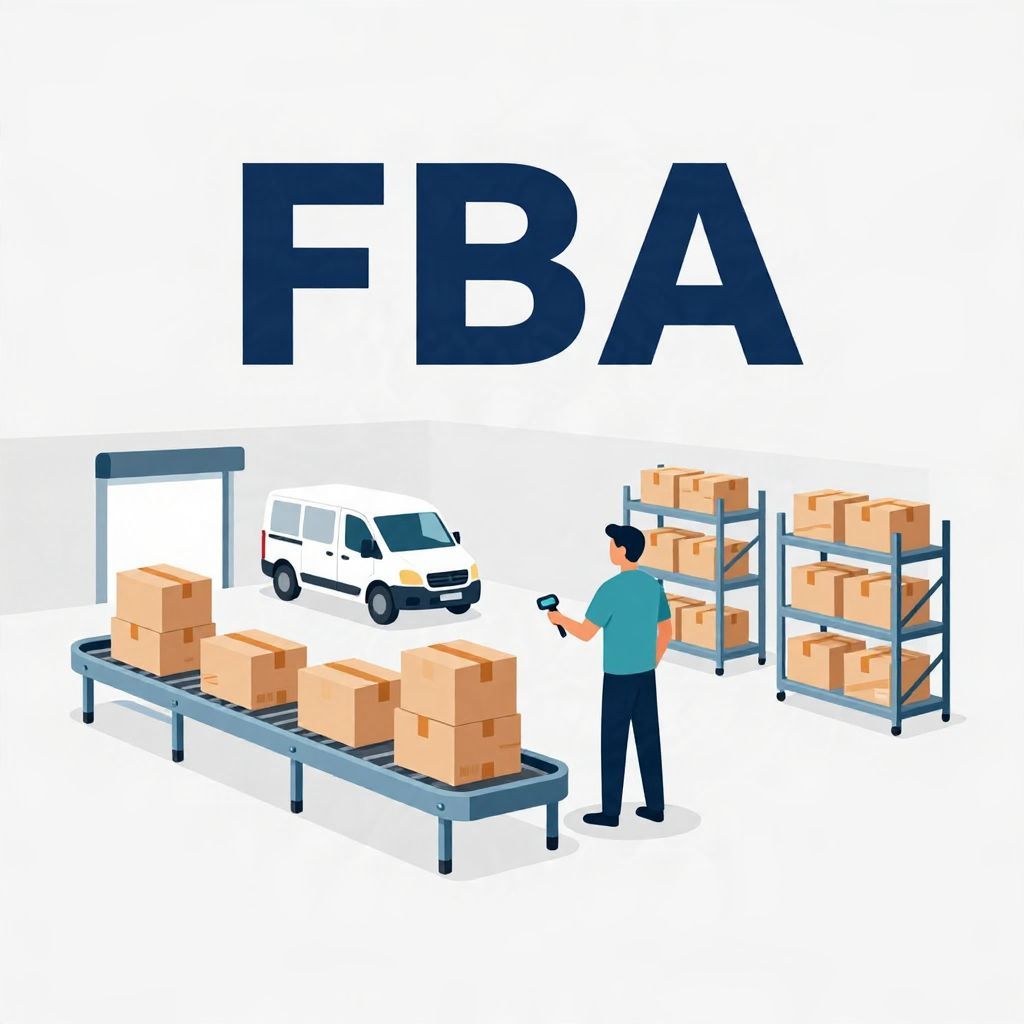
What does FBA stand for? The answer depends on context, because the abbreviation has been used in different fields and periods. In modern usage, it most commonly means Fulfillment by Amazon, a logistics program launched in the 2000s. In older or more formal contexts, however, FBA can also stand for titles, institutions, or technical terms.
To understand the phrase historically, it helps to look at how abbreviations spread in business, government, education, and online commerce. FBA is a good example of a modern acronym whose meaning shifted with the rise of digital retail and platform economies.
What does FBA stand for?
FBA most commonly stands for “Fulfillment by Amazon,” Amazon’s warehousing and shipping service for third-party sellers. In other settings, FBA can mean different things, but this is the meaning most people are asking about today. The abbreviation became widely recognized as e-commerce expanded in the early 21st century.
The historical meaning of FBA in modern commerce
In business history, FBA is tied to the growth of online retail. Amazon introduced the service in the mid-2000s so sellers could store products in Amazon warehouses while Amazon handled packing, shipping, returns, and customer service. This changed the way small businesses reached national and global markets.
Why Fulfillment by Amazon mattered
Before services like FBA, many small merchants had to manage inventory, shipping, and customer support on their own. Amazon’s model reduced those barriers. Sellers could reach customers without building a full logistics network, while Amazon gained more products and more control over the shopping experience.
This was part of a broader historical shift in commerce: the move from local storefronts and independent mail-order systems to platform-based retail. The rise of FBA reflected the same forces that shaped late-20th- and early-21st-century globalization—faster shipping, digital marketplaces, and consumer expectations for convenience.
How FBA changed online selling
- Storage: Sellers send inventory to Amazon fulfillment centers.
- Shipping: Amazon picks, packs, and ships orders.
- Customer service: Amazon often handles returns and support.
- Marketplace visibility: FBA listings can gain an advantage in search and Prime eligibility.
These features made FBA especially attractive to entrepreneurs, small brands, and established companies testing e-commerce. At the same time, critics have argued that the system increased dependence on one platform and concentrated power in a single corporation. That tension is an important part of the history of modern digital trade.
Other meanings of FBA across history and institutions
Although “Fulfillment by Amazon” is the most common modern answer, FBA has appeared in other contexts too. Abbreviations often have multiple meanings, and historians must be careful not to assume one meaning across every era or region. The correct expansion depends on the subject matter.
Examples of other possible meanings
- Fellow of the British Academy — a scholarly honor in the United Kingdom.
- Federation of British Artists — an arts organization name used in the 20th century.
- Federal Bureau of Agriculture or similar institutional shorthand — depending on country and context.
- Field-based assessment or other technical phrases in education, science, or business.
Some of these meanings are less common today, and some are used only in specialized circles. That is why the surrounding text matters. A historian, journalist, or researcher would interpret FBA differently depending on whether the source is about retail, academia, government, or art.
How abbreviations like FBA became so common
Abbreviations are not new. They have been used for centuries in manuscripts, military records, bureaucratic paperwork, and trade. What changed in the modern era was their speed and scale. As institutions grew larger and communication became faster, short forms became practical tools for saving space and time.
From paperwork to platform language
In the 19th and 20th centuries, abbreviations became especially common in railroads, telegraphy, military administration, and corporate recordkeeping. By the late 20th century, they were everywhere in business and technology. The internet accelerated this trend, creating a culture in which acronyms could become brand identities almost overnight.
FBA fits this pattern well. It is short, functional, and easy to repeat in marketing, tutorials, and seller communities. Once Amazon’s service became central to e-commerce, the abbreviation itself became part of the vocabulary of online business.
The rise of Amazon and the background to FBA
To understand FBA historically, it helps to understand Amazon’s own development. Founded in 1994 as an online bookseller, Amazon expanded rapidly into a broad e-commerce platform. By the early 2000s, it was no longer just a retailer but also a marketplace where third-party sellers could offer goods alongside Amazon’s own inventory.
Why Amazon created FBA
Amazon’s marketplace model created a problem and an opportunity. Third-party sellers needed reliable fulfillment, and customers wanted fast delivery. Amazon responded by building logistics infrastructure that could serve both its own retail operations and outside merchants. FBA emerged from that environment.
The service helped Amazon deepen customer loyalty by standardizing shipping speed and service quality. It also encouraged more sellers to join the marketplace, which increased product variety and strengthened Amazon’s position in online retail.
A simple timeline
- 1994: Amazon is founded.
- Late 1990s to early 2000s: Amazon expands beyond books into a broad marketplace.
- Mid-2000s: Fulfillment by Amazon is introduced and begins to reshape third-party selling.
- 2010s onward: FBA becomes a major feature of global e-commerce.
Exact dates for the earliest rollout can vary depending on how one defines the launch, because Amazon expanded the service gradually. What matters historically is the broader transformation: fulfillment became a platform service rather than a task handled entirely by individual sellers.
Why the meaning of FBA matters historically
At first glance, FBA may look like a simple business acronym. But it reflects several larger historical developments: the rise of e-commerce, the outsourcing of logistics, the centralization of digital marketplaces, and the changing relationship between small sellers and large platforms.
Economic consequences
FBA lowered entry barriers for many sellers. Someone with a product idea no longer needed a warehouse, shipping staff, or a national distribution system. That helped create new forms of entrepreneurship. At the same time, it also meant that many businesses became dependent on Amazon’s rules, fees, and search algorithms.
In that sense, FBA is part of a larger story about modern capitalism: convenience and access often come with new forms of dependence and concentration of power. Historians of business and technology often study these trade-offs when examining platform economies.
Cultural consequences
FBA also changed consumer expectations. Fast shipping, easy returns, and broad product selection became normal for many shoppers. These expectations did not arise overnight; they developed through decades of changes in logistics, computing, and retail competition. Amazon’s fulfillment system helped make those expectations mainstream.
How to tell which meaning of FBA is intended
If you encounter FBA in a text, the surrounding context usually reveals the intended meaning. The abbreviation is not fixed to one historical definition, so careful reading is essential.
Use these clues
- Retail or e-commerce context: likely Fulfillment by Amazon.
- Academic or honorific context: possibly Fellow of the British Academy.
- Art, nonprofit, or organizational context: another institutional meaning may apply.
- Technical or local government context: the abbreviation may be specialized and region-specific.
This is a standard historical method as well as a practical one: always interpret an abbreviation in its source context. Acronyms can be misleading if they are detached from the time, place, and institution that produced them.
Common misconceptions about FBA
One common mistake is assuming that FBA has only one meaning everywhere. Another is treating the abbreviation as ancient or longstanding in the way that some older institutional abbreviations are. In fact, the most familiar meaning today is relatively recent and belongs to the era of internet commerce.
It is also easy to confuse FBA with other Amazon-related terms, such as seller accounts, marketplace listings, or Prime shipping. FBA is not the same as Amazon itself; it is a service within Amazon’s larger retail system. That distinction matters when discussing the history of the company and the broader evolution of online trade.
So, what does FBA stand for in historical terms?
Historically speaking, FBA stands for “Fulfillment by Amazon” in the context most readers mean today. The phrase is a product of the digital retail age and reflects the growth of platform-based commerce in the 21st century. In other contexts, FBA can mean other things, but those are secondary to its modern commercial use.
What makes FBA historically interesting is not just the definition, but the system behind it: the merging of marketplace, logistics, and technology into one powerful business model. If you want to explore more related background, you may also find what FBA means in different contexts and the fuller explanation of FBA useful.