
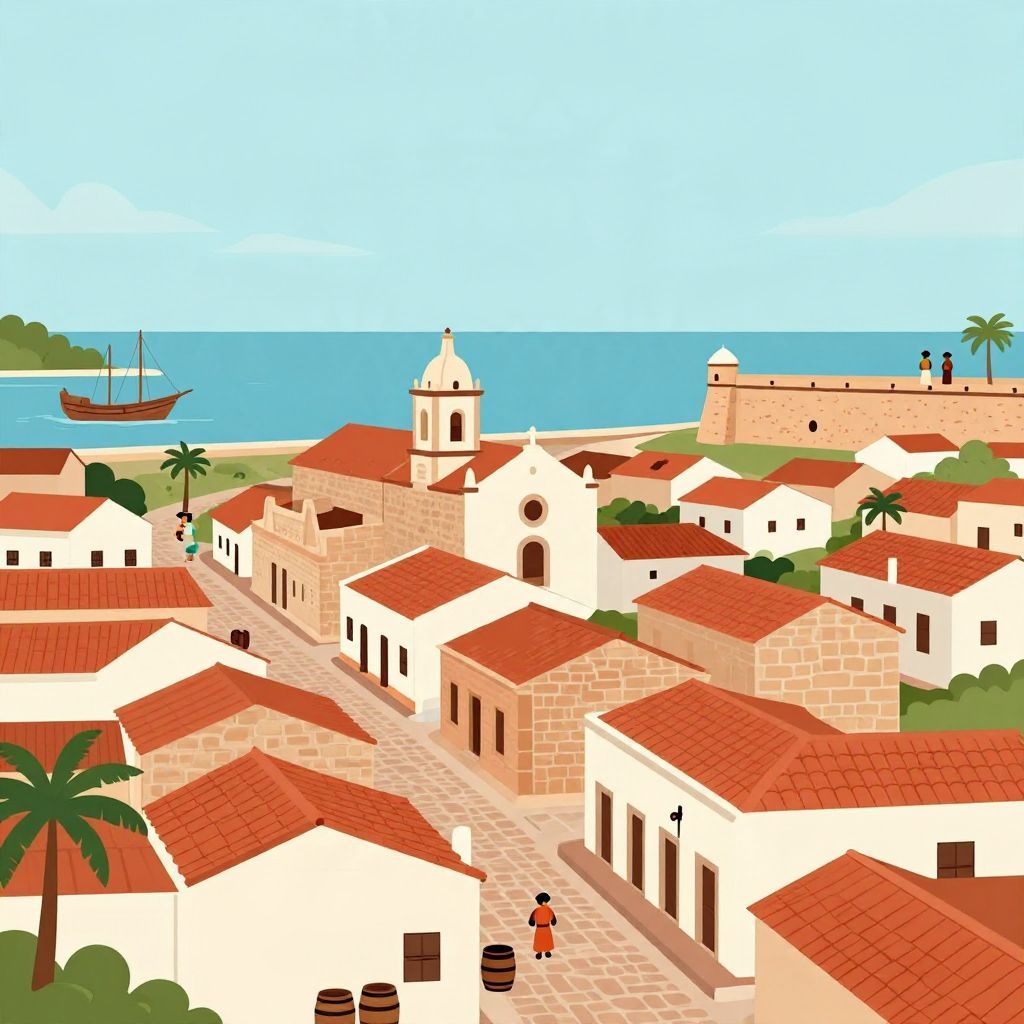
What is the oldest city in America? The most common answer is St. Augustine, Florida, founded by the Spanish in 1565. But the question depends on what “America” means and how “city” is defined. If you mean the oldest continuously inhabited European-founded city in what is now the United States, St. Augustine is the standard answer.
That said, older Indigenous settlements existed across the Americas long before European colonization, and several places in Latin America were founded earlier than St. Augustine. The historical answer is therefore more nuanced than a single name.
What Is The Oldest City In America?
St. Augustine, Florida, founded in 1565, is widely regarded as the oldest continuously inhabited European-established city in the continental United States. It was created by Spain as a military outpost and colonial settlement, and it has remained occupied ever since. If the question is broadened to all of the Americas, however, older cities such as Santo Domingo and others in the Caribbean and Latin America predate it.
Why St. Augustine Is Usually the Answer
St. Augustine’s claim rests on continuity. It was founded by Pedro Menéndez de Avilés on September 8, 1565, to secure Spain’s presence in Florida and protect the route for treasure fleets sailing from the Caribbean. Unlike many early settlements that were abandoned, destroyed, or relocated, St. Augustine survived repeated attacks, changing empires, and centuries of political change.
Founded as a Spanish military settlement
Spain established St. Augustine in response to French activity in the region. The settlement was not first imagined as a large city in the modern sense. It began as a strategic stronghold, with soldiers, settlers, priests, and administrators forming the core population. Over time, the outpost developed into a permanent town with churches, homes, defenses, and civil institutions.
Continuity matters in the historical claim
Many places in North America were founded earlier than St. Augustine but did not remain continuously occupied. That is why historians and guidebooks often specify “oldest continuously inhabited European-founded city” rather than simply “oldest city.” The wording matters because the Americas had complex settlement histories long before Europeans arrived, and because colonial settlements were often temporary or repeatedly disrupted.
What Counts as “America” and “Oldest City”?
The answer changes depending on geography and definition. “America” can mean the United States, North America, or the entire Western Hemisphere. “City” can mean a legally incorporated municipality, a European colonial settlement, or any long-term urban community. Because of these differences, there is no single universally accepted oldest city for every possible definition.
If you mean the United States
For the United States, St. Augustine is the usual answer. It is older than Jamestown, Virginia, which was founded in 1607, and older than many other famous colonial towns. Its age is one reason it occupies a special place in American historical memory.
If you mean the Americas as a whole
If the question includes Latin America and the Caribbean, St. Augustine is not the oldest city. Spanish, Portuguese, and other European powers founded settlements in the Caribbean and mainland Americas before 1565. In that broader sense, the title belongs elsewhere, and the answer depends on whether one is asking about the oldest surviving European city, the oldest colonial city, or the oldest continuously inhabited urban center overall.
Older Cities in the Americas: Important Comparisons
Several places are often mentioned in discussions of the oldest city in America. Some are older than St. Augustine, but they differ in location, continuity, and the meaning of “city.”
Santo Domingo, Dominican Republic
Santo Domingo, founded in 1496, is generally considered the oldest continuously inhabited European-established settlement in the Americas. It became an important Spanish colonial center and is often cited as the oldest European city in the New World. If the question is about the oldest city in the broader Americas, Santo Domingo is a stronger candidate than St. Augustine.
Other early colonial settlements
Other early European settlements in the Americas include places founded in the early 1500s by Spain, Portugal, and later other imperial powers. Some were abandoned, destroyed, or absorbed into later cities. Their histories show that “oldest” can mean different things: earliest founded, longest continuously occupied, or earliest to become an urban center of lasting importance.
Indigenous urban centers long predate European cities
Long before European colonization, the Americas were home to major Indigenous cities and ceremonial centers. Examples include Teotihuacan in central Mexico, Tenochtitlan of the Mexica (Aztec) Empire, and the great urban landscapes of the Maya, Mississippian, and Andean worlds. These were not “American cities” in the modern nation-state sense, but they were cities in the historical and archaeological sense—and they are far older than any European-founded settlement in the hemisphere.
A Brief History of St. Augustine
St. Augustine’s story begins with empire, rivalry, and survival. Its founding was part of Spain’s effort to defend its Atlantic interests after French Protestants threatened Spanish shipping and claims in Florida. The settlement became a frontier town shaped by warfare, religion, trade, and adaptation to a difficult environment.
1565: Founding and early survival
Menéndez de Avilés founded St. Augustine after defeating the French at nearby Fort Caroline. The Spanish then built a settlement that could support troops and settlers. Early life was precarious: food shortages, disease, and conflict with rival European powers made survival difficult. Yet the settlement endured, helped by its strategic location and Spain’s determination to hold Florida.
Fortified frontier town
St. Augustine developed as a fortified colonial town rather than a sprawling metropolis. Its defenses became central to its identity. The most famous surviving structure, Castillo de San Marcos, was built later, beginning in the late 17th century, to protect the settlement from attack. The fortress reflects the city’s long history as a frontier outpost in a contested imperial world.
Changing empires, continuing city
St. Augustine changed hands over time. Spain controlled it for long periods, Britain ruled it from 1763 to 1783, and Spain regained it before the United States acquired Florida in 1821. Despite these political shifts, the city remained inhabited. That continuity is the core reason it is remembered as the oldest city in the United States.
Why the Question Is More Complicated Than It Seems
“Oldest city” sounds simple, but historians must ask: oldest by what measure? Founding date, continuous habitation, urban status, or current legal recognition? A place can be older than another yet lose its claim if it was abandoned. Another can be younger but more clearly documented. Historical answers often require careful definitions rather than a single slogan.
Continuity versus first settlement
Some settlements were the first European outposts in a region but did not survive. Others were founded later yet endured. St. Augustine is important because it combines early founding with long continuity. That makes it especially significant in the history of European colonization in North America.
Urban life versus colonial outposts
Not every early settlement functioned as a true city. Some were military camps, missions, or trading posts. Over time, however, places like St. Augustine developed civic institutions, churches, neighborhoods, and commercial life. This gradual transformation is part of what turns a frontier settlement into a city in the historical sense.
Key Facts About St. Augustine
Here are the main facts most historians and educators use when discussing the oldest city in America:
- Founded: 1565
- Founder: Pedro Menéndez de Avilés
- Colonial power: Spain
- Location: Florida, in the present-day United States
- Historical significance: Oldest continuously inhabited European-founded city in the continental U.S.
- Broader context: Older European-founded cities exist elsewhere in the Americas, especially in the Caribbean and Latin America
How St. Augustine Became a Symbol of Early America
St. Augustine’s importance goes beyond age. It represents the early collision of empires, Indigenous peoples, religion, and migration in the Atlantic world. Its long survival makes it a rare place where the early colonial era remains visible in the landscape, architecture, and historical memory.
A city shaped by contact and conflict
The city’s history includes Spanish colonization, Native American diplomacy and resistance, British occupation, slavery, and the shifting borders of empire. Like many old cities, it was not built in isolation. Its growth depended on regional networks of trade, coercion, and cultural exchange.
Tourism and historical memory
Today, St. Augustine is widely promoted as the oldest city in America, and that identity has become part of its civic brand. Tourism emphasizes its colonial streets, fortress, and historic district. While this public image is useful, it can simplify a more complicated past that includes Indigenous history and imperial conflict.
The Bottom Line
If you are asking what is the oldest city in America in the usual U.S. historical sense, the answer is St. Augustine, Florida, founded in 1565. If you mean the entire Americas, the answer changes, because older colonial cities exist in the Caribbean and Latin America, and Indigenous urban centers in the hemisphere are far older still. For a deeper look at related topics in early American history, you may also want to explore more history articles.